
The Humble Origins and Global Evolution of Paella
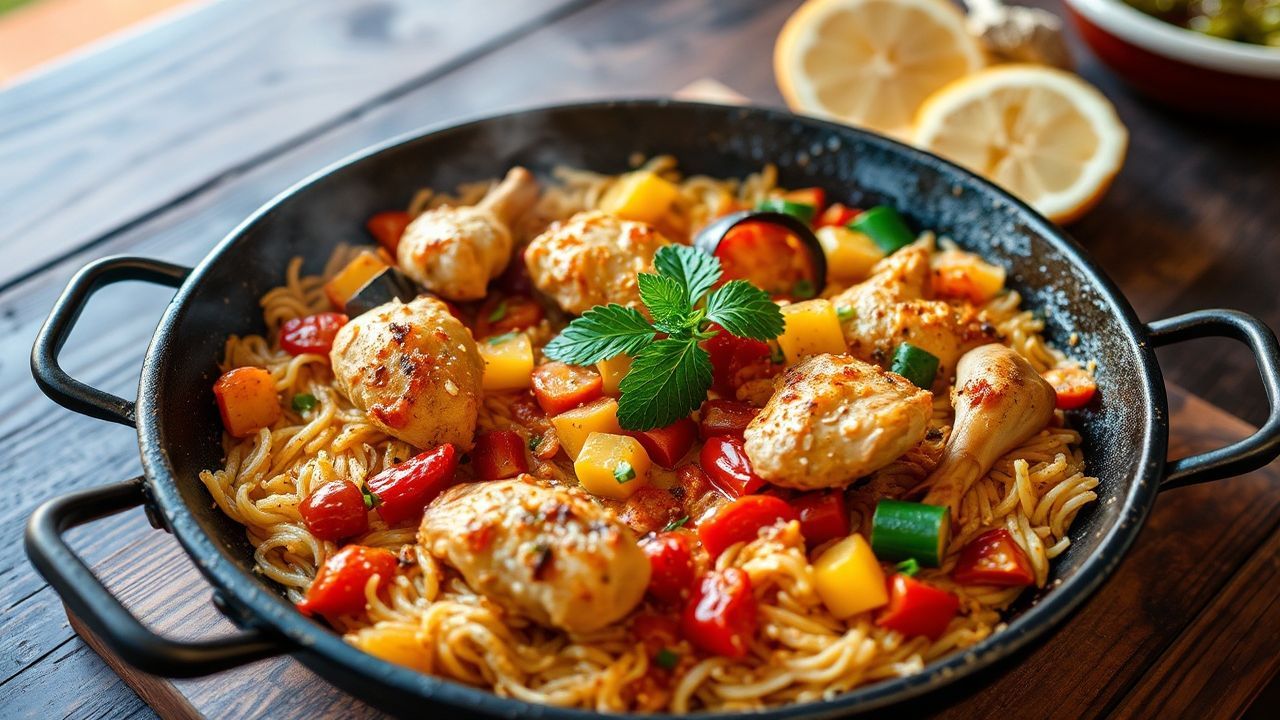
The very notion of paella, particularly the chicken and vegetable iteration, often conjures images of sun-drenched Valencian fields and boisterous family gatherings. Yet, to confine this dish to mere rustic simplicity is to miss its profound cultural evolution. While the original paella Valenciana, proof of the agricultural bounty of its namesake region, traditionally featured rabbit and snails, the democratic spirit of Spanish cuisine has embraced countless variations. The chicken and vegetable paella, far from being a diluted imitation, represents a sophisticated adaptation, proof of the dish’s inherent adaptability and its power to absorb the essence of its environment. It’s a dish that speaks of shared meals and communal joy, a culinary ambassador for Spain that has traversed continents, adapting its nuances to local palates while retaining its soul.
- The Humble Origins and Global Evolution of Paella
- The Symphony of Ingredients: Crafting Your Paella
- The Art of the Searing and Sauté: Building the Flavour Base
- The Crucial Alchemy: Rice, Broth, and Saffron
- The Patience of the Socarrat: The Final Act
- Nutritional Snapshot: A Wholesome Mediterranean Delight
- Elevating Your Paella: Pro Tips for Restaurant-Quality Results
- Frequently Asked Questions About Paella
- Can I use other types of rice for paella?
- What is the best way to prevent my paella from being mushy?
- How can I make my paella vegetarian?
At a Glance: Mastering the Art of Paella
- The Socarrat is King: Achieving the coveted crispy, toasted layer of rice at the bottom is the hallmark of a truly great paella.
- Rice Matters: Selecting the correct short-grain rice is non-negotiable for authentic paella texture.
- Broth is the Foundation: The quality and flavour of your broth directly dictate the soul of your paella.
- Patience is a Virtue: Resist the urge to stir once the liquid is added; this is crucial for socarrat formation.
My own early encounters with paella were in the bustling markets of Valencia, where the air was thick with the aroma of saffron and sizzling ingredients. There, I learned that paella is not merely a recipe; it’s a philosophy, a dance between heat, rice, and flavour. The chicken and vegetable paella, in particular, offers a canvas for an incredible spectrum of tastes, a delightful interplay of earthy vegetables and succulent poultry, all harmonizing within the embrace of perfectly cooked rice. This is not about following a rigid set of rules, but about understanding the principles that underpin this magnificent dish, allowing for creativity without compromising its fundamental character.
The Symphony of Ingredients: Crafting Your Paella
The foundation of any remarkable paella lies in the quality and balance of its constituent parts. For our chicken and vegetable paella, we seek ingredients that are fresh, vibrant, and complementary, each playing its role in the grand ensemble. The rice, of course, is paramount. A short-grain variety, such as Bomba or Calasparra, is essential. These rices possess an unparalleled ability to absorb liquid and flavour without becoming mushy, a critical factor in achieving the desired texture and preventing a soupy outcome. Their starch content allows for the formation of the coveted *socarrat*, that glorious toasted layer of rice at the bottom of the pan.
The choice of chicken is equally important. While thighs offer more flavour and succulence, breasts can be used if trimmed of excess fat and cooked with care to avoid dryness. The vegetables, too, should be selected for their seasonality and their ability to contribute both colour and taste. Think of the sweetness of red bell peppers, the slight bitterness of green beans, the earthiness of artichoke hearts, and the delicate aroma of peas. These elements, when combined with the subtle warmth of garlic and the aromatic depth of paprika and saffron, create a flavour profile that is both complex and comforting.
Essential Components for Two Servings of Paella
- Chicken: 200g (approx. 7 oz) boneless, skinless chicken thighs, cut into bite-sized pieces
- Rice: 150g (approx. 5 oz) Spanish short-grain rice (Bomba or Calasparra)
- Olive Oil: 3 tablespoons extra virgin olive oil
- Onion: 1 small yellow onion, finely chopped
- Garlic: 2 cloves garlic, minced
- Bell Pepper: 1/2 red bell pepper, deseeded and diced
- Green Beans: 100g (approx. 3.5 oz) fresh green beans, trimmed and cut into 2cm (approx. 3/4 inch) pieces
- Artichoke Hearts: 100g (approx. 3.5 oz) canned or jarred artichoke hearts, quartered (if using fresh, prepare and par-boil them beforehand)
- Tomatoes: 1 ripe medium tomato, grated (skin discarded) or 75g (approx. 2.5 oz) crushed tomatoes
- Paprika: 1 teaspoon sweet smoked paprika (pimentón dulce ahumado)
- Saffron Threads: A generous pinch (approx. 0.1g), steeped in 50ml (approx. 1.7 fl oz) warm water
- Chicken Broth: 400ml (approx. 13.5 fl oz) good quality chicken broth, heated
- Peas: 50g (approx. 1.7 oz) fresh or frozen peas
- Lemon: 1/2 lemon, cut into wedges, for serving
- Fresh Parsley: A small handful, finely chopped, for garnish
- Salt and Freshly Ground Black Pepper: To taste
The sourcing of ingredients is not merely a functional aspect; it’s an integral part of the paella experience. Visiting a local market, selecting plump, vibrant vegetables, and choosing a fragrant bunch of parsley elevates the entire process. For the chicken, opting for free-range thighs will yield a richer, more nuanced flavour, and the slight marbling of fat will prevent the meat from becoming dry during the cooking process. The paprika, a cornerstone of Spanish cuisine, should ideally be a smoked variety, offering a subtle smokiness that deepens the overall flavour profile. And the saffron, the ‘red gold’ of the culinary world, is non-negotiable for that quintessential paella hue and aroma.
The Art of the Searing and Sauté: Building the Flavour Base
The journey to a perfect paella begins not with the rice, but with the careful development of the *sofrito*, the flavour base that will infuse every grain. This initial stage is where precision and patience yield immense rewards. Heat is your ally here, but it must be controlled, allowing ingredients to soften and caramelize rather than burn. The process is akin to coaxing out the inherent sweetness and depth of each component, creating a harmonious foundation upon which the rest of the dish will be built.
Start by heating a generous amount of good quality olive oil in a wide, shallow pan – a traditional paella pan, or a large, heavy-bottomed skillet. The pan’s surface area is crucial for even cooking and the eventual formation of the *socarrat*. Add the chicken pieces and sear them until they are golden brown on all sides. This searing locks in their juices and begins the flavour development. Remove the chicken and set aside, leaving the rendered fat in the pan. This fat is liquid gold, imbued with the essence of the chicken, and will serve as the flavour conduit for the vegetables.
Developing the Sofrito
- Heat the olive oil in your paella pan or skillet over medium-high heat.
- Add the chicken pieces and season with salt and pepper. Sear until golden brown on all sides. Remove the chicken from the pan and set aside.
- Reduce the heat to medium. Add the chopped onion to the pan and sauté until softened and translucent, about 5-7 minutes.
- Stir in the minced garlic and cook for another minute until fragrant, being careful not to burn it.
- Add the diced red bell pepper and green beans. Cook, stirring occasionally, until the vegetables begin to soften, about 5-8 minutes.
- Introduce the artichoke hearts and cook for a further 2-3 minutes.
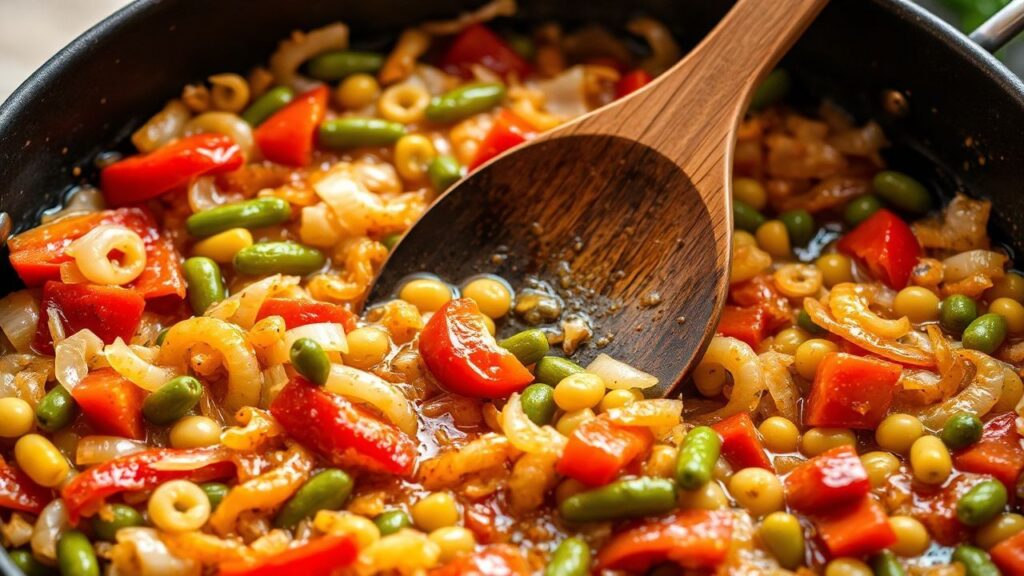
- Stir in the grated tomato (or crushed tomatoes) and the sweet smoked paprika. Cook for about 5 minutes, stirring frequently, allowing the tomato to reduce and the flavours to meld. This is the heart of your *sofrito*.
The transformation of the raw ingredients into a rich *sofrito* is a subtle art. The onion should become sweet and yielding, the garlic fragrant without a hint of bitterness, and the peppers tender. This stage is where the magic begins to unfold, where simple ingredients start to weave a complex tapestry of aroma and taste. The paprika, toasted gently, releases its smoky, sweet notes, a signature of Spanish cooking. This careful layering of flavours ensures that the final paella will possess a depth and richness that cannot be achieved through shortcuts.
The Crucial Alchemy: Rice, Broth, and Saffron
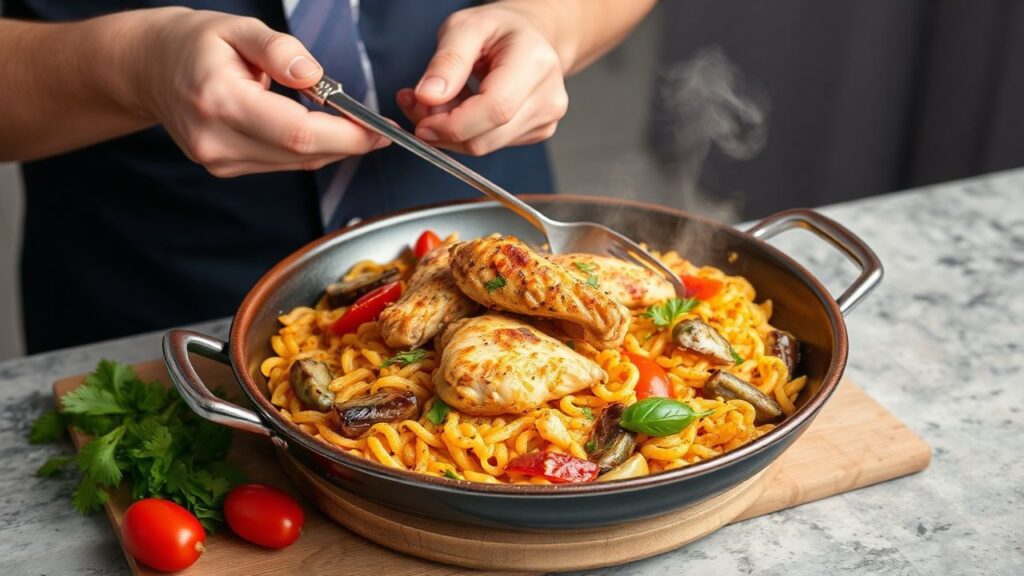
With the *sofrito* perfected, we move to the crucial stage where the rice is introduced, absorbing the foundational flavours before the liquid transforms it into paella. This is a delicate balance, requiring an understanding of how rice behaves when exposed to heat and liquid. The short-grain rice, with its unique starch structure, is designed to absorb flavour without becoming sticky, a quality essential for the textural integrity of the final dish. Adding the rice at this juncture, toasting it lightly in the *sofrito*, further enhances its ability to absorb and retain flavour.
Once the rice has been stirred through the *sofrito* for a minute or two, ensuring each grain is coated, it’s time for the liquid. The heated chicken broth is poured over the rice, followed by the steeped saffron and its fragrant liquid. The broth is the lifeblood of the paella, carrying the dissolved saffron’s colour and aroma throughout the dish. It’s vital that the broth is of excellent quality; a weak or bland broth will result in a similarly uninspired paella. This is where the flavour development truly culminates, as the rice begins its slow, alchemical transformation.
The Infusion Process
- Add the short-grain rice to the pan. Stir well to coat each grain with the *sofrito* mixture. Cook for 1-2 minutes, stirring constantly, until the edges of the rice grains appear slightly translucent.
- Pour in the heated chicken broth and the steeped saffron with its liquid. Stir gently to distribute the ingredients evenly.
- Season with salt and pepper to taste. Remember that the broth may already be salted, so adjust accordingly.
- Bring the liquid to a gentle simmer.
- Nestle the seared chicken pieces back into the pan, distributing them evenly amongst the rice.
The infusion of saffron is more than just a visual cue; it’s a complex aromatic contribution that is utterly indispensable to authentic paella. The delicate threads, when steeped, release their distinctive flavour and a vibrant golden hue that is as much a part of the dish’s identity as its taste. This step, often overlooked in less authentic preparations, elevates the paella from a simple rice dish to a culinary masterpiece. The quality of the saffron, and the care taken in its steeping, will directly translate to the final sensory experience. A good saffron can cost a considerable amount, but its impact on a paella is immeasurable, proof of its value in Spanish gastronomy.
The Patience of the Socarrat: The Final Act
This is where the true test of a paella chef lies. The period after the liquid has been absorbed and the rice is nearing doneness requires a keen ear and a discerning nose. The goal is to achieve the *socarrat*, that coveted crispy, caramelized layer of rice at the bottom of the pan. This is not achieved through stirring, but through controlled heat and a measure of patience. Once the surface of the rice appears mostly dry and the liquid has been absorbed, the heat should be lowered to medium-low. You’ll begin to hear a gentle crackling sound, a sign that the rice at the bottom is toasting.
This toasting process should be monitored closely. If it becomes too aggressive, you risk burning the *socarrat*, turning a delicacy into a disaster. A gentle hiss is good; a sharp crackle that turns into a frantic sizzle is a warning. The aroma will change, becoming nutty and toasted. This is the moment to intervene with a delicate shake of the pan, or a very brief, careful lift to check the colour. The *socarrat* should be golden brown, not black. Once achieved, remove the pan from the heat immediately. The residual heat will continue to cook the rice for a few more minutes.
Achieving the Perfect Socarrat
- Once the rice has absorbed most of the liquid and the surface appears almost dry, reduce the heat to medium-low.
- Allow the paella to cook undisturbed for 5-10 minutes, or until you hear a gentle crackling sound from the bottom of the pan, indicating the *socarrat* is forming. You may also notice a faint toasted aroma.
-
⚠️ Pro-CautionPro-Caution: Do NOT stir the paella once the liquid has been added and the rice is cooking. Stirring releases starch and prevents the formation of the *socarrat*. If the liquid evaporates too quickly before the rice is cooked, you can add a small splash of hot broth, but do so sparingly.
- Carefully lift a corner of the rice with a spoon to check the colour of the bottom layer. It should be golden brown and slightly crispy, not burnt.
- Once the *socarrat* has formed to your liking, remove the pan from the heat.
- Sprinkle the fresh peas over the top of the paella during the last 2-3 minutes of cooking, or add them immediately after removing from the heat to allow them to warm through.
- Cover the paella with a clean kitchen towel or foil and let it rest for 5-10 minutes before serving. This resting period is crucial for the flavours to meld and the rice to finish cooking.
The *socarrat* is not merely a textural element; it is proof of the chef’s understanding of heat management and timing. It represents the culmination of the cooking process, a final flourish that elevates the dish from satisfying to sublime. The faint, nutty aroma that emanates from the bottom of the pan as it toasts is an olfactory promise of the delightful crunch to come. Many aspiring paella makers fear the *socarrat*, but with practice and attention, it becomes an achievable and deeply rewarding aspect of the dish. It’s the subtle whisper of the hearth, the echo of tradition in every bite.
Nutritional Snapshot: A Wholesome Mediterranean Delight
While paella is undoubtedly a celebratory dish, its ingredients also contribute a significant nutritional profile, particularly when prepared with lean chicken and a bounty of vegetables. This chicken and vegetable paella offers a balanced intake of carbohydrates from the rice, lean protein from the chicken, and essential vitamins, minerals, and fibre from the diverse array of vegetables. The use of olive oil provides healthy monounsaturated fats, crucial for cardiovascular health.
The specific nutritional content will vary depending on the exact quantities of ingredients used and any variations in preparation. However, a typical serving of this paella can be expected to provide a good source of energy, support muscle health with its protein content, and contribute to digestive well-being through its fibre-rich vegetables. The vibrant colours of the bell peppers and tomatoes also indicate the presence of antioxidants, such as Vitamin C and lycopene, while saffron, though used in small quantities, contains beneficial compounds like crocin and safranal.
Estimated Nutritional Information (per serving, based on 2 servings):
| Nutrient | Approximate Amount |
|---|---|
| Calories | 450-550 kcal |
| Protein | 25-30g |
| Fat | 15-20g |
| Saturated Fat | 3-5g |
| Carbohydrates | 50-60g |
| Fibre | 5-7g |
| Sodium | 600-800mg (can be adjusted by broth choice and added salt) |
Keep in mind that these figures are estimations. For precise nutritional data, it is recommended to use a nutritional calculator with the specific ingredients and quantities used in your preparation. The inclusion of a wide variety of vegetables significantly boosts the fibre content, which aids in satiety and digestive health. The lean protein from the chicken ensures a satisfying meal that supports muscle repair and growth. Furthermore, the use of olive oil as the primary fat source contributes healthy fats that are beneficial for overall well-being.
Elevating Your Paella: Pro Tips for Restaurant-Quality Results
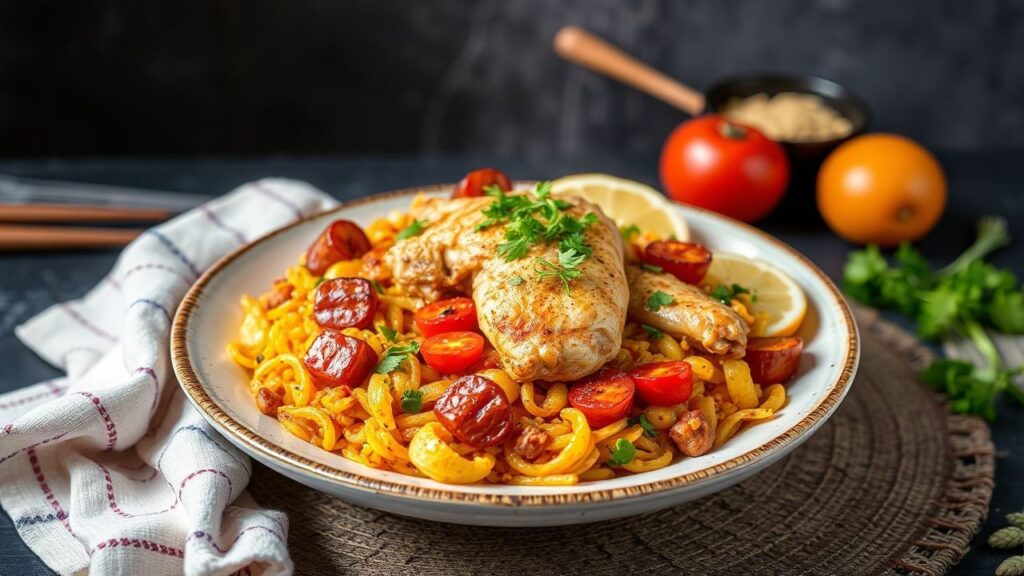
Transforming a good paella into an exceptional one often comes down to subtle techniques and an unwavering commitment to quality. These are the nuances that separate a home-cooked meal from a culinary revelation, the secrets passed down through generations of Spanish cooks. The foundation is, of course, paramount, but the finishing touches and the attention to detail are what truly elevate the dish to its full potential. Think of it as the difference between a well-executed piece of music and a truly masterful performance.
One of the most impactful ways to elevate your paella is by using homemade chicken stock. While good quality store-bought broth is acceptable, a homemade stock, simmered with aromatics like bay leaves, peppercorns, and a mirepoix, will imbue your paella with an unparalleled depth of flavour. This is where the true essence of the chicken is captured and distilled into the very soul of the dish. The richness and complexity of a homemade broth are simply irreplaceable.
Expert Techniques for Paella Perfection
- Homemade Broth is Key: As mentioned, a rich, homemade chicken stock is a breakthrough. Simmer chicken bones, mirepoix (carrots, celery, onion), bay leaves, and peppercorns for at least 2-3 hours. Strain thoroughly.
- Quality Saffron is Non-Negotiable: Invest in good quality saffron threads. The flavour and aroma are significantly superior to lower-grade options. Steep them in warm water or broth for at least 15-20 minutes before adding to the paella.
- The Right Pan Matters: A traditional paella pan, with its wide, shallow surface, is designed for even cooking and optimal evaporation, crucial for developing the *socarrat*. If you don’t have one, a large, heavy-bottomed skillet will suffice, but it may require more attention to heat distribution.
- Don’t Overcrowd the Pan: Ensure your paella pan is appropriately sized for the amount of rice. Overcrowding will lead to steaming rather than even cooking, and will hinder the development of the *socarrat*. A thin layer of rice is ideal.
- Resting is Crucial: Allowing the paella to rest, covered, for 5-10 minutes after cooking is essential. This allows the flavours to meld and the rice to finish cooking gently, resulting in a more cohesive and flavourful dish.
- Fresh Garnishes Elevate: A generous sprinkle of freshly chopped parsley and a squeeze of fresh lemon juice just before serving add brightness and a touch of acidity that cuts through the richness of the dish.
Consider the impact of a well-seasoned paella pan. Over time, the layers of flavour from repeated cooking build up, contributing to the dish’s character. A new paella pan, or a skillet that hasn’t been seasoned, may require a slightly different approach to heat management until it develops its own culinary patina. Furthermore, the finishing touches are often where true artistry shines. The vibrant green of fresh parsley, a stark contrast to the golden hue of the rice, and the bright, zesty burst of lemon juice, awaken the palate and provide a refreshing counterpoint to the richness of the dish. These are not mere garnishes; they are integral components of the final sensory experience.
The art of paella, particularly this versatile chicken and vegetable rendition, is a journey of understanding flavour, texture, and tradition. It’s a dish that invites participation, a celebration of simple ingredients transformed through careful technique and a touch of Spanish passion. From the initial searing of the chicken to the final, tantalizing crunch of the *socarrat*, each step matter significantly in creating a dish that is more than just a meal; it’s an experience, a taste of Spain that can be savoured and shared.
Frequently Asked Questions About Paella
Can I use other types of rice for paella?
While short-grain Spanish rice varieties like Bomba and Calasparra are strongly recommended for their superior ability to absorb liquid and maintain their texture without becoming mushy, it is possible to achieve a passable paella with other short-grain rices. Arborio rice, commonly used for risotto, can be a substitute, but it tends to release more starch, making the paella creamier and less likely to develop a distinct *socarrat*. Long-grain rices, such as basmati or jasmine, are not suitable as they do not absorb liquid in the same way and will result in a very different texture. If you must substitute, aim for the shortest-grain rice available and be prepared to adjust cooking times and liquid ratios.
What is the best way to prevent my paella from being mushy?
The primary culprit for a mushy paella is the use of the wrong type of rice and over-stirring. As previously emphasized, short-grain Spanish rice is crucial. Secondly, resist the urge to stir the rice once the liquid has been added. Stirring releases starches, leading to a creamy, risotto-like consistency, which is not the desired outcome for paella. Allow the rice to cook undisturbed, letting the liquid absorb evenly and facilitating the formation of the *socarrat*. Ensuring the correct liquid-to-rice ratio is also vital; too much liquid will invariably lead to a soupy result.
How can I make my paella vegetarian?
Transforming this chicken and vegetable paella into a vegetarian delight is straightforward and equally delicious. The key is to replace the chicken broth with a high-quality vegetable broth and to increase the variety and quantity of vegetables used. Consider adding ingredients like mushrooms (shiitake or cremini), asparagus, zucchini, eggplant, or even a handful of chickpeas for added texture and protein. The *sofrito* can be built with extra onion, garlic, and peppers, and the overall flavour profile can be enhanced with herbs like rosemary or thyme. The principles of rice cooking and *socarrat* formation remain the same, ensuring a flavourful and satisfying vegetarian paella.
See also: Paella