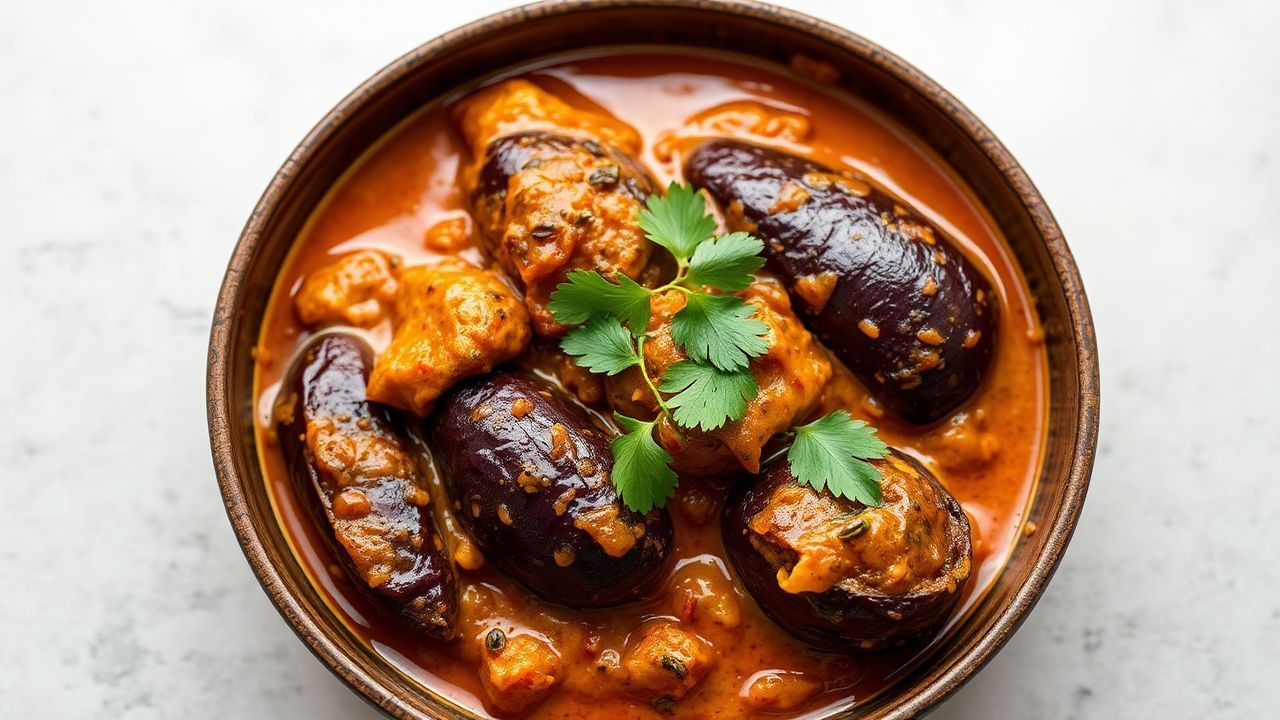

“The eggplant is a culinary sponge, a vessel of infinite potential that demands both patience and a deep understanding of heat to transform from a bitter orb into a silken masterpiece.” — Madhur Jaffrey. This principle is the foundation of a world-class Eggplant curry, a dish that elevates humble ingredients into the realm of high-end plant-based gastronomy.
At a Glance: Key Culinary Insights
- Textural Integrity: Achieving a melt-in-the-mouth consistency requires a dual-stage cooking process to manage the eggplant’s high water content and prevent sogginess.
- Emulsification Mastery: High-fat coconut milk acts as the primary vehicle for fat-soluble spice compounds, creating a cohesive, velvety sauce.
- Aromatic Layering: The sequence of adding spices—from whole seeds to ground powders—determines the final complexity and depth of the flavor profile.
The Cultural Resonance of Eggplant Curry
The history of the eggplant, or Solanum melongena, is woven into the ancient trade routes of South and Southeast Asia. For millennia, this nightshade has been the cornerstone of vegetarian diets across the Indian subcontinent, where it is often hailed as the “King of Vegetables.” In a modern Eggplant curry, we see a fusion of these ancient traditions with contemporary vegan sensibilities, utilizing coconut milk to provide the creamy luxury once reserved for ghee or heavy dairy.
In regions like Kerala or Sri Lanka, the marriage of eggplant and coconut is a reflection of the local ecosystem rather than mere convenience. The natural bitterness of certain eggplant varieties is balanced by the lauric acid-rich sweetness of coconut. This synergy is a prime example of “flavor pairing” utilized long before the term was popularized by molecular gastronomists. When constructing an Eggplant curry today, we participate in a multi-generational dialogue about balance, heat, and nutrition.
Selecting the Best Nightshade for Eggplant Curry
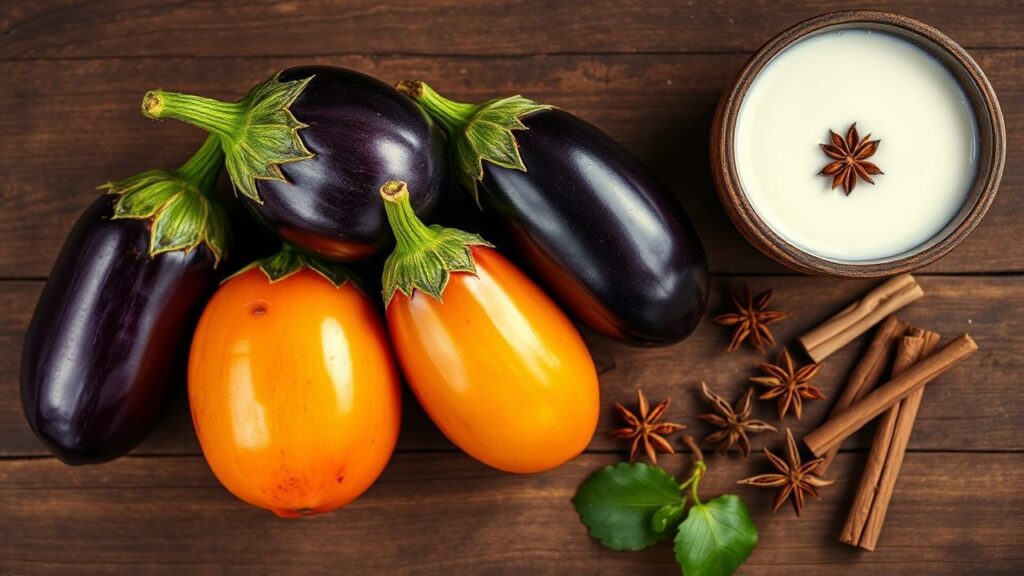
Each eggplant variety brings a distinct profile to the curry. The large, glossy Globe eggplant is widely available but contains a higher seed-to-flesh ratio, which can lead to a bitter profile if the seeds are over-mature. Conversely, the slender Japanese or Chinese varieties possess thinner skin and a creamier, more delicate interior that dissolves beautifully into a thick gravy.
If you prefer a dish with more structural integrity, the small, round Indian “brinjal” varieties are ideal. They hold their shape even after long simmering, providing a satisfying “bite” that mimics the density of protein. Regardless of the variety, the fruit must be firm to the touch with vibrant, unblemished skin. Dull skin often indicates an older fruit with more developed, bitter seeds—a trait that can easily disrupt the delicate balance of a coconut-based sauce.
The Science of Texture in Eggplant Curry
The primary challenge in creating an exceptional Eggplant curry lies in the vegetable’s cellular structure. Eggplants are composed of a porous, air-filled matrix. When heat is applied, these cells collapse. If the eggplant is simply boiled, it becomes waterlogged and unappealing. However, if it is first roasted or sautéed, the air is replaced by flavorful fats, and the sugars undergo the Maillard reaction, resulting in a deep, savory complexity.
According to research in the Journal of Food Science and Technology, the retention of phenolic compounds in eggplants—specifically chlorogenic acid—is significantly higher when the vegetable is cooked using dry heat or fat-based methods rather than boiling. This is crucial for an Eggplant curry because those phenols provide the dish’s antioxidant properties and its unique, slightly smoky depth. By pre-searing the eggplant, we create a hydrophobic barrier that prevents it from becoming mushy once the coconut milk is introduced.
Once the eggplant is prepared, the introduction of coconut milk requires precision. Coconut milk is an emulsion of water and coconut fats. If boiled too aggressively, the emulsion can break, leading to a greasy, curdled appearance. Maintain a gentle simmer to allow the coconut fats to bind with the spices, creating a homogenous, silk-like sauce that coats the eggplant without overwhelming it.
Spicing Your Eggplant Curry
The spice architecture of an Eggplant curry should be built in layers. We begin with the “Tadka” or tempering—toasting whole cumin and mustard seeds in hot oil until they pop. This releases essential oils trapped within the seeds’ husks. Next, aromatics like ginger, garlic, and shallots are caramelized to provide a sweet, pungent base. Only then do we introduce ground spices like turmeric, coriander, and Kashmiri chili powder.
The use of turmeric is particularly vital. Beyond its vibrant color, turmeric contains curcumin, which is fat-soluble. In an Eggplant curry, the fats from the coconut milk serve as the delivery system for curcumin, enhancing its bioavailability. Furthermore, the earthy notes of coriander provide a bridge between the brightness of the aromatics and the richness of the coconut milk. This layering ensures every bite offers a multi-dimensional sensory experience.
Ingredients for an Authentic Eggplant Curry
To produce an Eggplant curry that rivals professional kitchen standards, prioritize the quality of your pantry staples. Freshly extracted coconut milk is superior, but a high-quality canned version with at least 17% fat content is a viable alternative. Avoid “lite” versions, as they lack the viscosity needed to create a luxurious mouthfeel.
| Ingredient Category | Item & Measurement (Metric/Imperial) | Purpose in the Dish |
|---|---|---|
| The Star | 800g (1.7 lbs) Eggplant, cubed | Primary texture and flavor carrier |
| The Liquid Gold | 400ml (14 oz) Full-fat Coconut Milk | Creamy base and fat source for spices |
| The Aromatics | 2 Medium Onions, finely diced | Sweetness and body for the gravy |
| The Heat | 2 Green Chilies, slit lengthwise | Controlled capsaicin release |
| The Earth | 1 tsp Turmeric, 2 tsp Ground Coriander | Color and deep herbal notes |
| The Acid | 1 tbsp Tamarind Paste or Lime Juice | Brightens the dish and cuts through fat |
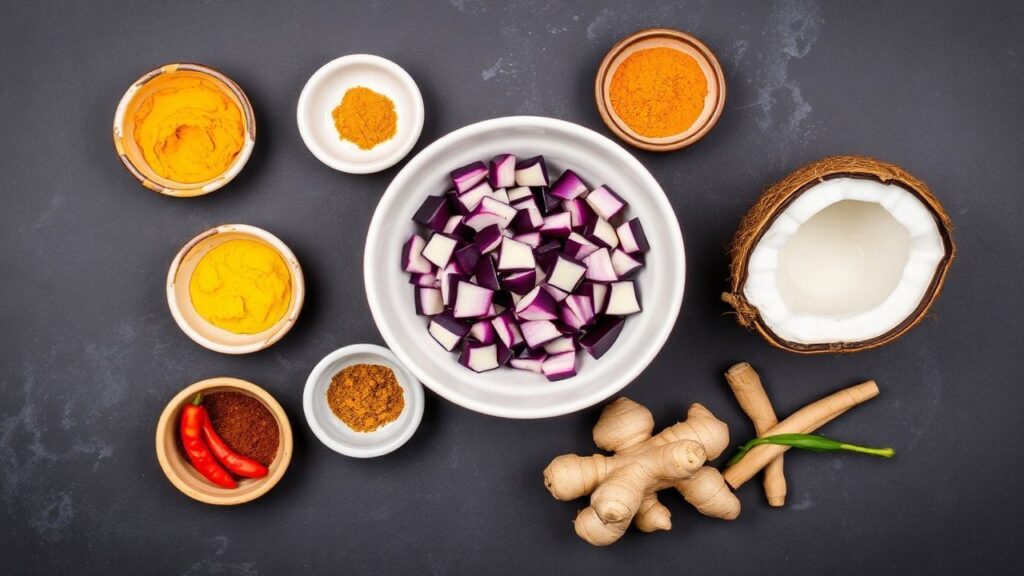
The inclusion of fresh curry leaves—if available—cannot be overstated. Their citrusy, nutty aroma is a hallmark of authentic Eggplant curry in the Southern Indian tradition. If you cannot find them, a small amount of lime zest provides a similar, albeit less complex, aromatic lift. The goal is a harmony of sweet, sour, salty, and spicy notes.
Step-by-Step Preparation of Eggplant Curry
Preparing an Eggplant curry is a rewarding process that requires attention to detail. Begin by roasting the eggplant. Toss the cubes in a neutral oil (such as grapeseed or coconut) and a pinch of salt. Roast at 200°C (400°F) for 20-25 minutes until the edges are charred and the centers are soft. This step is the “secret” to a non-greasy curry; it precisely controls the oil absorption that would otherwise happen in the pan.
While the eggplant roasts, prepare the base. In a heavy-bottomed pot, heat two tablespoons of coconut oil. Add a teaspoon of mustard seeds; once they begin to dance, add a sprig of curry leaves and your diced onions. Sauté the onions slowly until they reach a deep golden hue, which indicates the development of sugars that will balance the acidity of the later ingredients. Add your ginger-garlic paste and cook until the raw aroma dissipates.
Once the aromatics are ready, stir in your ground spices and a splash of water to prevent burning. Pour in the coconut milk and bring to a very gentle simmer. Introduce the roasted eggplant cubes into this fragrant bath. Let them simmer together for 10-15 minutes. This allows the eggplant to act as a “flavor sponge,” drawing the spiced coconut milk into its softened core. Finish with a tablespoon of tamarind paste to provide a sharp, clean finish to the Eggplant curry.
Nutritional Profile of Eggplant Curry
From a nutritional standpoint, an Eggplant curry is a dense source of plant-based benefits. Eggplants are rich in anthocyanins, particularly nasunin, which is found in the purple skin and has been studied for its ability to protect cell membranes. When combined with the medium-chain triglycerides (MCTs) found in coconut milk, the dish provides a sustained energy source that is easily metabolized.
A standard serving (approx. 300g) of this Eggplant curry provides roughly 280 calories, 4g of protein, 12g of fiber, and 22g of healthy fats. It is naturally gluten-free and vegan, making it an inclusive choice for diverse dietary needs. The high fiber content from the eggplant ensures a low glycemic index, preventing the insulin spikes often associated with carb-heavy meals. Pairing this curry with brown rice or quinoa further enhances its nutritional profile by providing a complete amino acid profile.
Perfecting the Flavor Balance of Eggplant Curry
The hallmark of an elite Eggplant curry is the “rounding” of flavors. If the dish feels one-dimensional, it is likely lacking in one of the four pillars of taste. If it feels too heavy, add more tamarind or lime. If it is too spicy, a teaspoon of coconut sugar or jaggery can provide the necessary counterbalance. If the sauce feels thin, allow it to simmer uncovered for a few extra minutes to concentrate the flavors.
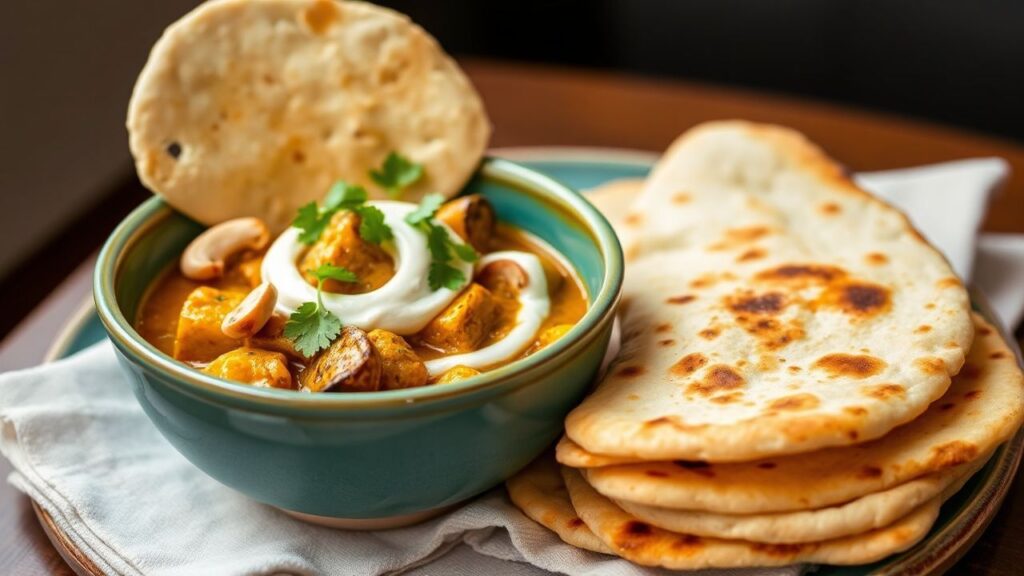
Texture also plays a role in the final perception of flavor. For a more sophisticated presentation, consider garnishing with toasted cashews or pomegranate seeds. The crunch of the nuts or the burst of acidity from the fruit provides a necessary contrast to the velvety softness of the Eggplant curry. This interplay of textures elevates a simple vegetable stew into a gourmet experience.
Ultimately, mastering the Eggplant curry is about intuition. It is about knowing when the eggplant has reached that perfect state of collapse and when the spices have bloomed to their fullest potential. As you become more comfortable with these foundational techniques, you will find that this recipe becomes a versatile canvas for your own culinary creativity.
Frequently Asked Questions about Eggplant Curry
How do I prevent my eggplant from becoming too mushy in the curry?
The key to maintaining texture in an Eggplant curry is the initial sear or roast. By cooking the eggplant separately until it is 80% done, you create a firm exterior that holds up during the simmering phase. Additionally, avoid over-stirring once the eggplant is added; a gentle fold is all that is needed to incorporate the vegetables into the sauce without breaking them apart.
Can I make this curry ahead of time for meal prep?
In fact, Eggplant curry often tastes better the next day. As the dish sits, the spices continue to infuse the eggplant, and the flavors meld together more deeply. When reheating, do so gently over low heat and add a splash of water or extra coconut milk if the sauce has thickened too much in the refrigerator. It can be stored in an airtight container for up to four days.
What are the best side dishes to serve with Eggplant curry?
To complement the richness of the Eggplant curry, serve it with a base that can absorb the sauce. Basmati rice, seasoned with a few cardamom pods, is the traditional choice. For a lower-carb option, cauliflower rice works exceptionally well. If you prefer bread, a garlic naan or a flaky paratha provides a wonderful textural contrast. A side of cooling cucumber raita (made with vegan yogurt) can also help balance the heat if you prefer a spicier profile.
See also: Eggplant curry