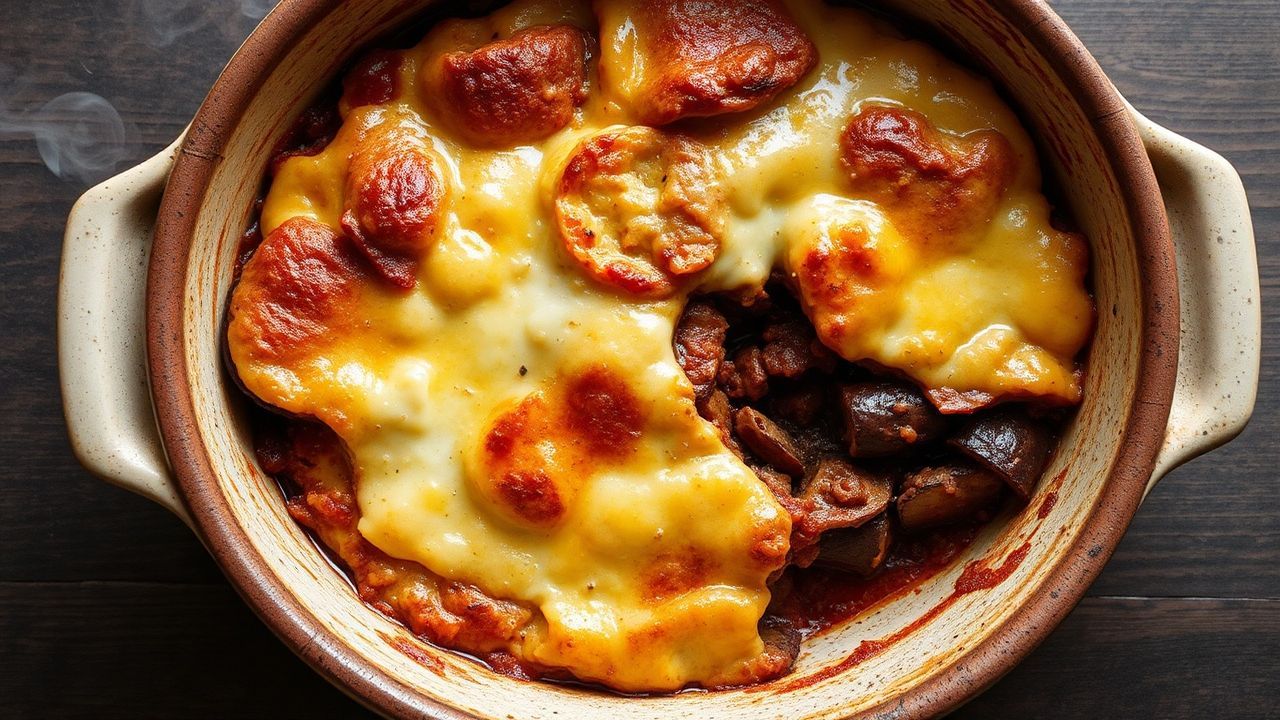

The notion that moussaka, that iconic layered casserole, is merely a humble, albeit delicious, dish is an underestimation that diminishes its true stature. Moussaka, particularly the quintessential Greek version featuring eggplant and lamb, is not merely food; it is an edible narrative, proof of resourcefulness, patience, and an alchemical ability to transform simple ingredients into something profoundly complex and deeply comforting. It is a dish that demands respect, not just for its preparation, but for the cultural tapestry it represents. Its layers speak of history, of the agricultural bounty of the Mediterranean, and of the enduring human desire to create something beautiful and nourishing from the earth.
At a Glance: The Essence of True Moussaka
- Moussaka is a profound expression of Mediterranean culinary philosophy, emphasizing layered flavors and textures derived from simple, seasonal ingredients.
- The meticulous layering and slow cooking process are not just techniques, but rituals that build depth and character, transforming humble components into a sublime whole.
- Authentic moussaka transcends regional variations, with the Greek eggplant and lamb iteration standing as a benchmark for its robust flavor profile and comforting richness.
- Mastering moussaka is an investment in patience and technique, yielding a dish that rewards the cook and captivates the diner with its unparalleled depth and soul-warming qualities.
The journey of moussaka from its origins to its current celebrated status is as layered as the dish itself. While versions exist across the Balkans and the Middle East, the Greek moussaka, with its characteristic béchamel topping and distinct spice profile, has carved out a unique identity. It’s a dish that speaks of family gatherings, of Sunday lunches that stretch into the afternoon, and of the enduring warmth of Greek hospitality. To truly appreciate moussaka is to understand that each component, from the perfectly fried eggplant to the slow-simmered lamb ragu, matter significantly in the symphony of flavors.
The Soul of the Dish: Eggplant and Lamb
The foundation of any great Greek moussaka rests on two pillars: the eggplant and the lamb. These are not merely ingredients; they are the very soul of the dish, each contributing its unique character to the final masterpiece. The choice and preparation of the eggplant are paramount, setting the stage for the textural interplay that defines moussaka.
The Eggplant: A Canvas of Texture
For moussaka, the ideal eggplant is the common globe variety, large and firm with a glossy, deep purple skin. Its flesh, when treated correctly, becomes a tender, yielding canvas, absorbing flavors like a sponge. The critical step here is the salting and draining process. This is not merely to remove bitterness, though that is a secondary benefit; it is primarily to draw out excess moisture. An eggplant laden with water will steam rather than fry, resulting in a flabby, unappealing texture that detracts significantly from the overall moussaka experience.
The proprietor of a small taverna in Crete, whose hands seemed to have shaped generations of this dish, confided that her secret was not just salting, but a generous twenty-four-hour soak in cold water after salting, followed by a thorough patting dry before frying. This extended submersion, she explained, ensured maximum moisture extraction and a more even, pleasing texture. This level of detail, often overlooked in hurried home kitchens, is what elevates moussaka from merely good to sublime.
The Lamb: A Rich, Aromatic Heartbeat
The lamb provides the savory depth, the rich, aromatic heart that anchors the dish. Ground lamb, with its inherent fat content, is crucial for creating a succulent ragu. It’s the slow simmering, the patient development of flavor with aromatics like onion, garlic, and tomato, that imbues the lamb with its characteristic warmth. The addition of spices is where regional nuances truly emerge, but in the classic Greek iteration, cinnamon and allspice are non-negotiable. These warm spices, a legacy of Byzantine cuisine, lend an intoxicating, almost exotic perfume that is instantly recognizable and deeply comforting.
A well-executed lamb ragu for moussaka is not just cooked; it is coaxed. It requires low heat, gentle stirring, and ample time for the flavors to meld. A cook in Athens shared that she often browned the lamb in batches to ensure a proper sear, building layers of browned bits (fond) in the pan, which she then deglazed with red wine to capture every iota of flavor. This meticulous attention to browning is a cornerstone of deep flavor development in any meat dish, and moussaka is no exception.
The Art of Assembly: Layering Moussaka
The construction of moussaka is an act of deliberate artistry. It is a process that requires patience and precision, where each layer contributes to the final symphony of textures and tastes. This is not a dish to be rushed; it is a culinary meditation.
The Béchamel: A Creamy Crown of Glory
The béchamel sauce, or *besamel* as it’s known in Greece, is the crown jewel of moussaka. It is a rich, velvety blanket that binds the layers, adding a luxurious creaminess that contrasts beautifully with the earthy eggplant and savory lamb. A perfectly made béchamel is proof of fundamental French mother sauce techniques, adapted and embraced by Greek cooks. It begins with a roux – equal parts butter and flour – cooked until fragrant but not browned. This is then whisked with warm milk, gradually, to prevent lumps, and cooked until it thickens to a coating consistency. The addition of egg yolks and a hint of nutmeg elevates it from a simple white sauce to something truly special. The resulting béchamel should be thick enough to hold its shape but still pourable, creating a luscious topping that bakes to a golden-brown perfection.
Achieving a silken texture in béchamel requires warming the milk separately and whisking it in a slow, steady stream while constantly stirring the roux over medium-low heat. Some chefs advocate for a double boiler method for the final thickening stage, ensuring absolute control over temperature and preventing any chance of scorching or curdling. This dedication to technique, even for a seemingly simple sauce, is what separates a good moussaka from an extraordinary one.
The Construction: Building the Masterpiece
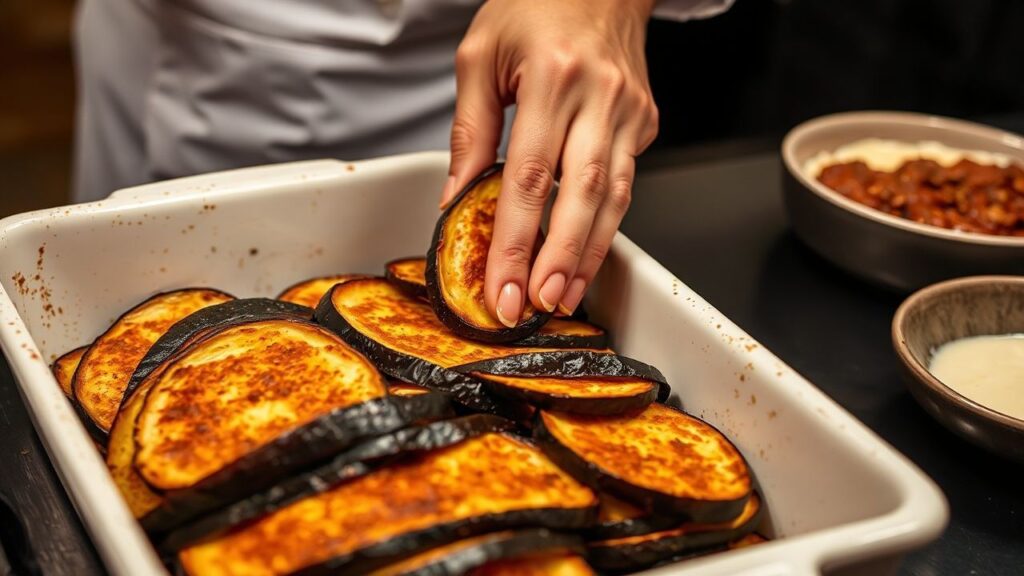
The layering process itself is where the magic truly happens. A generous base layer of the fried eggplant slices forms the foundation, followed by a substantial amount of the lamb ragu, ensuring an even distribution of the rich meat sauce. Another layer of eggplant follows, and this process is repeated until the ingredients are used up, typically ending with a final layer of eggplant.
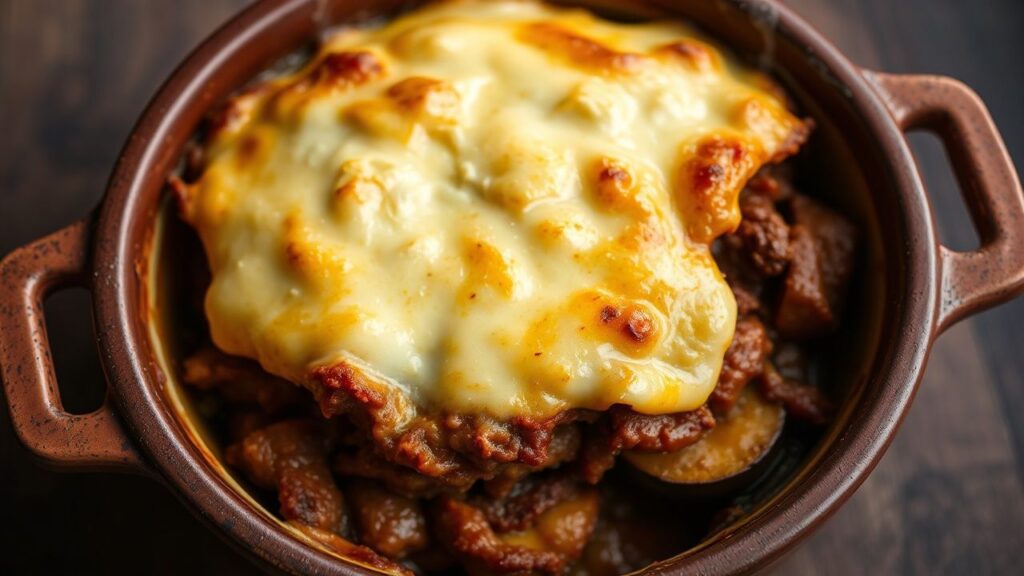
The crowning glory, of course, is the generous application of the béchamel sauce, spread evenly to cover the entire surface. Some cooks sprinkle grated Kefalotyri or Parmesan cheese over the béchamel before baking, adding an extra layer of savory complexity and a delightful crust. The key is to ensure that the béchamel completely seals the top layer of eggplant, preventing it from drying out during the long bake.
The Moussaka Recipe: A Step-by-Step Guide
This recipe is designed to guide you through the creation of an authentic Greek moussaka with eggplant and lamb, emphasizing the techniques that yield exceptional results.
Yields: 8-10 servings
Prep time: 1 hour 30 minutes (plus eggplant draining time)
Cook time: 1 hour 45 minutes
Ingredients:
For the Eggplant:
- 3 large globe eggplants (approx. 1.5 kg / 3.3 lbs total)
- 1/2 cup (120 ml) olive oil, for frying (or more as needed)
- Salt, for salting eggplant
For the Lamb Ragu:
- 2 tablespoons olive oil
- 1 kg (2.2 lbs) ground lamb
- 2 large onions, finely chopped
- 4 cloves garlic, minced
- 1 (400g / 14 oz) can crushed tomatoes
- 1/2 cup (120 ml) dry red wine (optional, but recommended)
- 1/4 cup (60 ml) water or beef broth
- 1 cinnamon stick
- 1/2 teaspoon ground allspice
- 1/4 teaspoon ground cinnamon (additional)
- 1 bay leaf
- Salt and freshly ground black pepper to taste
- 2 tablespoons chopped fresh parsley
For the Béchamel Sauce:
- 1/2 cup (115g) unsalted butter
- 1/2 cup (65g) all-purpose flour
- 4 cups (950 ml) whole milk, warmed
- 2 large egg yolks
- 1/4 teaspoon grated nutmeg
- Salt and white pepper to taste
- Optional: 1/4 cup (25g) grated Kefalotyri or Parmesan cheese
Preparation Method:
1. Prepare the Eggplant: Wash the eggplants and trim off the stems. Slice them lengthwise into 1/2 inch (1.25 cm) thick slices. Lay the slices on a baking sheet lined with paper towels or clean kitchen towels. Sprinkle generously with salt on both sides. Let them sit for at least 1 hour, or up to 2-3 hours, to draw out moisture. You will see beads of liquid form on the surface. After draining, rinse the eggplant slices under cold water to remove excess salt and pat them thoroughly dry with paper towels. This step is crucial for achieving a tender, non-oily texture.
2. Fry the Eggplant: Heat the olive oil in a large skillet over medium-high heat. Fry the eggplant slices in batches until they are golden brown on both sides and tender. Do not overcrowd the pan; this will cause them to steam. As they are fried, transfer them to a plate lined with fresh paper towels to drain any excess oil.
3. Make the Lamb Ragu: While the eggplant is draining or frying, prepare the lamb ragu. Heat 2 tablespoons of olive oil in a large, heavy-bottomed pot or Dutch oven over medium-high heat. Add the ground lamb and cook, breaking it up with a spoon, until it is well browned. Drain off any excess fat, leaving about 1-2 tablespoons in the pot.
4. Add the chopped onions to the pot and cook until softened and translucent, about 8-10 minutes. Add the minced garlic and cook for another minute until fragrant.
5. Stir in the crushed tomatoes, red wine (if using), and water or broth. Add the cinnamon stick, ground allspice, additional ground cinnamon, and bay leaf. Season with salt and freshly ground black pepper. Bring to a simmer, then reduce the heat to low, cover, and cook for at least 45 minutes to 1 hour, or until the sauce has thickened and the flavors have melded. Stir occasionally. Remove the cinnamon stick and bay leaf. Stir in the chopped fresh parsley.
6. Make the Béchamel Sauce: While the ragu simmers, prepare the béchamel. Melt the butter in a medium saucepan over medium heat. Whisk in the flour and cook, stirring constantly, for 1-2 minutes to form a roux. Do not let it brown.
7. Gradually whisk in the warmed milk, a little at a time, ensuring each addition is fully incorporated before adding more. Continue whisking until the sauce is smooth and thickened, about 5-7 minutes. It should coat the back of a spoon.
8. Remove the saucepan from the heat. In a small bowl, whisk together the egg yolks. Temper the egg yolks by gradually whisking about half a cup of the hot béchamel sauce into them. Then, pour the tempered egg yolk mixture back into the saucepan with the remaining béchamel, whisking constantly. Return the saucepan to low heat and cook, stirring, for another 1-2 minutes until the sauce is thick and glossy. Do not boil. Stir in the grated nutmeg, salt, and white pepper to taste.
9. Assemble the Moussaka: Preheat your oven to 180°C (350°F). Lightly grease a deep baking dish (approximately 9×13 inches or a similar volume). Arrange a layer of fried eggplant slices on the bottom of the dish, overlapping them slightly.
10. Spread about half of the lamb ragu evenly over the eggplant layer. Add another layer of eggplant slices, followed by the remaining lamb ragu. Finish with a final layer of eggplant slices.
11. Pour the béchamel sauce evenly over the top layer of eggplant, ensuring it covers the entire surface. If using cheese, sprinkle it over the béchamel.
12. Bake the Moussaka: Place the baking dish on a baking sheet (to catch any potential drips) and bake in the preheated oven for 45 minutes to 1 hour, or until the top is golden brown and bubbling.
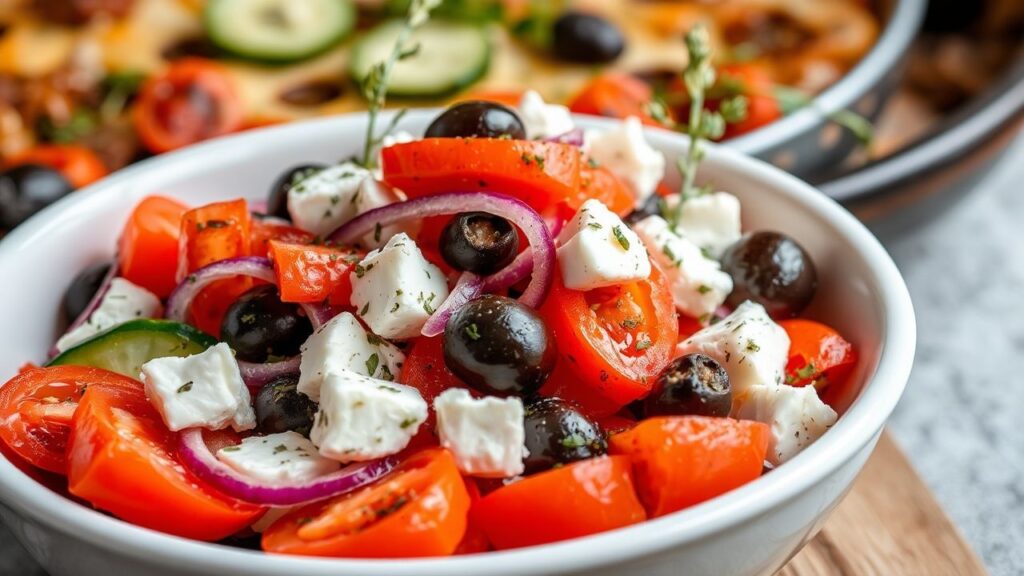
13. Rest and Serve: Let the moussaka rest for at least 15-20 minutes before slicing and serving. This allows the layers to set, making it easier to cut clean portions. Moussaka is often served with a simple Greek salad and crusty bread.
Nutritional Information (Approximate Per Serving – 10 servings):
- Calories: 550-650 kcal (This can vary significantly based on fat content of lamb and amount of oil used for frying)
- Protein: 30-35g
- Fat: 35-45g (Saturated fat will be higher due to lamb and butter)
- Carbohydrates: 25-35g (Primarily from eggplant and minimal from flour)
- Fiber: 6-8g
Expert Pro-Tips for Elevating Your Moussaka
Achieving restaurant-quality moussaka at home is within reach with a few key considerations. These refinements can transform a good dish into an unforgettable culinary experience.
- The Quality of Ingredients: Seek out fresh, vibrant produce and good-quality ground lamb. A slightly higher fat content in the lamb will contribute to a more succulent and flavorful ragu.
- Double-Frying Eggplant: For an exceptionally tender and melt-in-your-mouth texture, consider a quick double-fry for the eggplant. Fry them until golden, drain, then return them to the hot oil for a brief second fry just before layering. This creates a beautifully crisp exterior that softens into pure succulence within the casserole.
- The Spice Balance: Taste your ragu as it simmers and adjust the warming spices like cinnamon and allspice. They should be present, adding an aromatic depth, but not overpowering. A pinch of ground cloves can also add an intriguing complexity.
- The Béchamel Consistency: Aim for a consistency that coats the back of a spoon thickly but still flows. If it’s too thick, whisk in a little more warmed milk. If too thin, gently cook it down for a few more minutes, stirring constantly.
- The Resting Period: Allowing the moussaka to rest for at least 20-30 minutes after baking is essential. It allows the layers to firm up, preventing a messy collapse when you slice into it. This patience is rewarded with clean, distinct layers and a much more elegant presentation.
- A Touch of Lemon Zest: For a subtle brightness that cuts through the richness, consider adding a teaspoon of finely grated lemon zest to the béchamel sauce. This is a modern twist but one that adds a delightful counterpoint to the heavier flavors.
A Dish That Lingers in Memory
Moussaka is more than just a meal; it is an experience. It is a dish that demands time, care, and an appreciation for the subtle interplay of flavors and textures. The process of making it is a form of culinary mindfulness, a chance to slow down and engage with the ingredients and the traditions they represent. When that golden-brown béchamel-topped casserole emerges from the oven, filling the kitchen with its intoxicating aroma, you know you have created something truly special. It is a dish that warms the soul, nourishes the body, and connects us to a rich culinary heritage. The Greek moussaka, with its deep flavors and comforting layers, is a timeless classic that continues to captivate palates and inspire cooks around the world.
Frequently Asked Questions
What is the best way to prevent eggplant from being oily in moussaka?
The most effective method is thorough salting and draining. After slicing the eggplant, sprinkle it generously with salt and let it sit for at least an hour. This draws out moisture and some of the bitter compounds. Rinse the slices thoroughly and pat them completely dry before frying or roasting. When frying, ensure the oil is hot enough to sear the eggplant quickly, creating a barrier against excessive oil absorption. Roasting is also a viable, less oily alternative.
Can I make moussaka ahead of time?
Yes, moussaka is an excellent make-ahead dish. You can assemble the entire casserole, cover it tightly with plastic wrap and foil, and refrigerate it for up to 24 hours before baking. When ready to bake, remove the plastic wrap and bake as directed, potentially adding an extra 10-15 minutes to account for the chill. The flavors often meld even further when made ahead, resulting in a richer taste. It can also be frozen, either before or after baking.
What are common variations of moussaka?
While the Greek eggplant and lamb moussaka is perhaps the most renowned, variations abound. Turkish *musakka* often uses zucchini or a mix of vegetables with ground beef. In the Balkans, versions might include potatoes alongside eggplant or use different spice profiles. There are also vegetarian moussakas, utilizing lentils or mushrooms for a hearty filling, and even versions with béchamel made from alternative milks for those with dietary restrictions. Each variation, however, retains the fundamental principle of layered ingredients baked until tender and delicious.
How do I achieve a perfectly browned béchamel topping?
A well-browned béchamel topping is a sign of a perfectly baked moussaka. Ensure your oven is at the correct temperature and that the dish is placed in the upper third of the oven. The béchamel itself should be thick enough to hold its structure. If you find it’s not browning sufficiently by the end of the baking time, you can briefly place the moussaka under the broiler (grill) for a minute or two, watching it very carefully to prevent burning. Some cooks also find that adding a sprinkle of grated cheese on top of the béchamel helps achieve a more robust golden crust.
See also: Moussaka