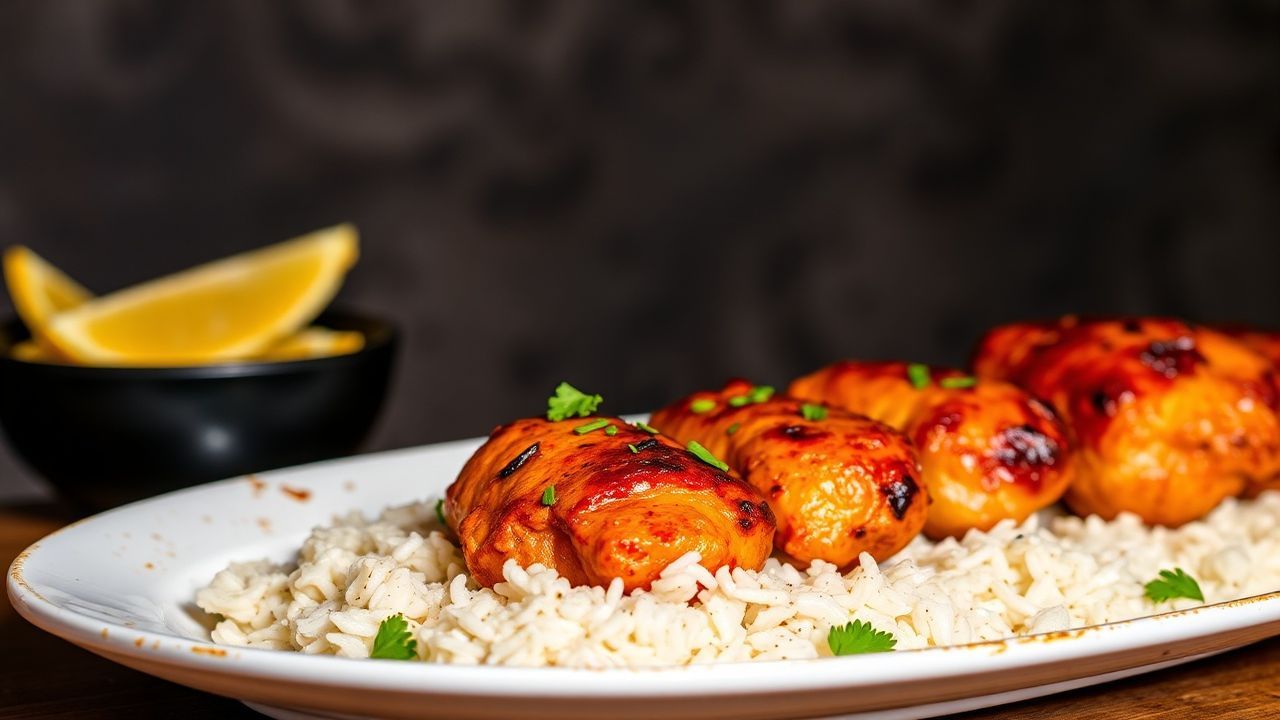

For too long, the vibrant crimson hue of tandoori chicken tikka has been mistaken as merely a visual cue, a dye-induced spectacle rather than proof of profound culinary science. This assumption fundamentally misunderstands the dish’s soul. The captivating colour, far from being an artificial flourish, is an emergent property of the interplay between specific spices, the high heat of the tandoor, and the chemical reactions that occur during its intense cooking process. It speaks to a heritage of flavour development that predates modern culinary trends by millennia, proof of the ingenuity of a cuisine that understands how to coax unparalleled depth from simple ingredients. Mastering this dish is not about replication, but about understanding these foundational principles.
- The Genesis of a Culinary Icon: From Ancient Ovens to Global Tables
- Deconstructing the Tandoori Marinade: The Alchemical Foundation
- The Tandoor Experience: Replicating the Unreplicable?
- The Anatomy of Perfect Tandoori Chicken Tikka
- Nutritional Information (Approximate per serving, based on 4 servings):
- Elevating Tandoori Chicken Tikka: Expert Touches
- The Tandoori Legacy: A Continuing Evolution
- Frequently Asked Questions (FAQ)
- What is the difference between Tandoori Chicken and Chicken Tikka?
- Why is Tandoori Chicken Tikka often red?
- Can I make Tandoori Chicken Tikka without a tandoor?
- What are the key spices in a Tandoori marinade?
- How long should chicken marinate for Tandoori Tikka?
At a Glance: The Essence of True Tandoori
- The signature crimson colour is a natural byproduct of paprika, Kashmiri chili, and the Maillard reaction, not artificial colouring.
- Authentic tandoori preparation hinges on a meticulous yogurt-based marinade that tenderizes and infuses flavour deeply.
- The tandoor oven’s intense, dry heat is crucial for achieving the characteristic smoky char and succulent interior.
- Understanding the spice balance – particularly the warming notes of garam masala and the tang of lemon – is paramount.
The Genesis of a Culinary Icon: From Ancient Ovens to Global Tables
The story of tandoori chicken tikka is intrinsically linked to the ancient Indian clay oven, the tandoor. This unique cooking vessel, predating written history in its rudimentary forms, is the very crucible from which this dish, and indeed many iconic North Indian cuisines, emerged. The tandoor’s cylindrical shape and its ability to reach searing temperatures, often exceeding 450°C (840°F), create a microclimate of intense, dry heat. This environment is perfect for rapid searing and imparts a distinctive smoky flavour that cannot be replicated by conventional ovens.
The practice of marinating meats in yogurt and spices, a cornerstone of tandoori preparation, likely evolved as a method of tenderizing tougher cuts of meat and preserving them in warmer climates. Yogurt’s lactic acid breaks down protein fibers, making the chicken incredibly tender. The spices, beyond flavour, also possessed antimicrobial properties, further aiding preservation. Over centuries, these practices coalesced, and the tandoor became the undisputed champion for cooking marinated meats, with chicken tikka emerging as a particularly beloved iteration due to its accessibility and flavour profile.
When we talk about *Tandoori* chicken tikka, we are invoking a lineage of cooking that is deeply rooted in community and tradition. Historically, tandoors were communal ovens, shared by neighbours in villages. The act of preparing and sharing food cooked in the tandoor was as much a social ritual as it was about sustenance. This communal aspect has, in many ways, been preserved even as the dish has travelled the globe, becoming a staple in Indian restaurants worldwide. Each restaurant, each home cook, adds their subtle nuances, their family secrets, to this ancient formula.
Deconstructing the Tandoori Marinade: The Alchemical Foundation
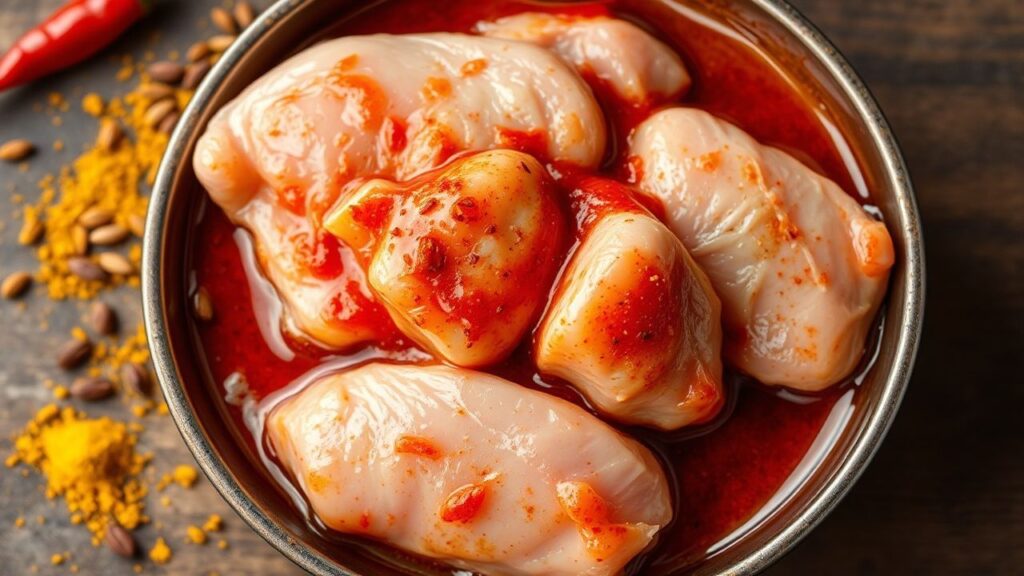
The heart of exceptional tandoori chicken tikka lies in its marinade. This is not merely a flavouring agent; it is a transformative elixir that tenderizes, infuses, and prepares the chicken for the intense heat of the tandoor. A truly great marinade achieves a delicate balance, ensuring that each component plays its part without overpowering the others.
The base is almost universally thick, full-fat yogurt. This provides the necessary acidity for tenderization and a creamy texture that clings to the chicken. The fat content is crucial; it carries fat-soluble flavours and prevents the chicken from drying out. Next comes the spice ensemble. This is where regional variations and personal preferences come into play, but a core set of spices forms the bedrock:
- Kashmiri chili powder: This is the secret to the dish’s characteristic vibrant red hue. It offers a mild heat and a deep, earthy sweetness, distinct from the fiery punch of hotter chilies.
- Paprika (sweet or smoked): Adds further depth to the colour and a subtle sweetness or smokiness, depending on the type used.
- Turmeric: Contributes a warm, earthy flavour and a golden undertone that, when combined with chili, helps create the signature colour.
- Garam masala: A complex blend of ground spices, typically including cumin, coriander, cardamom, cloves, cinnamon, and black pepper. It provides the characteristic warmth and aromatic complexity.
- Cumin and Coriander (ground): Essential for their earthy, citrusy, and slightly nutty notes.
- Ginger and Garlic Paste: A pungent, aromatic foundation that cuts through the richness and adds a vital savoury element.
- Lemon Juice: Provides brightness and acidity, further aiding in tenderization and balancing the richness of the yogurt and spices.
- Salt: Essential for flavour enhancement and drawing out moisture.
Beyond these staples, one might find fenugreek leaves (kasoori methi), mustard oil (for its pungency and ability to penetrate), or even a touch of food colouring in less traditional preparations, though the latter is a practice purists eschew. The ratio of these spices is critical. Too much chili can make it overwhelmingly hot; too little, and the colour and flavour will be muted.
The Art of Marination: Timing and Technique
The duration of marination is as important as the ingredients themselves. A minimum of 4 hours is recommended for the flavours to penetrate, but overnight marination, particularly for bone-in pieces, yields the most profound results. The chicken pieces should be cut into uniform, bite-sized chunks (tikka means “pieces”) to ensure even cooking.
The Tandoor Experience: Replicating the Unreplicable?
The true magic of tandoori chicken tikka is inextricably linked to the tandoor. The intense, dry heat of the clay oven cooks the chicken rapidly, creating a beautifully charred exterior while keeping the interior incredibly moist and succulent. The radiant heat from the oven walls and the convection currents generated within cook the meat from all sides simultaneously. Skewering the marinated chicken and lowering it into the tandoor, often sticking directly to the inner walls, allows for maximum exposure to this intense heat.
Replicating this experience at home presents a significant challenge. Traditional ovens simply cannot achieve the same blistering heat or the unique smoky flavour imparted by the charcoal or wood fire within a tandoor. However, several methods can approximate the results:
The Grill Method: Embracing the Char
A very hot outdoor grill (charcoal or gas) is perhaps the closest analogue. Preheat the grill to its highest setting. Thread the marinated chicken onto skewers, leaving a little space between pieces to allow heat to circulate. Grilling over direct heat for a few minutes per side will create char marks. Then, move the skewers to indirect heat to finish cooking through. Basting occasionally with leftover marinade (ensuring it has been brought to a boil to kill any bacteria) can add moisture.
The Broiler/Oven Method: A Controlled Inferno
For an indoor approach, a very hot oven combined with the broiler is the best bet. Preheat your oven to its highest setting (250-275°C / 480-530°F). If using a baking steel or stone, preheat it in the oven. Place the marinated chicken pieces on a wire rack set over a baking sheet to allow air circulation. Broil for a few minutes, turning frequently, until charred and cooked through. This method requires vigilance to prevent burning.
A key element to capture is the smoky aroma. This can be achieved by adding a small amount of soaked wood chips (like hickory or mesquite) to the grill, or by using a stovetop smoker if available. In an oven, a touch of liquid smoke (used judiciously) can provide a hint of that characteristic flavour, though it’s a pale imitation of the real thing.
The Anatomy of Perfect Tandoori Chicken Tikka
Let’s break down the process into actionable steps for achieving restaurant-quality tandoori chicken tikka.
Ingredients:
- 500g boneless, skinless chicken thighs or breast, cut into 2.5cm (1 inch) cubes
- 200g thick, full-fat plain yogurt (Greek yogurt works well)
- 2 tablespoons lemon juice
- 1 tablespoon grated fresh ginger
- 1 tablespoon minced garlic
- 1 teaspoon Kashmiri chili powder (or paprika for milder heat)
- 1 teaspoon ground cumin
- 1 teaspoon ground coriander
- ½ teaspoon ground turmeric
- ½ teaspoon garam masala
- ¼ teaspoon cayenne pepper (optional, for extra heat)
- 1 teaspoon salt, plus more to taste
- 1 tablespoon mustard oil (optional, for authentic flavour)
- Fresh cilantro, chopped, for garnish
- Lemon wedges, for serving
Preparation Method:
1. Prepare the Marinade: In a large bowl, whisk together the yogurt, lemon juice, grated ginger, minced garlic, Kashmiri chili powder, cumin, coriander, turmeric, garam masala, cayenne pepper (if using), salt, and mustard oil (if using). Ensure the spices are well incorporated and no lumps remain.
2. Marinate the Chicken: Add the chicken pieces to the marinade. Toss thoroughly to ensure each piece is evenly coated. Cover the bowl tightly with plastic wrap and refrigerate for at least 4 hours, or preferably overnight, for maximum flavour infusion and tenderness.
3. Prepare for Cooking: If using skewers, soak wooden skewers in water for at least 30 minutes to prevent them from burning. Thread the marinated chicken onto the skewers, leaving a small gap between each piece.
4. Cooking (Grill Method):
- Preheat your grill to high heat (around 230-260°C / 450-500°F).
- Lightly oil the grill grates to prevent sticking.
- Place the skewers on the direct heat side of the grill. Grill for 3-4 minutes per side, until well-charred.
- Move the skewers to the indirect heat side of the grill. Close the lid and cook for another 8-12 minutes, or until the chicken is cooked through and no pink remains in the centre. Internal temperature should reach 74°C (165°F).
5. Cooking (Broiler/Oven Method):
- Preheat your oven to its highest setting (250-275°C / 480-530°F) with a baking steel or stone inside, if using.
- Arrange the chicken skewers on a wire rack set over a baking sheet.
- Place the baking sheet under the preheated broiler, about 10-15cm (4-6 inches) from the heat source.
- Broil for 3-4 minutes per side, watching carefully to prevent burning, until charred.
- Transfer the baking sheet to the middle rack of the oven and bake for another 8-12 minutes, or until the chicken is cooked through (internal temperature 74°C / 165°F).
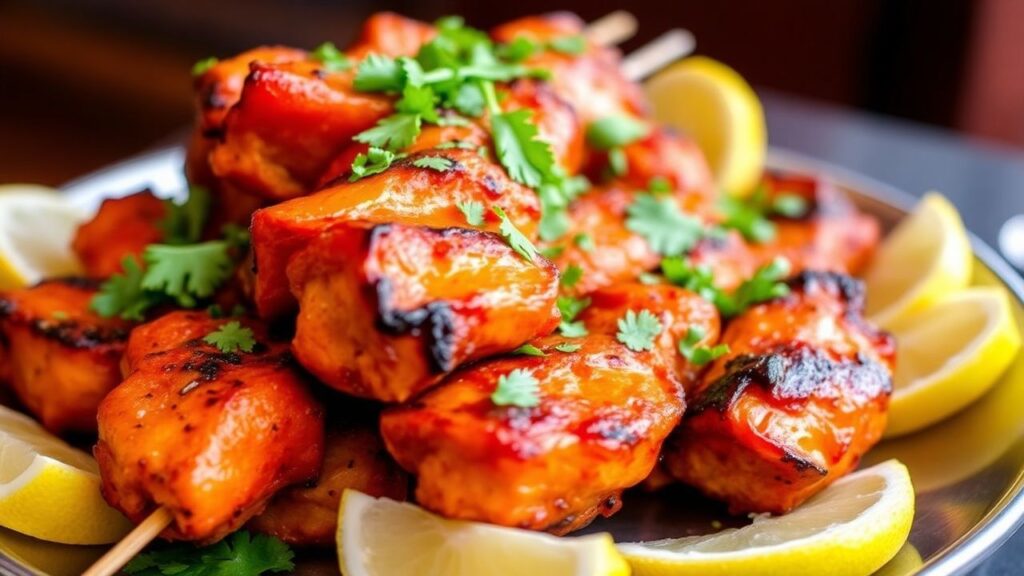
6. Rest and Serve: Once cooked, let the chicken rest on the skewers for 5-10 minutes before serving. This allows the juices to redistribute, ensuring a more succulent result. Garnish generously with chopped fresh cilantro and serve with lemon wedges.
Nutritional Information (Approximate per serving, based on 4 servings):
- Calories: 300-350 kcal (depending on chicken cut and marinade ingredients)
- Protein: 30-35g
- Fat: 15-20g (Saturated Fat: 5-7g)
- Carbohydrates: 5-8g
- Sodium: 600-800mg (can be reduced by controlling salt)
*Please note: This is an approximate nutritional breakdown. Actual values may vary based on specific ingredients and portion sizes.*
Elevating Tandoori Chicken Tikka: Expert Touches
Achieving that elusive restaurant-quality tandoori chicken tikka often comes down to subtle techniques and attention to detail.
The Importance of Fat Content:
While chicken breast is leaner, chicken thighs are inherently more forgiving and produce a juicier, more flavourful tikka. The fat renders during cooking, basting the meat from within. If using breast, ensure the marinade is rich and consider slightly reducing the cooking time to prevent dryness.
The Role of Mustard Oil:
Authentic tandoori recipes from Punjab often feature mustard oil. Its pungent, slightly sharp flavour is distinct and penetrates the meat beautifully. If you can source it and tolerate its assertive taste, it adds a layer of complexity that is hard to replicate.
Achieving Uniformity in Cooking:
Cut your chicken into uniform pieces. This is not just for aesthetics; it ensures that all pieces cook at the same rate. Uneven pieces will lead to some being overcooked and dry while others remain undercooked.
The Tandoori Legacy: A Continuing Evolution
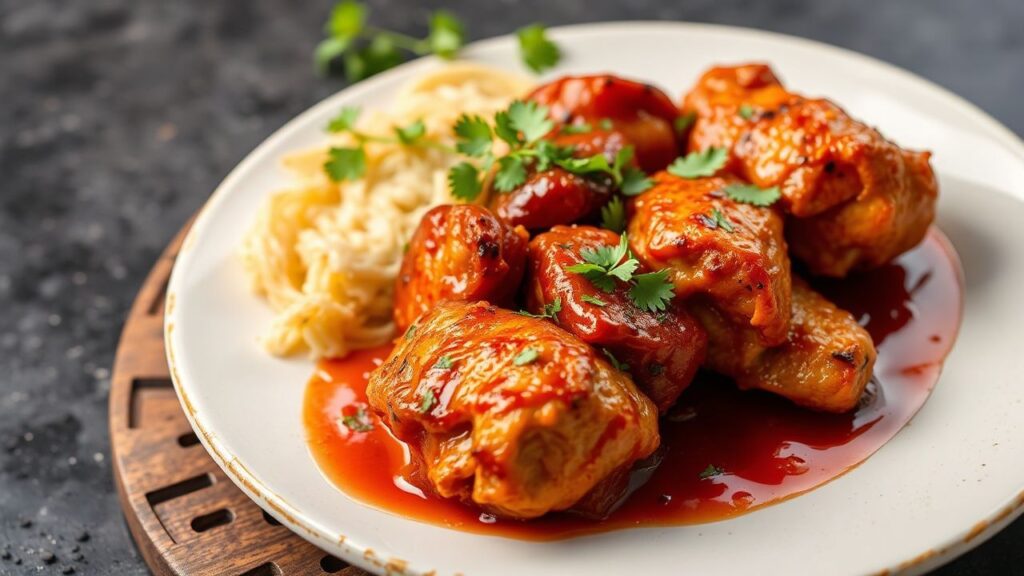
The enduring appeal of tandoori chicken tikka lies in its perfect synergy of flavour, texture, and aroma. It’s a dish that demands respect for its ancient origins while simultaneously inviting innovation. From the smoky char of the tandoor to the vibrant tapestry of spices, it represents a pinnacle of Indian culinary artistry. While replicating the exact tandoor environment at home is a noble but often elusive goal, understanding the principles behind its preparation – the tenderizing marinade, the balanced spice profile, and the high-heat cooking – allows us to bring a truly remarkable taste of this culinary tradition into our own kitchens. The journey to perfect tandoori chicken tikka is a delicious exploration of flavour, technique, and the enduring power of tradition.
Frequently Asked Questions (FAQ)
What is the difference between Tandoori Chicken and Chicken Tikka?
While often used interchangeably, there’s a subtle distinction. Tandoori Chicken typically refers to bone-in chicken pieces (like a whole leg or thigh quarter) marinated and cooked whole in the tandoor. It often retains the skin. Chicken Tikka, on the other hand, specifically refers to boneless meat (chicken, lamb, or paneer) cut into bite-sized pieces (tikka means “pieces”), marinated, and then cooked, usually on skewers. The focus for chicken tikka is on the tender, flavourful morsels rather than the entire piece of chicken.
Why is Tandoori Chicken Tikka often red?
The vibrant red colour of authentic tandoori chicken tikka is primarily derived from the generous use of Kashmiri chili powder and paprika. These spices offer a deep, rich red hue without an overwhelming level of heat. The high heat of the tandoor also contributes to the colour through the Maillard reaction – a complex chemical process between amino acids and reducing sugars that creates browning and develops rich flavours and colours. In some less traditional preparations, artificial food colouring might be used to achieve an even more intense red, but this is not characteristic of authentic tandoori cooking.
Can I make Tandoori Chicken Tikka without a tandoor?
Absolutely! While a tandoor provides a unique smoky flavour and intense, dry heat that’s difficult to replicate perfectly, you can achieve excellent results using other methods. A hot grill (charcoal or gas) is an excellent substitute, allowing you to achieve char marks and smoky notes. Indoors, the broiler function of your oven, set to its highest temperature, is the best option for mimicking the searing heat. Preheating your oven very high and using a baking steel or stone can also help achieve a better crust. For smoky flavour, consider adding soaked wood chips to a grill or a dash of liquid smoke (used sparingly) in an oven preparation.
What are the key spices in a Tandoori marinade?
The quintessential spices in a tandoori chicken tikka marinade form a complex flavour profile. Key ingredients include Kashmiri chili powder (for colour and mild heat), turmeric (for warmth and colour), cumin and coriander (for earthy depth), garam masala (a blend of warming spices like cardamom, cloves, and cinnamon), and often cayenne pepper for added heat. The aromatic base is provided by fresh ginger and garlic paste. The yogurt base tenderizes, while lemon juice adds brightness. The precise ratio of these spices is what differentiates one recipe from another, creating a delicate balance of warmth, spice, tang, and earthiness.
How long should chicken marinate for Tandoori Tikka?
For optimal flavour penetration and tenderness, chicken for tandoori tikka should marinate for a minimum of 4 hours in the refrigerator. However, for the most profound results, an overnight marination (12-24 hours) is highly recommended, especially for bone-in pieces or larger cuts. This extended period allows the yogurt and spices to work their magic, breaking down proteins and infusing the meat with deep, complex flavours. Shorter marination times (e.g., 1-2 hours) will still yield a tasty dish, but the depth of flavour and tenderness will be noticeably less pronounced.
See also: Tandoori