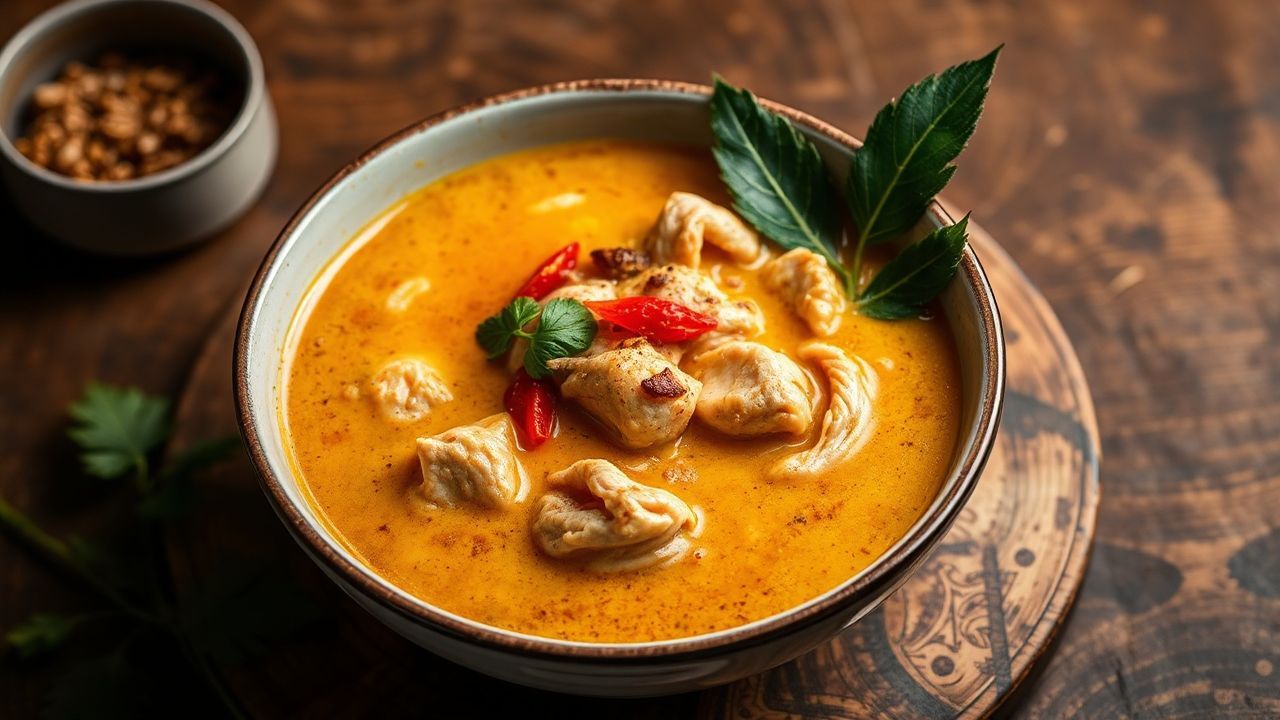

The Soul of Malaysia in a Bowl: Mastering Authentic Chicken Laksa
The very mention of the word “Laksa” conjures a symphony of aromas and a kaleidoscope of flavours – a culinary embodiment of Malaysia’s rich, multicultural tapestry. But beyond the comforting embrace of a steaming bowl lies a complex culinary art, a delicate balance of spices, aromatics, and textures that has captivated palates for generations. This is not merely soup; it is a heritage, a story told through fragrant broth, tender chicken, and springy noodles. For those seeking to recreate this iconic dish at home, understanding the nuances of its preparation is paramount. The journey to an authentic Malaysian Chicken Laksa is one of patience, precision, and a deep appreciation for the interplay of ingredients.
- The Soul of Malaysia in a Bowl: Mastering Authentic Chicken Laksa
- Deconstructing the Essence: The Anatomy of Malaysian Chicken Laksa
- The Alchemist’s Blueprint: Crafting the Perfect Chicken Laksa Paste
- The Art of the Broth: Balancing Richness and Fragrance
- Assembling Your Masterpiece: The Laksa Construction
- A Culinary Journey: Recipe for Authentic Malaysian Chicken Laksa
- Nutritional Insights: A Wholesome Indulgence
- Elevating Your Laksa: Pro Tips for Restaurant-Quality Results
- Frequently Asked Questions About Laksa
At a Glance: Key Insights for Authentic Chicken Laksa
- The Foundation is Crucial: A well-made laksa paste is the soul of the dish, demanding fresh, high-quality ingredients and proper toasting of spices for maximum aroma.
- Broth Harmony: The balance between chicken stock and coconut milk is critical; too much of one can overpower the other, diminishing the complex flavour profile.
- Texture Play: The combination of various noodle types, protein, and fresh garnishes provides a multi-layered textural experience that is integral to the laksa’s appeal.
- Garnishes Elevate: Don’t underestimate the power of fresh herbs, chili, and lime; they cut through the richness and add crucial brightness.
The genesis of laksa is as varied as the Malaysian landscape itself, with regional variations boasting distinct characteristics. From the fiery Assam Laksa of Penang, with its tamarind-infused fish broth, to the creamy, coconut-rich Curry Laksa found across the peninsula, each iteration offers a unique gastronomic adventure. Our focus today is on the universally beloved Chicken Laksa, a dish that, while perhaps less intensely spiced than some of its cousins, offers a profound depth of flavour and a comforting, velvety richness. It’s a dish that speaks of home, of family gatherings, and of the enduring spirit of Malaysian cuisine.
Deconstructing the Essence: The Anatomy of Malaysian Chicken Laksa
At its core, Malaysian Chicken Laksa is a harmonious confluence of several key components, each playing a vital role in the final symphony of taste and aroma. The foundation, undeniably, is the laksa paste. This is not a simple blend; it’s an alchemical creation requiring meticulous preparation. Think of the vibrant crimson of dried chilies, the pungent punch of shallots and garlic, the earthy warmth of galangal and turmeric, the citrusy high notes of lemongrass, and the subtle, sweet fragrance of belacan (shrimp paste). Each element must be balanced, its intensity modulated to contribute to the overall complexity without overpowering the others.
Following closely is the broth. This is typically a dual-component system, starting with a robust chicken stock as its base, providing a savoury depth. This is then enriched, but not drowned, by coconut milk. The quality of the coconut milk is paramount; freshly squeezed milk offers a superior flavour and texture to pre-packaged versions. The ratio of stock to coconut milk is a delicate dance, a point where many home cooks falter. Too little coconut milk results in a watery, uninspired broth; too much, and the dish transforms into a heavy, cloying curry, losing the signature lightness that defines a good laksa.
The noodles are the vehicle for this exquisite broth, and their selection profoundly impacts the eating experience. Traditionally, a combination of thick rice vermicelli (bihun) and yellow egg noodles (mee) is favoured. The bihun absorbs the broth beautifully, while the slightly chewy mee offers a satisfying bite. The choice of noodles is not merely functional; it contributes to the overall textural interplay, a crucial element in any great Southeast Asian dish.
Finally, the garnishes are not afterthoughts but essential finishing touches. These are the bright sparks that cut through the richness, offering freshness and contrasting textures. Bean sprouts provide a crisp, refreshing crunch; shredded chicken (often poached in the broth for added flavour) adds a tender, savoury element; hard-boiled eggs offer a creamy counterpoint; and a generous scattering of fresh herbs like laksa leaves (daun kesum), mint, and cilantro, along with fiery sambal and a squeeze of lime, elevate the dish from merely good to truly exceptional.
The Alchemist’s Blueprint: Crafting the Perfect Chicken Laksa Paste
The soul of any truly remarkable laksa resides in its paste. This is where the magic begins, transforming humble ingredients into a fragrant powerhouse. The quality of your dried chilies is the first consideration. For a balanced heat and colour, a mix of dried red chilies (seeds removed for less heat, if desired) and perhaps a few dried bird’s eye chilies for a sharper kick, is recommended. Soaking these chilies in hot water until softened is a crucial first step, ensuring they blend into a smooth, homogenous consistency.
The aromatics form the backbone of the paste. Shallots, rather than onions, provide a sweeter, more nuanced flavour. Garlic, of course, is indispensable. Galangal, a rhizome related to ginger but with a more pungent, peppery, and slightly floral aroma, is a non-negotiable ingredient. Fresh turmeric root, with its vibrant hue and earthy notes, adds both colour and depth. Lemongrass, bruised and finely chopped, introduces a bright, citrusy fragrance that cuts through the richness. Finally, a small amount of belacan, a fermented shrimp paste, provides an umami depth that is unmistakably Southeast Asian. It’s vital to lightly toast the belacan before adding it to the paste; this mellows its intensity and unlocks its full flavour potential.
The Process: Building Layers of Flavour
- Prepare the Dried Chilies: Start by soaking 15-20 dried red chilies (about 50g, adjust to your spice preference) in hot water for at least 30 minutes, or until thoroughly softened. Drain and discard the soaking water.
- Toast the Belacan: Lightly toast a small piece of belacan (about 1 teaspoon) on a dry pan over low heat until fragrant. This can be done on a small piece of foil as well. Be careful not to burn it.
- Chop and Blend Aromatics: Roughly chop 200g of shallots, 8-10 cloves of garlic, 2-inch piece of galangal, 1-inch piece of fresh turmeric root (or 1 teaspoon ground turmeric), and the white part of 2 stalks of lemongrass.
- Combine and Grind: In a food processor or blender, combine the soaked chilies, toasted belacan, chopped aromatics, and about 1-2 tablespoons of cooking oil (this helps in blending). Process until you achieve a smooth, fine paste. If using a mortar and pestle, this will require significant effort but yields an unparalleled texture and flavour.
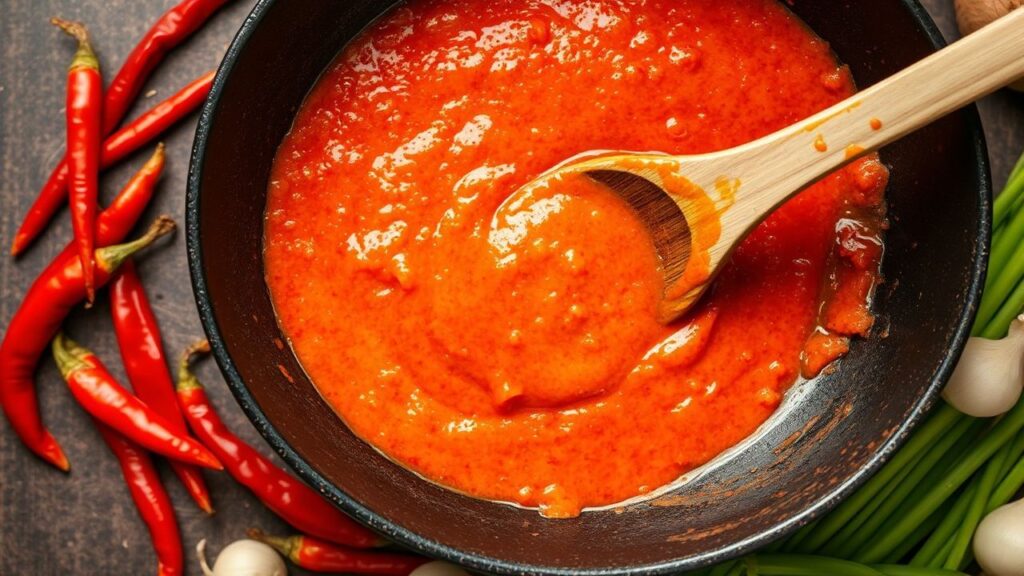
- Fry the Paste: Heat 3-4 tablespoons of cooking oil in a wok or deep pan over medium-low heat. Add the laksa paste and stir-fry continuously for at least 15-20 minutes, or until the paste darkens slightly in colour, becomes fragrant, and the oil separates from the paste. This slow frying process is crucial for developing the complex flavours and mellowing the raw aromatics.
This slow-frying technique, known as “pecah minyak” (breaking the oil), is not merely about cooking the paste; it’s about coaxing out its deepest aromas and flavours. The transformation is palpable – a raw, pungent mixture evolves into a rich, deeply aromatic foundation that will define the character of your laksa.
The Art of the Broth: Balancing Richness and Fragrance
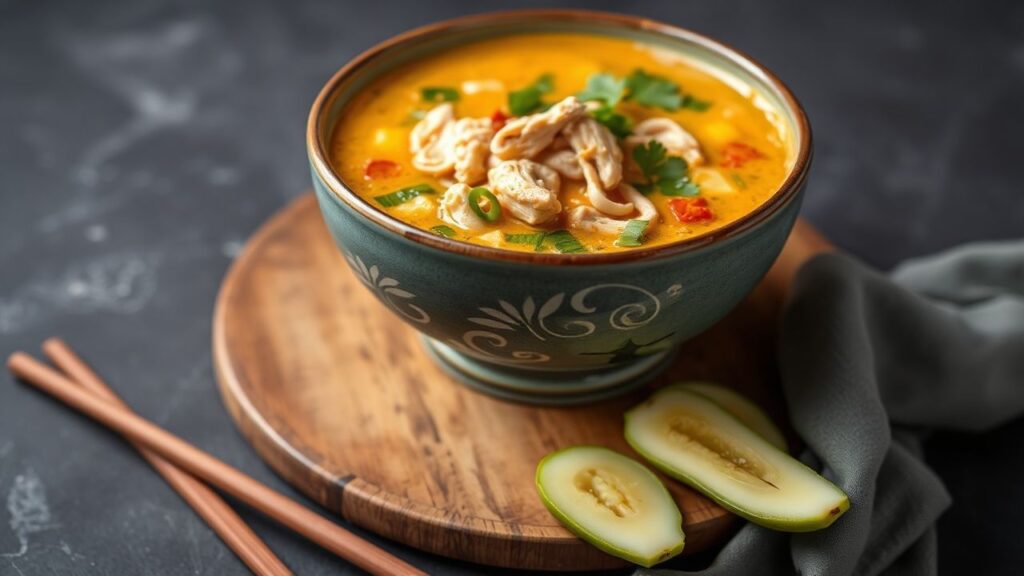
With the potent laksa paste ready, the next critical phase is the creation of the broth. This is where the soul of the dish truly comes alive. Begin by simmering 1 litre (approximately 4 cups) of good quality chicken stock. For an even richer flavour, you can poach chicken thighs or drumsticks in the stock. Once the chicken is cooked, remove it, shred the meat, and set it aside for later. The residual poaching liquid, now infused with chicken essence, becomes an invaluable part of your laksa base.
Now, introduce the star of the paste to this simmering stock. Add the entirety of your painstakingly fried laksa paste to the chicken stock. Stir well to ensure it’s fully incorporated. Bring the mixture to a gentle simmer and let it meld for at least 15-20 minutes. This allows the flavours of the paste to infuse thoroughly into the stock, creating a complex and aromatic base that is both robust and nuanced.
The introduction of coconut milk is where the true art lies. You will need approximately 400ml (about 1.5 to 2 cups) of full-fat coconut milk. Crucially, add the coconut milk towards the end of the simmering process, and maintain a gentle simmer, never a rolling boil. Boiling coconut milk can cause it to split, resulting in an unappealing texture and a diminished flavour. Stir it in gently and allow it to heat through for another 5-10 minutes. This carefully controlled addition preserves the creamy texture and subtle sweetness of the coconut milk, which beautifully balances the spices from the laksa paste.
Refining the Flavour Profile
Seasoning is a personal journey, but for laksa, a judicious hand is required. Start with a pinch of salt, and then consider adding a teaspoon of sugar. This is not to make the broth sweet, but to round out the flavours and enhance the natural sweetness of the coconut milk and aromatics. A splash of fish sauce can also add another layer of umami, but use it sparingly, as the belacan in the paste already provides significant savouriness.
The beauty of this broth lies in its complexity. The initial heat from the chilies, the deep savouriness from the belacan and chicken stock, the aromatic notes of galangal and lemongrass, and the subtle sweetness and creaminess from the coconut milk all converge to create a truly captivating flavour profile. It’s proof of the power of slow cooking and the harmonious blending of diverse ingredients.
Assembling Your Masterpiece: The Laksa Construction
The final act of creating your Malaysian Chicken Laksa is the assembly. This is where all the carefully prepared components come together to form the iconic dish. The goal is to create a visually appealing and texturally diverse bowl that delights the senses. Begin by preparing your noodles. Cook the yellow egg noodles according to package directions until al dente. Drain and divide them among your serving bowls. If using rice vermicelli (bihun), soak them in hot water until softened, then drain. Some prefer to add a smaller portion of bihun alongside the yellow noodles for a textural contrast.
Next, arrange your toppings. Start with a generous portion of the shredded poached chicken. Then, add a handful of fresh bean sprouts. Place a sliced hard-boiled egg in each bowl. If you’ve prepared other accompaniments like fried shallots or firm tofu puffs, add them now. The arrangement should be neat and inviting, a promise of the culinary delights to come.
The moment of truth arrives as you ladle the piping hot, fragrant broth over the noodles and toppings. Ensure each bowl is generously filled, allowing the broth to envelop the ingredients. The heat of the broth will slightly wilt the bean sprouts and further infuse the chicken with flavour.
The Essential Finale: Garnishes That Sing
No laksa is complete without its vibrant array of garnishes. These are not mere decorations; they are integral to the flavour profile, providing freshness, acidity, and an extra kick of spice. A generous sprig of fresh laksa leaves (daun kesum), if available, is traditional and imparts a unique, slightly tangy flavour. Fresh cilantro and mint leaves offer herbaceous brightness. For those who crave an extra layer of heat, a dollop of your favourite sambal or chili paste is essential. Finally, a wedge of fresh lime, to be squeezed over the top just before eating, provides a crucial burst of acidity that cuts through the richness of the broth and ties all the flavours together. The interplay of textures and flavours with these fresh garnishes is what elevates a good laksa to an unforgettable one.
The experience of eating laksa is as much about the journey as the destination. Each spoonful offers a new revelation: the tender chicken, the crisp bean sprouts, the yielding noodles, all embraced by that complex, fragrant broth. The final squeeze of lime and the occasional bite of chili create moments of intense flavour that linger on the palate, inviting you back for more.
A Culinary Journey: Recipe for Authentic Malaysian Chicken Laksa
This recipe aims to guide you through the creation of a truly authentic Malaysian Chicken Laksa, a dish that celebrates the depth and complexity of Southeast Asian flavours. Patience and attention to detail are your most important tools.
Ingredients:
For the Laksa Paste:
- 50g (approx. 15-20) dried red chilies, seeds removed (adjust to taste)
- 1 teaspoon belacan (dried shrimp paste)
- 200g shallots, peeled and roughly chopped
- 8-10 cloves garlic, peeled
- 2-inch piece galangal, peeled and roughly chopped
- 1-inch piece fresh turmeric root, peeled and roughly chopped (or 1 teaspoon ground turmeric)
- 2 stalks lemongrass, white part only, tough outer layers removed, roughly chopped
- 3-4 tablespoons cooking oil, plus more for frying
For the Broth:
- 1.5 litres (approx. 6 cups) good quality chicken stock
- 500g chicken thighs or drumsticks (optional, for poaching and shredding)
- 400ml (approx. 1.5 to 2 cups) full-fat coconut milk
- 1 teaspoon sugar (optional, to balance flavours)
- Salt to taste
- 1 tablespoon fish sauce (optional, for extra umami)
For the Noodles & Assembly:
- 200g yellow egg noodles (mee)
- 100g rice vermicelli (bihun)
- Shredded poached chicken (from above, if using)
- 150g fresh bean sprouts, blanched briefly
- 2 hard-boiled eggs, halved or quartered
- Fresh laksa leaves (daun kesum), cilantro, and mint leaves, for garnish
- Sambal or chili paste, for serving
- Lime wedges, for serving
Preparation Method:
- Make the Laksa Paste: Soak the dried chilies in hot water for 30 minutes until softened. Drain. Lightly toast the belacan on a dry pan until fragrant. Combine drained chilies, toasted belacan, chopped shallots, garlic, galangal, turmeric, and lemongrass in a food processor with 1-2 tablespoons of oil. Process until a smooth paste forms.
- Fry the Paste: Heat 3-4 tablespoons of cooking oil in a wok or deep pan over medium-low heat. Add the laksa paste and stir-fry continuously for 15-20 minutes, or until the paste darkens, becomes very fragrant, and the oil separates from the solids. This is the “pecah minyak” stage.
- Prepare the Broth: If poaching chicken, place chicken pieces in a pot with chicken stock. Simmer gently until cooked through (about 20-25 minutes). Remove chicken, shred the meat, and set aside. Strain the stock if desired.
- Infuse the Broth: Add the fried laksa paste to the chicken stock. Bring to a gentle simmer and cook for 15-20 minutes, stirring occasionally, to allow flavours to meld.
- Add Coconut Milk: Stir in the coconut milk. Heat gently for another 5-10 minutes, ensuring it does not boil. Season with sugar (if using), salt, and fish sauce (if using) to taste. Keep the broth warm over low heat.
- Prepare Noodles: Cook yellow egg noodles according to package directions. Drain. Soak rice vermicelli in hot water until softened, then drain.
- Assemble the Laksa: Divide cooked yellow noodles and soaked rice vermicelli between serving bowls. Top with shredded chicken, blanched bean sprouts, and hard-boiled egg halves.
- Serve: Ladle the hot laksa broth generously over the noodles and toppings. Garnish with fresh laksa leaves, cilantro, mint, a dollop of sambal, and a wedge of lime. Serve immediately.
Nutritional Insights: A Wholesome Indulgence
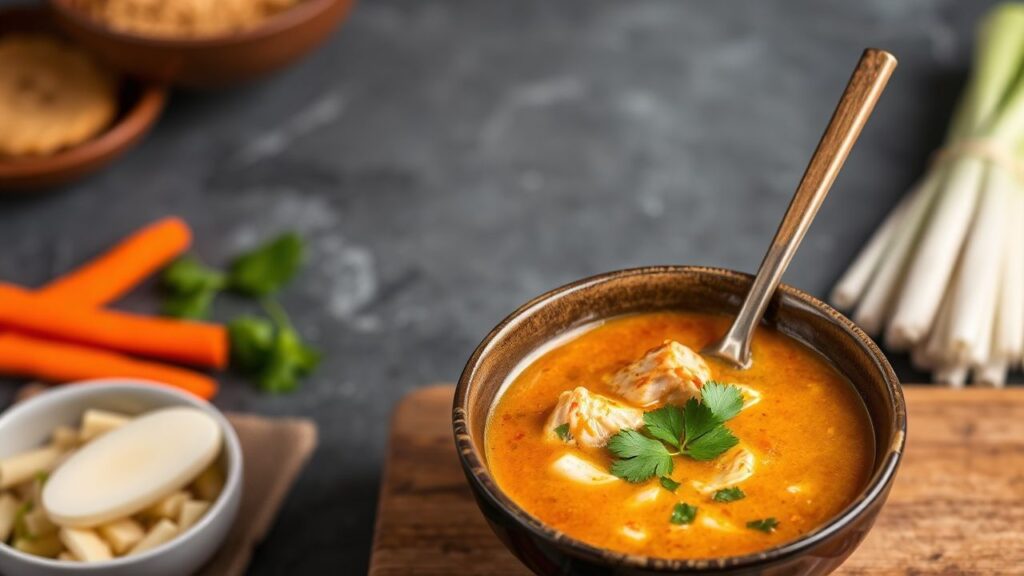
While a definitive nutritional breakdown for laksa can vary significantly based on specific ingredients and portion sizes, a typical serving of Malaysian Chicken Laksa, when prepared with moderate amounts of coconut milk and lean chicken, offers a complex nutritional profile. It’s a dish rich in carbohydrates from the noodles, providing essential energy. The chicken contributes lean protein, vital for muscle repair and satiety. The coconut milk, while a source of healthy fats, also provides some dietary fibre and minerals like manganese.
The spices and aromatics within the laksa paste are not just flavour enhancers; many possess beneficial properties. Turmeric, for instance, contains curcumin, a potent anti-inflammatory compound. Galangal and lemongrass also offer their own unique health benefits, often associated with digestive aid and antioxidant properties. The fresh garnishes, such as bean sprouts and herbs, add essential vitamins, minerals, and fibre, contributing to the overall healthfulness of the dish. However, due to the richness of the coconut milk and the potential for added sugar and salt for flavour balancing, it’s advisable to consume laksa in moderation as part of a balanced diet.
A rough estimate for one serving (approximately 500-600g) of Malaysian Chicken Laksa might look something like this:
| Nutrient | Approximate Amount |
|---|---|
| Calories | 600-800 kcal |
| Protein | 25-35g |
| Fat | 35-50g |
| Saturated Fat | 20-30g |
| Carbohydrates | 45-60g |
| Fibre | 3-6g |
| Sodium | 800-1500mg (highly variable depending on salt and fish sauce) |
Note: These are approximate values and can vary significantly based on ingredients and preparation methods.
Elevating Your Laksa: Pro Tips for Restaurant-Quality Results
Achieving that elusive, deeply satisfying flavour found in the best hawker stalls requires more than just following a recipe; it involves understanding the subtle techniques that elevate a home-cooked meal to something truly special. One of the most impactful ways to enhance your laksa is by dedicating ample time to frying the paste. Rushing this process is a common pitfall. The slow, methodical frying, until the oil separates and the paste becomes deeply fragrant and darkens in colour, is non-negotiable for developing the complex, savoury base that defines authentic laksa.
Another area for refinement lies in the broth itself. While chicken stock is the standard, consider enriching it further. Poaching chicken pieces directly in the stock not only yields tender, flavourful chicken for shredding but also infuses the stock with a deeper chicken essence. Furthermore, for an even more nuanced broth, some chefs advocate for a small addition of prawn shells (cleaned and lightly toasted) to the stock during poaching, adding a subtle, briny sweetness that complements the other flavours beautifully.
The texture of the noodles also matter significantly. Perfectly cooked noodles should have a pleasant chewiness, not be mushy or overcooked. A quick blanching of the rice vermicelli in hot water is usually sufficient. For the yellow egg noodles, cook them just until al dente, as they will continue to cook slightly in the hot broth. Don’t overcrowd your serving bowls; allow space for the broth to circulate and for the garnishes to be appreciated.
Finally, the quality and freshness of your garnishes cannot be overstated. Seek out fresh laksa leaves (daun kesum) if possible; their unique flavour is a hallmark of authentic Malaysian laksa. A good quality sambal, made with fresh chilies, will provide a more vibrant heat and complex flavour than many store-bought versions. And, of course, a perfectly ripe lime, offering a bright, zesty counterpoint, is the final flourish that brings all the elements into perfect harmony.
Mastering Malaysian Chicken Laksa is a rewarding endeavour. It’s a dish that invites creativity and personal expression, yet it is deeply rooted in tradition. By understanding the fundamental principles of its preparation – the meticulous paste-making, the balanced broth, and the thoughtful assembly – you can consistently recreate this beloved Southeast Asian classic in your own kitchen, offering a taste of Malaysia that is both comforting and exhilarating.
Frequently Asked Questions About Laksa
What is the difference between Curry Laksa and Chicken Laksa?
The primary distinction lies in the base of the broth. Curry Laksa, a more general term, typically refers to laksa varieties that heavily rely on a coconut milk base infused with curry spices, often including elements like turmeric, cumin, and coriander, alongside the usual laksa paste ingredients. Chicken Laksa, as we’ve detailed, specifically uses chicken as its primary protein and often has a broth that balances chicken stock with coconut milk, creating a rich yet fragrant soup. While both can incorporate similar paste ingredients, the emphasis on curry spices in Curry Laksa and the focus on chicken and a more nuanced spice profile in Chicken Laksa differentiate them. Some might argue that Chicken Laksa is a specific, refined type of Curry Laksa, but the distinction is in the dominant flavour profile and primary protein.
Can I make Laksa paste ahead of time?
Absolutely. In fact, making the laksa paste ahead of time is highly recommended, as it allows the flavours to meld and deepen. Once the paste has been fried until the oil separates (the “pecah minyak” stage), allow it to cool completely. Store it in an airtight container in the refrigerator for up to a week, or freeze it for several months. Freezing is an excellent option for preserving its freshness and flavour for longer periods. When ready to use, you can thaw it and add it directly to your simmering broth. This convenience makes weeknight laksa preparation much more manageable.
What are some common variations of Laksa?
Malaysia is a melting pot of cultures, and this is beautifully reflected in its laksa variations. Beyond the Malaysian Chicken Laksa and the broader category of Curry Laksa, some of the most prominent include:
- Assam Laksa: Predominantly found in Penang, this is a fish-based broth soured with tamarind, giving it a distinct tangy and spicy profile. It typically features mackerel or sardine and is garnished with shredded cucumber, onion, pineapple, and mint.
- Sarawak Laksa: Hailing from the state of Sarawak in Borneo, this laksa is known for its complex, rich broth made with a blend of spices and shrimp, often served with shredded chicken, prawns, omelette strips, and bean sprouts. It has a unique, slightly sweet and savoury flavour.
- Johor Laksa: This southern Malaysian variation is characterized by a thick, gravy-like gravy made from fish and spices, served with spaghetti or vermicelli noodles. It’s less soupy than other laksas and has a robust, flavourful profile.
- Katong Laksa: Popular in Singapore (though with Malaysian roots), this laksa features a rich, spicy coconut broth with a distinct flavour profile, often served with a mix of seafood like prawns and cockles, and short-cut vermicelli noodles.
Each variation offers a unique culinary experience, showcasing the diverse gastronomic heritage of the region.
See also: Laksa