
“The pumpkin is a humble vessel, yet when introduced to the alchemy of spice and the velvet embrace of coconut, it transforms into a dish of profound complexity and warmth.” — Chef Julian Vance, Culinary Historian.
- The Science of Sustenance: Why Pumpkin Curry Captivates
- Selecting the Substrate: Which Squash for Your Pumpkin Curry?
- The Emulsion: Coconut Milk Dynamics in Pumpkin Curry
- Essential Ingredients for an Authentic Pumpkin Curry
- Preparation Method for Your Pumpkin Curry
- Nutritional Profile of Pumpkin Curry
- Elevating the Texture of Your Pumpkin Curry
- Global Variations of Pumpkin Curry
- Frequently Asked Questions About Pumpkin Curry
Pumpkin curry represents a global intersection of botanical sweetness and capsaicin-driven heat—a dish that has migrated across the Indian subcontinent and Southeast Asia to become a mainstay in the modern gastronome’s repertoire. While it may appear as a simple stew, the true expert understands it as a delicate exercise in viscosity, lipid emulsification, and the Maillard reaction. Achieving the perfect equilibrium requires more than a recipe; it necessitates an understanding of the structural integrity of the gourd and the chemical behavior of coconut fats under heat.
At a Glance: Key Insights for the Perfect Curry
- Starch Selection: Not all squashes are equal; the choice between Kabocha and Butternut dictates the final mouthfeel and sauce thickness.
- Lipid Stability: Understanding the “cracking” of coconut cream is essential for an authentic, aromatic oil-slicked finish.
- Aromatic Layering: The sequence of adding galangal, lemongrass, and shallots determines the depth of the olfactory profile.
The Science of Sustenance: Why Pumpkin Curry Captivates
The allure of a well-executed Pumpkin curry lies in its ability to satisfy multiple taste receptors simultaneously. The natural sugars in the pumpkin—primarily sucrose and glucose—provide a baseline sweetness that counters the pungency of shrimp paste or fermented soy. Roasting these sugars before simmering induces caramelization, adding a nutty dimension that raw-boiled pumpkin lacks. This is a chemical enhancement of the dish’s flavor profile, transforming simple carbohydrates into complex aromatic compounds.
The bioavailability of nutrients in this dish is equally significant. Research on carotenoid absorption indicates that the presence of medium-chain triglycerides (MCTs) in coconut milk significantly increases the body’s ability to absorb Beta-carotene from the pumpkin. The fat serves as more than a flavor carrier; it is a metabolic catalyst. This synergy makes the dish a powerhouse of nutritional efficiency, far exceeding the sum of its individual parts.
Selecting the Substrate: Which Squash for Your Pumpkin Curry?
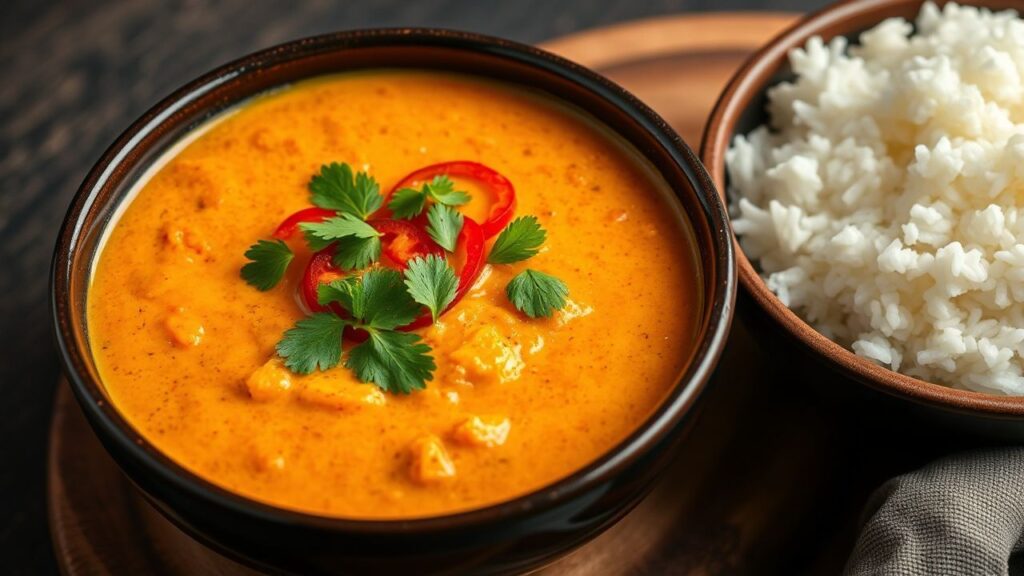
The success of your Pumpkin curry hinges on the moisture content and starch density of your primary ingredient. While the “Sugar Pie” pumpkin is a common western default, it often lacks the density required for a long simmer. For a superior result, many elite chefs favor the Kabocha (Japanese pumpkin). The Kabocha possesses a lower water content and a higher starch-to-sugar ratio, allowing it to maintain its structural integrity while contributing a chestnut-like flavor to the broth.
If Kabocha is unavailable, Butternut squash serves as a respectable alternative, though it requires a shorter cooking time to prevent it from dissolving into a puree. Understanding the varieties of the Cucurbita genus is vital for manipulating the texture of the dish. For instance, the Hubbard squash offers an earthiness that can ground a particularly spicy curry, whereas the Red Kuri provides a delicate, floral sweetness that pairs beautifully with lime zest.
The Emulsion: Coconut Milk Dynamics in Pumpkin Curry
The “milk” extracted from mature coconut meat is a natural emulsion of oil and water. In a Pumpkin curry, the quality of this emulsion defines the sauce. Many commercial coconut milks contain stabilizers like guar gum to prevent separation. While convenient, these additives can hinder the “cracking” process—a traditional Thai technique where coconut cream is boiled until the water evaporates and the oil separates, allowing the curry paste to be fried directly in the coconut fat. This step is essential for achieving restaurant-quality depth.
When selecting coconut milk, aim for a fat content of at least 17-19%. This high lipid concentration ensures a luxurious mouthfeel that coats the palate, buffering the heat from the chilies. If the fat content is too low, the curry will feel “thin” and the spices will taste sharp rather than integrated. The interaction between the coconut lipids and the pumpkin’s pectin creates a velvety suspension that is the hallmark of a masterfully prepared dish.
Essential Ingredients for an Authentic Pumpkin Curry
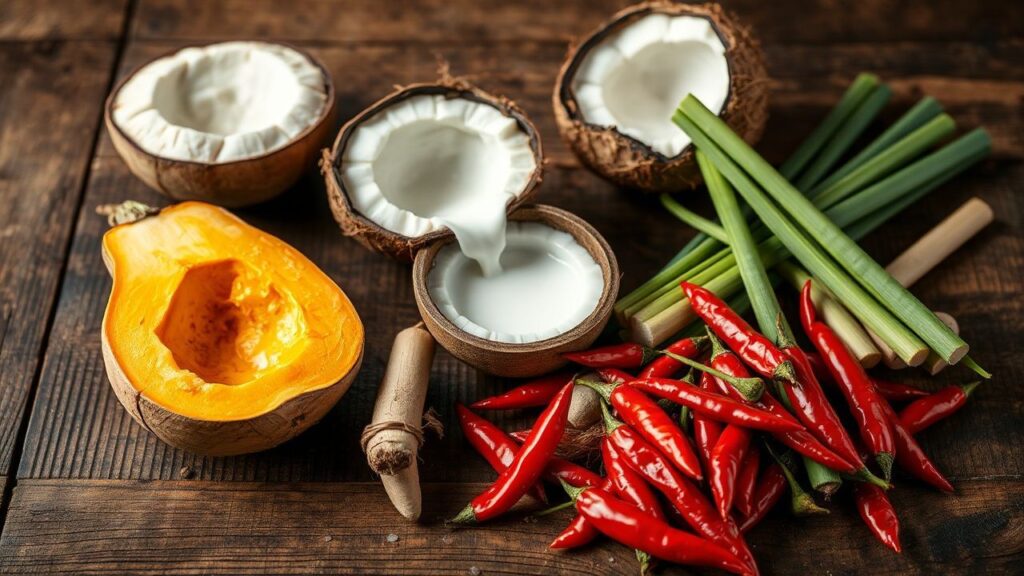
Constructing a Pumpkin curry that resonates with authenticity requires ingredients that provide a full spectrum of flavor: salty, sweet, sour, and spicy. The aromatics—lemongrass, galangal, and kaffir lime leaves—form the “holy trinity” of the Southeast Asian profile. Each must be prepared with care: lemongrass should be bruised with the back of a knife to release its essential oils, while kaffir lime leaves should be torn to expose their aromatic veins.
- Pumpkin/Squash: 2 lbs (900g) of Kabocha or Butternut, peeled and cubed into 1-inch pieces.
- Coconut Milk: 2 cans (13.5 oz / 400ml each) of full-fat coconut milk (avoid “lite” versions).
- Curry Paste: 3-4 tablespoons of high-quality Red or Yellow curry paste (Maesri or Mae Ploy are professional favorites).
- Aromatics: 2 stalks of lemongrass (white parts only), 1 inch of sliced galangal, and 4-5 kaffir lime leaves.
- Protein/Body: 1 cup of chickpeas or fried tofu (optional) for added textural contrast.
- Seasoning: 2 tablespoons of premium fish sauce (or salt/vegan fish sauce) and 1 tablespoon of palm sugar.
- Acidity: 1 tablespoon of fresh lime juice, added at the very end to preserve brightness.
- The Grain: 2 cups of long-grain Jasmine rice, rinsed until the water runs clear.
Preparation Method for Your Pumpkin Curry
The methodology of a Pumpkin curry is as much about timing as it is about ingredients. Begin by preparing the rice. The ratio for Jasmine rice is typically 1:1.5 (rice to water). Use the “knuckle method” or a digital scale for precision. Once the rice is simmering, shift focus to the curry base. In a heavy-bottomed pot or wok, take the thick cream from the top of the coconut milk can and heat it over medium heat until it bubbles and the oil starts to separate at the edges.
Add the curry paste to this oil for the “blooming” phase. Fry the paste for 2-3 minutes, stirring constantly. The aroma should shift from raw and pungent to toasted and fragrant. Once the paste is incorporated into the fat, add the remaining coconut milk, lemongrass, galangal, and lime leaves. Bring to a gentle simmer. This controlled heat allows the aromatics to infuse the lipid base without burning the delicate spices in the paste.
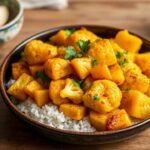
Add the roasted pumpkin cubes to the pot. Because the pumpkin is already partially cooked from the oven, the simmering time in the liquid is reduced to approximately 10-12 minutes. This ensures the pumpkin is tender but retains its shape. In the final two minutes, stir in the fish sauce and palm sugar. The broth should offer a balanced transition from the initial sweetness of the coconut to the mid-palate heat of the chili, finishing with a savory umami note. Turn off the heat and stir in the lime juice for a high-frequency acidic finish.
Nutritional Profile of Pumpkin Curry
While often viewed as a comfort food, Pumpkin curry is a nutritional powerhouse. The pumpkin provides a massive dose of Vitamin A (as Beta-carotene), which is vital for ocular health and immune function. One serving typically provides over 200% of the daily recommended intake of Vitamin A. Coconut milk provides lauric acid, a fatty acid known for its antimicrobial properties.
| Nutrient | Amount Per Serving | % Daily Value |
|---|---|---|
| Calories | 480 kcal | 24% |
| Total Fat | 32g | 41% |
| Saturated Fat | 26g | 130% |
| Carbohydrates | 45g | 16% |
| Fiber | 6g | 21% |
| Protein | 8g | 16% |
| Vitamin A | 18,500 IU | 370% |
Note the caloric density of the dish. The saturated fats from the coconut milk are significant; however, these are largely in the form of Medium Chain Triglycerides (MCTs), which the liver processes more efficiently for energy than the long-chain fats found in animal products. For those monitoring caloric intake, substituting one can of coconut milk with a high-quality vegetable stock can reduce the fat content, though the texture will be less “unctuous.”
Elevating the Texture of Your Pumpkin Curry
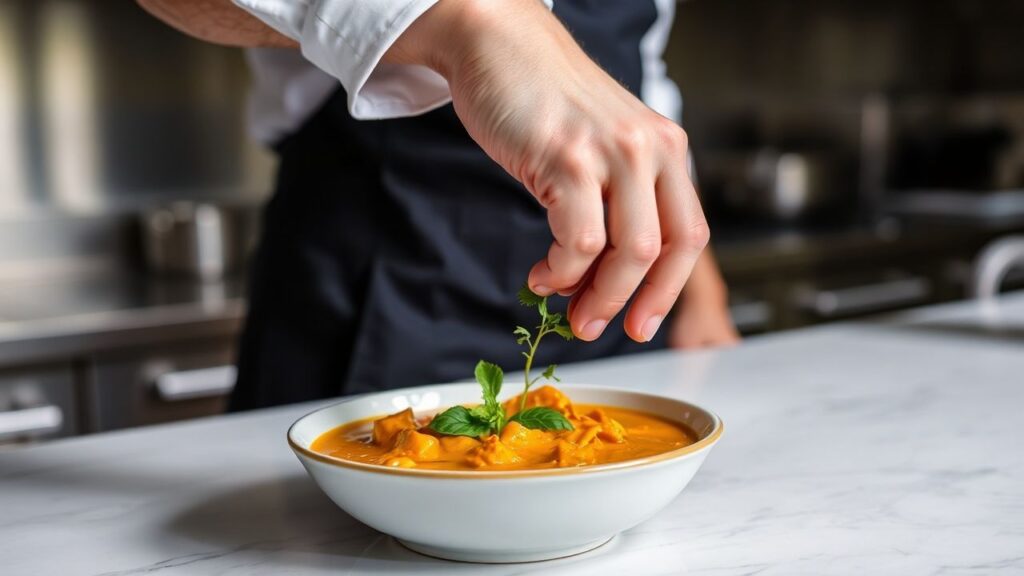
To reach an elite level, consider the “double-texture” approach. This involves pureeing about 10% of the cooked pumpkin back into the sauce. This technique increases the viscosity of the Pumpkin curry without relying on heavy creams or starches. It creates a cohesive bond between the coconut milk and the vegetables, ensuring every spoonful of rice is coated in a thick, flavorful gravy rather than a thin soup.
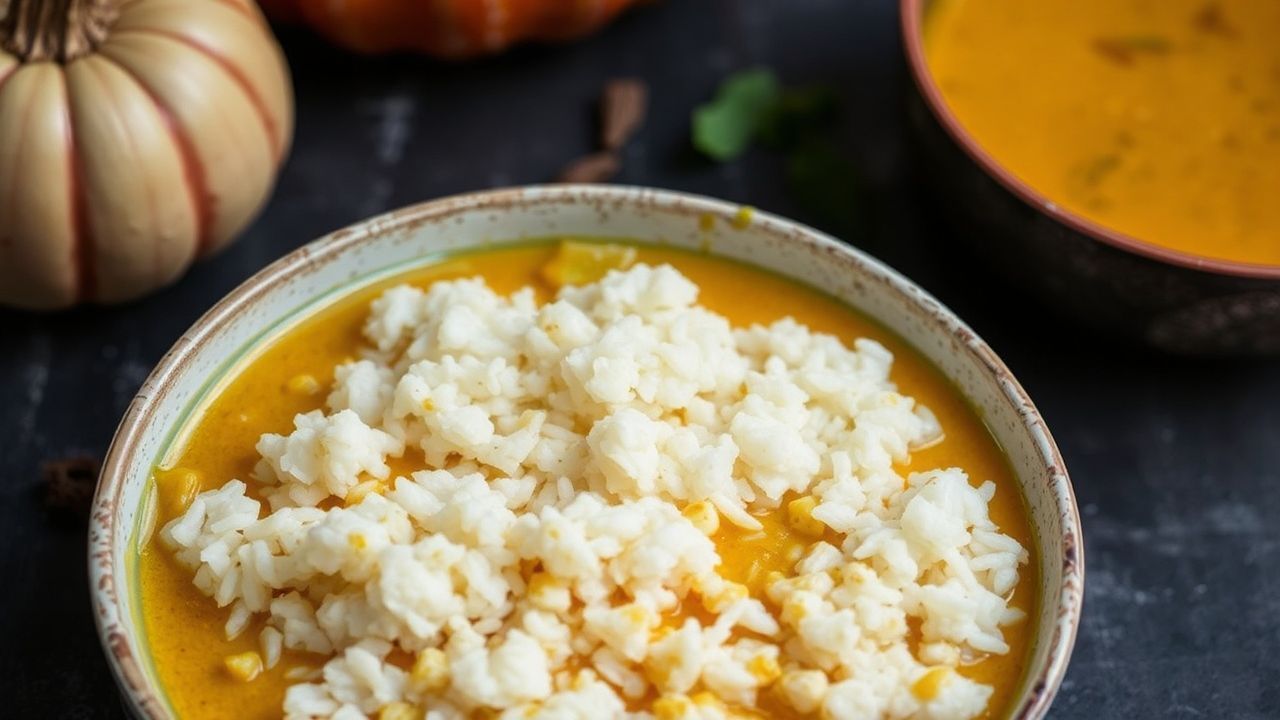
The choice of rice is equally critical. While Jasmine rice is the standard pairing for Thai-style curries due to its floral aroma and slightly sticky texture, Basmati rice can be used for a more “Indian-fusion” feel. Rice should never be an afterthought. By toasting the dry rice grains in a teaspoon of coconut oil before adding water, you create a subtle nutty undertone that mirrors the roasted pumpkin, creating a holistic dining experience.
Global Variations of Pumpkin Curry
The concept of a Pumpkin curry spans many borders. In Sri Lanka, “Wattakka Kalu Pol” is a celebratory dish where the pumpkin is cooked with toasted coconut and rice flour, creating a dark, intensely earthy flavor profile. This differs significantly from the Thai “Gaeng Fak Thong,” which relies on the freshness of red curry paste and the brightness of basil. Exploring these variations reveals how regional ingredients—like the Maldive fish in Sri Lanka or the shrimp paste in Thailand—alter the fundamental character of the gourd.
In the West, the dish has evolved into a centerpiece for plant-based fine dining. Chefs often incorporate seasonal elements like toasted pepitas (pumpkin seeds) for crunch or a drizzle of chili oil to add visual contrast. Regardless of the regional variation, the core principle remains the same: the pumpkin must be the star, supported by a cast of aromatics that highlight its natural sweetness rather than masking it.
Frequently Asked Questions About Pumpkin Curry
How do I prevent my Pumpkin curry from becoming mushy?
Mushy pumpkin is usually caused by overcooking or high water content. To avoid this, select a dense squash like Kabocha. Roasting the cubes before adding them to the liquid creates a protective “skin” through the Maillard reaction. Additionally, add the pumpkin toward the end of the cooking process—it only needs enough time in the liquid to absorb the flavors and heat through. If using a softer squash like Butternut, keep the simmer very low and check for tenderness every 3 minutes.
Can I freeze Pumpkin curry without losing texture?
Freezing is possible but requires care. Coconut milk can sometimes separate upon thawing, and the pumpkin may lose some firmness. To mitigate this, undercook the pumpkin slightly if the dish is intended for the freezer. When reheating, do so slowly over low heat and add a splash of fresh coconut milk or water to re-emulsify the sauce. Avoid using a microwave for reheating, as uneven heat can cause the coconut fat to separate further.
What is the best rice to serve with Pumpkin curry?
Jasmine rice is the gold standard. Its natural fragrance complements the lemongrass and coconut in the curry. For a more sophisticated pairing, consider “Coconut Rice” where half the cooking water is replaced with coconut milk and a pinch of salt. If you prefer a nuttier profile, a brown Jasmine rice or a wild rice blend can provide a chewy textural contrast that balances the softness of the simmered squash.
The mastery of this dish lies in the details. From the selection of the gourd to the precise moment the lime juice hits the pot, every decision contributes to the final symphony of flavor. Whether served as a simple weeknight meal or a sophisticated centerpiece, a well-crafted curry is proof of the beauty of balanced cooking.
See also: Pumpkin curry