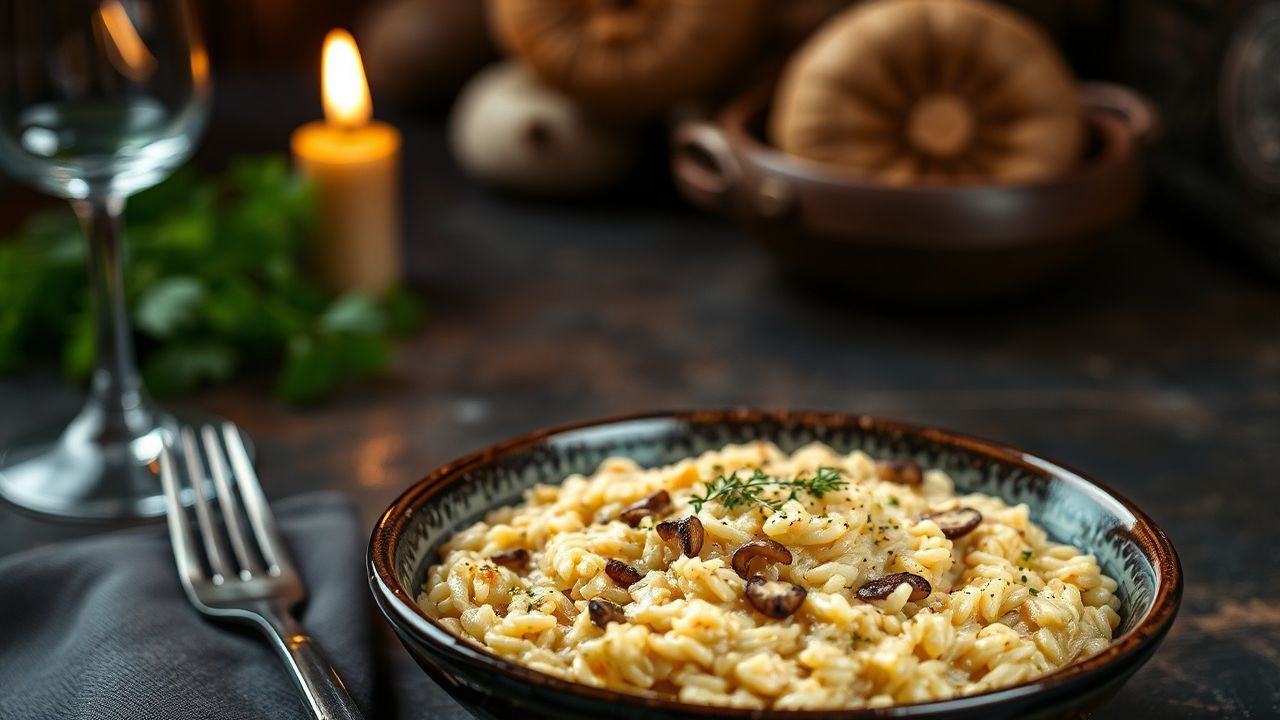

The aroma of simmering broth, the creamy embrace of Arborio rice, the earthy perfume of wild mushrooms – these are the sensory hallmarks of a truly transcendent mushroom risotto. I recall a drizzly autumn evening in Piedmont, huddled in a trattoria where the only light emanated from flickering candles and the gentle murmur of conversation. The proprietor, a woman whose hands bore the indelible marks of a lifetime in the kitchen, presented a steaming bowl of risotto. It wasn’t just food; it was an experience. Each grain of rice, perfectly al dente, was a tiny vessel for the profound, umami-rich essence of porcini mushrooms. This, I realised, was the soul of Italian cooking: simplicity elevated by profound technique and the finest ingredients. Achieving this level of sublime perfection in your own kitchen, however, can feel like navigating a culinary labyrinth. Many home cooks wrestle with achieving that elusive creamy texture, often ending up with either a stodgy, overcooked mess or a soupy, undercooked disappointment. The secret, as I’ve learned through decades of dedicated study and countless hours at the stove, lies not in a complex array of obscure ingredients, but in a profound understanding of technique, patience, and the subtle interplay of heat and moisture. This guide aims to make the most of an authentic Italian mushroom risotto, a dish that promises not just sustenance, but genuine comfort and culinary artistry.
- The Quintessential Mushroom Risotto: A Symphony of Simplicity
- The Method: A Step-by-Step Journey to Creamy Perfection
- Nutritional Information (Per Serving – Approximate):
- Elevating Your Risotto: Pro-Tips from the Kitchen
- Conclusion: The Enduring Appeal of Risotto
- Frequently Asked Questions about Mushroom Risotto
At a Glance: Key Takeaways for Perfect Mushroom Risotto
- The Rice is Paramount: Arborio, Carnaroli, or Vialone Nano rice are non-negotiable for their high amylopectin content, crucial for creaminess.
- Broth Management is Key: A hot, consistently added broth is the engine of risotto, gently coaxing starch from the rice.
- The “Mantecatura” Finish: The final emulsion of fat and cheese is what transforms good risotto into greatness.
- Patience and Observation: Risotto is not a dish to be rushed; constant stirring and tasting are essential.
The Quintessential Mushroom Risotto: A Symphony of Simplicity
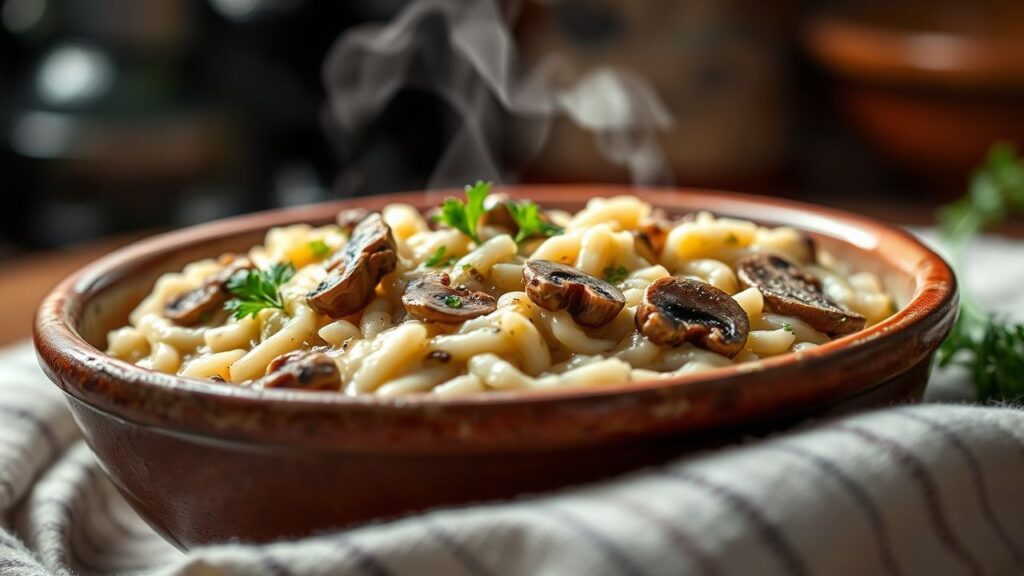
The beauty of a well-executed mushroom risotto lies in its ability to showcase the inherent quality of its components. Unlike dishes that rely on heavy sauces or competing flavours, this Italian classic allows the delicate sweetness of the rice and the profound earthiness of the mushrooms to sing in harmony. The fundamental principle behind any great risotto, including this mushroom iteration, is the gradual release of starch from the rice grains as they are agitated and cooked in liquid. This process, known as “rilascio dell’amido” (starch release), is what imparts that signature creamy, unctuous texture without the need for cream. It’s a patient, almost meditative culinary dance, and understanding its rhythm is the first step towards mastery.
The Foundation: Selecting Your Ingredients with Precision
The success of any Italian dish hinges on the quality of its ingredients. For a truly exceptional mushroom risotto, this is especially true. Compromising here will inevitably lead to a less-than-stellar result.
The Rice: The Heart of the Risotto
The choice of rice is arguably the most critical element. You cannot achieve the characteristic creamy texture of risotto with standard long-grain rice. The magic lies in specific short-grain Italian rice varieties that are high in amylopectin, a type of starch that leaches out during cooking.
- Arborio: The most widely available and a reliable choice. It has a plump grain and absorbs liquid well, yielding a creamy texture.
- Carnaroli: Often hailed as the “king” of risotto rice, Carnaroli grains are longer and firmer, holding their shape better during cooking. This results in a more distinct, “al dente” bite and a superb creamy consistency. It’s my personal preference for its superior texture.
- Vialone Nano: This smaller, rounder grain absorbs liquid exceptionally well and produces a very creamy, almost soupy risotto. It’s popular in the Veneto region.
For this recipe, Carnaroli is recommended for its exceptional texture, but Arborio is a perfectly acceptable substitute.
The Mushrooms: An Earthy Chorus
The type of mushroom you use will significantly influence the final flavour profile. A mix of cultivated and wild mushrooms offers the most complex and satisfying taste.
- Porcini (Boletus edulis): The undisputed king of wild mushrooms. Their intense, woodsy flavour is unparalleled. If fresh porcini are unavailable or out of season, high-quality dried porcini mushrooms are an excellent alternative. Rehydrating them not only softens them but also creates a flavourful mushroom broth that can be incorporated into the main cooking liquid.
- Cremini (Baby Bellas): These readily available mushrooms offer a good, mild earthy flavour and a pleasant texture.
- Shiitake: Their meaty texture and distinct umami flavour add depth.
- Oyster Mushrooms: Delicate and slightly sweet, they add a nuanced layer.
A combination of dried porcini for their intense flavour and fresh cremini or shiitake for their texture and aroma is a winning strategy.
The Broth: The Lifeblood of Risotto
A flavourful, hot broth is essential. Using water will result in a bland, uninspired dish.
- Vegetable Broth: A good quality vegetable broth provides a neutral yet flavourful base.
- Chicken Broth: Offers a richer, more savoury depth.
- Mushroom Broth: If using dried porcini, the rehydrating liquid is liquid gold and should absolutely be incorporated. Supplement this with a good quality vegetable or chicken broth.
The broth must be kept simmering throughout the cooking process. Adding cold broth will shock the rice and hinder the starch release.
Aromatics and Fat: The Supporting Cast
- Shallots or Onion: Finely minced shallots offer a more delicate flavour than yellow onion, but a sweet onion can also be used.
- Garlic: A clove or two, minced, adds a subtle pungency.
- Dry White Wine: A crisp, unoaked white wine (like Pinot Grigio or Sauvignon Blanc) is crucial for deglazing the pan and adding a layer of acidity that balances the richness.
- Butter: Unsalted butter is used both for sautéing the aromatics and mushrooms and for the final “mantecatura.”
- Parmigiano-Reggiano: The king of Italian cheeses. Use freshly grated, aged Parmigiano-Reggiano for its nutty, salty depth. Pre-grated cheese often contains anti-caking agents that can affect the texture.
- Olive Oil: A good quality extra virgin olive oil for sautéing.
- Fresh Herbs: Parsley is a classic garnish, adding a touch of freshness. Thyme or rosemary can also be subtly incorporated with the mushrooms.
The Method: A Step-by-Step Journey to Creamy Perfection
Achieving the perfect risotto is proof of patience and attention. It’s not a dish you can leave unattended. The process is about coaxing the starch from the rice, a gentle, rhythmic interaction.
Ingredients:
- 1.5 liters (6 cups) high-quality vegetable or chicken broth, plus extra if needed
- 30 grams (1 ounce) dried porcini mushrooms (optional, but highly recommended)
- 30 ml (2 tablespoons) extra virgin olive oil
- 30 grams (2 tablespoons) unsalted butter, divided
- 1 medium shallot, finely minced (about 50g / 1.7 oz)
- 1 clove garlic, minced
- 300 grams (1.5 cups) Arborio or Carnaroli rice
- 150 ml (2/3 cup) dry white wine
- 300 grams (10.5 oz) mixed fresh mushrooms (e.g., cremini, shiitake, oyster), cleaned and sliced
- 50 grams (1/2 cup) freshly grated Parmigiano-Reggiano cheese
- Salt and freshly ground black pepper to taste
- Fresh parsley, chopped, for garnish
Preparation Method:
1. Prepare the Broth and Mushrooms: If using dried porcini, place them in a heatproof bowl and cover with 250ml (1 cup) of hot water. Let them soak for at least 30 minutes. Once rehydrated, lift the mushrooms out of the liquid (reserve the soaking liquid!), rinse them briefly under cold water to remove any grit, and chop them finely. Strain the soaking liquid through a fine-mesh sieve lined with cheesecloth or a coffee filter to remove any sediment. Add this flavourful liquid to your main broth. Heat the combined broth (including the porcini liquid) in a saucepan and keep it at a gentle simmer over low heat. This is paramount.
2. Sauté the Fresh Mushrooms: In a large, heavy-bottomed pan or Dutch oven (wide enough to comfortably stir the rice), heat 1 tablespoon of olive oil and 1 tablespoon of butter over medium-high heat. Add the sliced fresh mushrooms and sauté, stirring occasionally, until they release their moisture and begin to brown. This browning is crucial for developing their flavour. Season lightly with salt and pepper. Remove the sautéed mushrooms from the pan and set them aside.
3. Soften the Aromatics: Add the remaining 1 tablespoon of olive oil and 1 tablespoon of butter to the same pan over medium heat. Add the minced shallot and cook gently for 5-7 minutes, stirring frequently, until softened and translucent, but not browned. Add the minced garlic and cook for another minute until fragrant.
4. Toast the Rice: Add the Arborio or Carnaroli rice to the pan. Stir the rice with a wooden spoon for 2-3 minutes, toasting each grain lightly. This step, known as “tostatura,” is vital. It slightly hardens the outer layer of the rice, helping it to absorb liquid evenly and maintain its structure. The grains should appear slightly translucent around the edges.
5. Deglaze with Wine: Pour in the dry white wine. Stir constantly, scraping any browned bits from the bottom of the pan, until the wine has almost completely evaporated. The sharp aroma of the wine will dissipate, leaving behind a subtle, complex flavour.
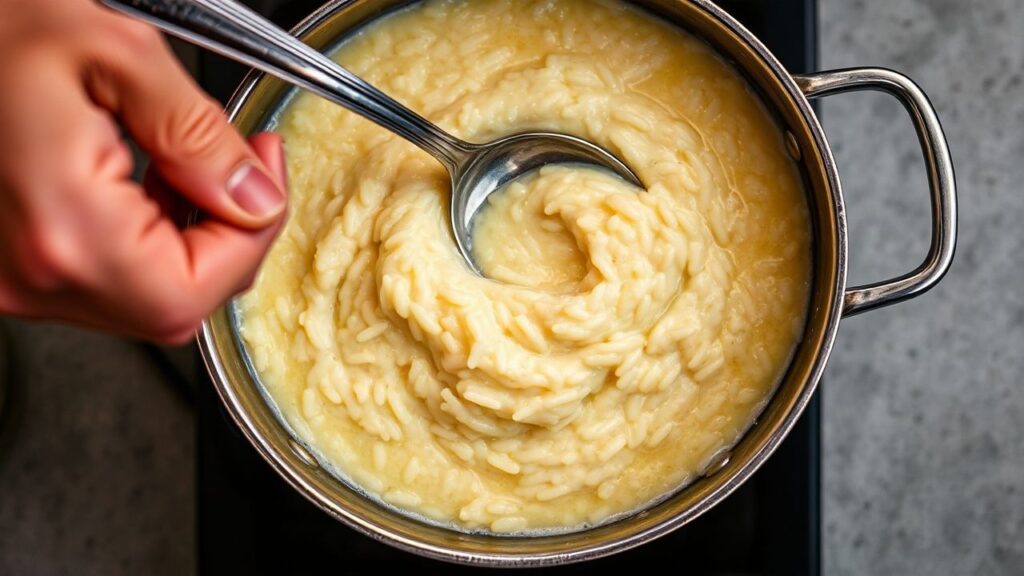
6. The Gradual Addition of Broth: This is where the magic truly happens. Begin adding the simmering broth, one ladleful (about 250ml / 1 cup) at a time. Stir the risotto continuously with a wooden spoon, ensuring the rice doesn’t stick to the bottom of the pan. Wait until each ladleful of broth has been almost completely absorbed by the rice before adding the next. Continue this process, stirring constantly, for about 18-20 minutes for Carnaroli, or slightly less for Arborio. As you stir, you’ll notice the rice releasing its starch, creating a creamy, emulsified sauce. Taste the rice periodically; it should be tender but still have a slight bite in the centre – “al dente.”
7. Incorporate the Mushrooms: Once the rice is almost cooked to your liking (al dente), stir in the reserved sautéed fresh mushrooms and the rehydrated chopped porcini (if using). Continue adding broth and stirring until the risotto reaches your desired consistency. It should be fluid enough to spread gently on the plate, not stiff or clumpy.
8. The “Mantecatura”: The Grand Finale: This is the crucial finishing step that transforms a good risotto into a sublime one. Remove the pan from the heat. Add the remaining 1 tablespoon of butter and the freshly grated Parmigiano-Reggiano cheese. Stir vigorously for about a minute. This process, known as “mantecatura,” emulsifies the fat from the butter and cheese with the starch from the rice, creating an incredibly rich, creamy, and glossy finish.
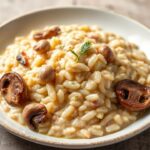
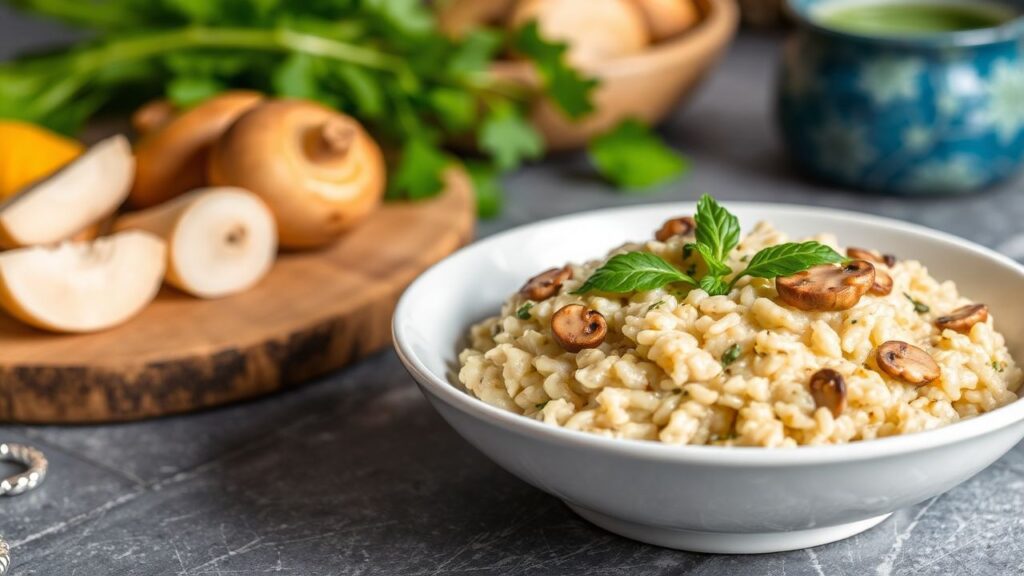
9. Season and Serve: Taste the risotto and adjust seasoning with salt and freshly ground black pepper. Remember that Parmigiano-Reggiano is salty, so season cautiously. Ladle the risotto immediately into warm shallow bowls. Garnish with chopped fresh parsley and an extra sprinkle of Parmigiano-Reggiano, if desired. Risotto is best served immediately, as its texture can change upon standing.
Nutritional Information (Per Serving – Approximate):
- Calories: 450-550 kcal (depending on specific ingredients and portion size)
- Protein: 12-15g
- Fat: 18-25g (including saturated fat)
- Carbohydrates: 60-75g
- Fiber: 3-5g
- Sodium: 600-900mg (can vary significantly based on broth and cheese)
*Note: This is an approximate nutritional breakdown. Actual values will vary based on ingredient brands, quantities used, and specific preparation methods.*
Elevating Your Risotto: Pro-Tips from the Kitchen
Transforming your homemade risotto from merely good to truly exceptional requires a keen eye for detail and a willingness to embrace classic Italian techniques. These refinements can elevate your dish from a comforting meal to a culinary masterpiece.
- The Power of Umami Boost: For an even deeper mushroom flavour, consider adding a tablespoon of mushroom powder (dried and ground mushrooms) to the rice during the toasting phase, or a teaspoon of truffle oil at the very end of the mantecatura. Be judicious with truffle oil, as it can be overpowering.
- Herb Infusion: If using woodsy herbs like thyme or rosemary, add a sprig or two to the simmering broth and remove it before adding the broth to the rice. This imparts a subtle, aromatic note without overwhelming the dish.
- The Perfect Consistency: Risotto should flow. When you tilt the bowl, it should spread gently, creating a “wave” effect. If it’s too stiff, add a touch more hot broth. If it’s too watery, you’ve likely added too much liquid too soon or haven’t stirred enough.
- The Art of the Finish: Some chefs advocate for a final drizzle of high-quality extra virgin olive oil just before serving, adding a fresh, fruity dimension. This is a subtle touch that can make a difference.
- Mushroom Variety is Key: Don’t be afraid to experiment with different mushroom combinations. A wild mushroom blend, including chanterelles or morels when in season, will lend an extraordinary depth of flavour. The key is to ensure a mix of textures and intense flavours.
A fascinating case study in the importance of broth quality comes from a renowned Milanese chef, Isabella Rossi. She once shared how a seemingly insignificant change in her house-made vegetable broth – opting for slow-roasted mirepoix vegetables instead of simply boiling them – dramatically intensified the flavour of her signature truffle risotto. This subtle shift, she explained, added a layer of caramelised sweetness and deeper umami that resonated beautifully with the delicate aroma of the truffles, transforming a familiar dish into something truly extraordinary. This underscores the principle that every component, even the broth, matter significantly in the final symphony of flavours.
Conclusion: The Enduring Appeal of Risotto
The journey to mastering mushroom risotto is a rewarding one. It’s a dish that demands presence, patience, and a deep appreciation for the transformation of simple ingredients. The creamy texture, the earthy aroma, the comforting embrace – these are the elements that have cemented risotto’s place in the hearts of food lovers worldwide. By understanding the science behind the starch release, respecting the quality of your ingredients, and embracing the meditative rhythm of the cooking process, you can consistently recreate this Italian classic in your own kitchen. The satisfaction of presenting a perfectly executed bowl of mushroom risotto, knowing you have conjured such comfort and flavour from humble beginnings, is a culinary triumph in itself. It’s proof of the enduring power of Italian cuisine, where simplicity, technique, and passion converge to create something truly magical.
Frequently Asked Questions about Mushroom Risotto
What is the best type of mushroom to use for risotto?
For the most authentic and flavourful mushroom risotto, a combination of dried porcini mushrooms and fresh cultivated mushrooms is ideal. Dried porcini offer an intense, concentrated earthy flavour and a rich umami depth that is difficult to replicate with fresh mushrooms alone. Their soaking liquid is also a treasure trove of flavour that should be incorporated into the broth. For fresh mushrooms, a mix of cremini, shiitake, and oyster mushrooms provides a pleasing variety of textures and nuanced earthy notes. If fresh porcini are available and in season, they are, of course, the ultimate choice. The key is to select mushrooms that offer a robust, earthy flavour profile.
Why is my risotto lumpy or gluey?
A lumpy or gluey risotto is usually a result of over-agitation or using the wrong type of rice. Using a rice variety that is not suitable for risotto (like long-grain white rice) is a primary culprit, as these grains lack the high amylopectin content necessary for creamy starch release. Another common cause is over-stirring or stirring too vigorously, which can break down the rice grains too much, leading to a gummy texture. Conversely, insufficient stirring can cause the rice to stick to the bottom of the pan and cook unevenly, leading to both burnt bits and undercooked grains. The aim is gentle, consistent stirring that encourages the slow release of starch.
How can I make my risotto creamier without adding cream?
The creaminess of risotto is achieved naturally through the release of amylopectin starch from the rice grains. This process is facilitated by using the correct type of rice (Arborio, Carnaroli, or Vialone Nano), toasting the rice properly before adding liquid, and gradually adding hot broth while stirring continuously. The “mantecatura” phase, where butter and Parmigiano-Reggiano cheese are vigorously stirred into the cooked risotto off the heat, is also critical for emulsifying the fats and starches, creating a luxurious, creamy finish. The moisture content is also important; a well-cooked risotto should have a slightly fluid consistency that spreads gently on the plate.
Can I prepare risotto in advance?
While risotto is best enjoyed immediately after cooking for optimal texture and flavour, it is possible to prepare it in advance with some caveats. You can partially cook the rice until it is about 80% done (al dente, but still with a firm bite). Spread it on a baking sheet to cool quickly and prevent it from continuing to cook. To finish, reheat the partially cooked risotto in a pan with a generous amount of hot broth, stirring until it reaches the desired creamy consistency and is fully cooked. You will need to add more broth than you might expect, as the rice will absorb it rapidly. The final “mantecatura” should also be done just before serving. However, be aware that the texture may not be quite as perfect as freshly made risotto.
See also: Risotto