
“Risotto is not merely food; it is an experience, proof of patience and the profound alchemy of simple ingredients.” – Massimo Bottura
- The Enduring Allure of Mushroom and Parmesan Risotto
- Deconstructing the Perfect Mushroom and Parmesan Risotto: The Art of Ingredient Selection
- The Quintessential Rice for Risotto
- The Earthy Heart: Selecting the Perfect Mushrooms
- The Salty Sentinel: Parmigiano-Reggiano
- The Ritual of Creation: Crafting Your Mushroom and Parmesan Risotto
- Nutritional Insights: A Richer Understanding
- Elevating Your Risotto Game: Expert Pro-Tips
- A Real-World Case Study: The “Puntarelle Risotto” Experiment
- Conclusion: A Dish of Depth and Delight
- Frequently Asked Questions
- What kind of mushrooms are best for mushroom risotto?
- The best mushrooms for risotto are those that offer a good balance of earthy flavour and texture. A combination of common cremini (or brown mushrooms) provides a solid base, while adding shiitake mushrooms introduces a deeper, umami-rich, almost smoky note. For an extra layer of complexity and an unparalleled aroma, rehydrated dried porcini mushrooms are indispensable. Their intense, woodsy flavour is a hallmark of gourmet mushroom dishes. When using dried porcini, be sure to strain the soaking liquid through a fine sieve or cheesecloth to remove any grit before adding it to the risotto, as this liquid is packed with flavour.
- Can I use other types of rice for risotto?
- While Arborio, Carnaroli, and Vialone Nano are the traditional and highly recommended rice varieties for risotto due to their high amylopectin content which releases starch for creaminess, other short-grain rice varieties can be used in a pinch. However, they may not yield the same signature creamy texture. For instance, Calrose rice, while a medium-grain rice, has some starchiness that can work, but it’s not ideal. Long-grain rice varieties like Basmati or Jasmine are unsuitable as they do not have the necessary starch content and will not achieve the characteristic texture. Stick to the recommended Italian short-grain varieties for the best results.
- How can I make my risotto creamier without adding cream?
- The true creaminess of risotto comes from the starch released by the rice itself, a process expertly managed through slow cooking and constant stirring. The key technique is the *mantecatura*, the final stage where butter and finely grated Parmigiano-Reggiano cheese are vigorously stirred into the hot rice off the heat. This emulsifies the fats and cheese with the starchy liquid, creating a luxurious, velvety texture. Ensuring you use the correct type of rice (Arborio, Carnaroli, or Vialone Nano) and a patient, consistent stirring method during the broth addition is fundamental. The quality and fineness of the grated cheese also play a significant role in achieving this smooth emulsion.
- My risotto is too thick/thin. How can I adjust it?
- Adjusting the consistency of risotto is a common challenge. If your risotto is too thick or dry, you can loosen it by stirring in a little more hot broth, one ladleful at a time, until it reaches your desired flowing consistency. The goal is for the risotto to spread gently on the plate, not to hold a stiff shape. Conversely, if your risotto is too thin or soupy, it generally means too much liquid was added too quickly, or it wasn’t cooked long enough for the starch to thicken it. In this situation, you can try cooking it gently over low heat for a few more minutes, stirring continuously, to allow some of the excess liquid to evaporate and the starch to thicken. However, it’s often best to aim for the correct consistency during the initial cooking phase by carefully controlling the broth addition.
The Enduring Allure of Mushroom and Parmesan Risotto
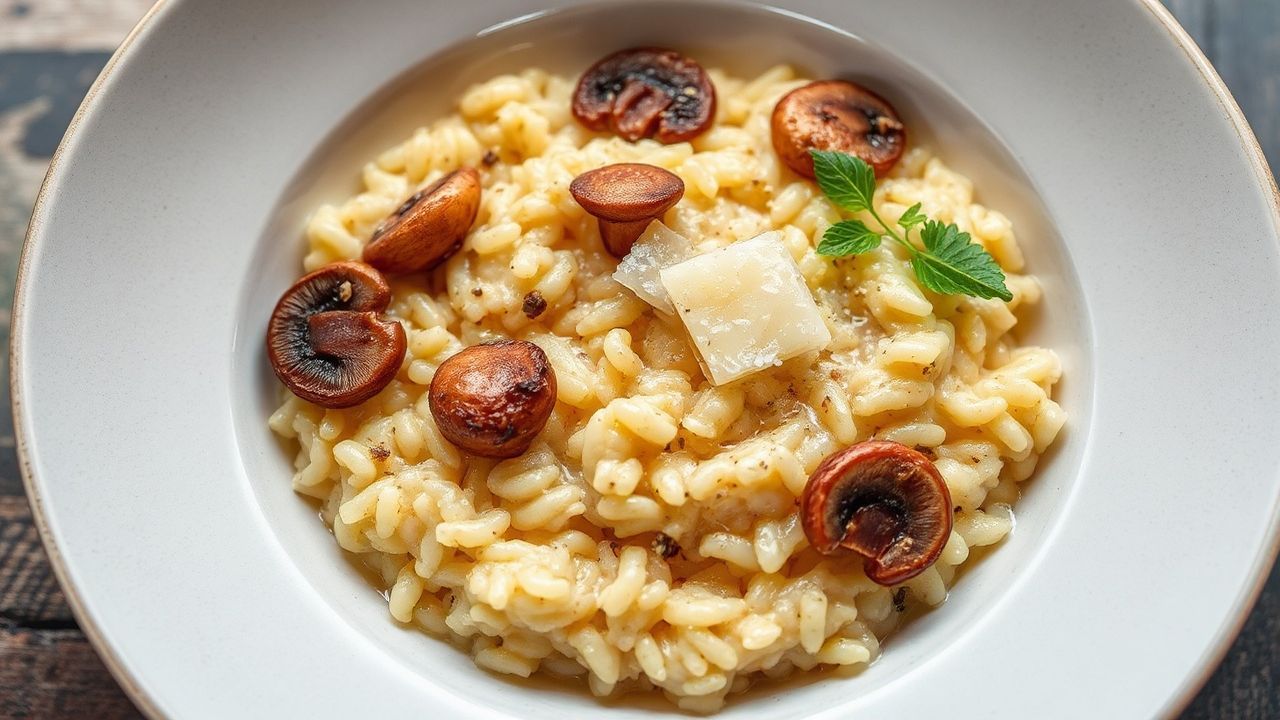
In the vast culinary landscape, few dishes possess the comforting embrace and sophisticated simplicity of a well-executed risotto. Among its myriad variations, the mushroom and parmesan risotto stands as a perennial favourite, proof of the harmonious marriage of earthy fungi and the sharp, nutty notes of aged cheese. This dish, more than a mere recipe, is a narrative woven through the grains of Arborio rice, coaxed to creamy perfection with each ladleful of broth. It speaks of Italian kitchens, of Sunday lunches, and of the quiet satisfaction derived from a meal crafted with intention. Understanding the genesis of this iconic dish, its regional roots, and the fundamental principles that govern its creation is paramount to achieving true mastery.
- The ‘Mantecatura’ is paramount: The final stage of emulsifying fat and cheese into the rice is what defines a truly luxurious risotto.
- Rice selection matters profoundly: The high amylopectin content in specific short-grain rice varieties is non-negotiable for achieving the characteristic creamy texture.
- Broth temperature is key: A simmering broth ensures the rice cooks evenly and absorbs flavour without becoming mushy.
- Patience is the secret ingredient: Risotto cannot be rushed; the gradual addition of liquid and constant stirring are integral to its success.
The origins of risotto are deeply rooted in Northern Italy, particularly in the regions of Lombardy and Piedmont, areas historically known for rice cultivation. Legend has it that the dish was invented in the 16th century by a glassblower’s apprentice who, while working on the Duomo of Milan, added saffron to his rice out of mischief, creating the precursor to Risotto alla Milanese. While the saffron version is iconic, the versatility of the rice and the technique allowed for countless regional interpretations. The combination with mushrooms and Parmesan cheese, however, is a classic that transcends specific locales, becoming a universally beloved expression of Italian comfort food. This particular rendition leverages the deep, umami-rich flavours of mushrooms, which are amplified by the salty tang of Parmigiano-Reggiano, creating a dish that is both grounding and elegantly complex.
Deconstructing the Perfect Mushroom and Parmesan Risotto: The Art of Ingredient Selection
The foundation of any exceptional risotto lies in the quality and thoughtful selection of its components. It is not merely a matter of throwing ingredients together; rather, it is a deliberate orchestration of flavours and textures, where each element matter significantly in the final symphony. The rice, the unsung hero, is perhaps the most critical choice.
The Quintessential Rice for Risotto
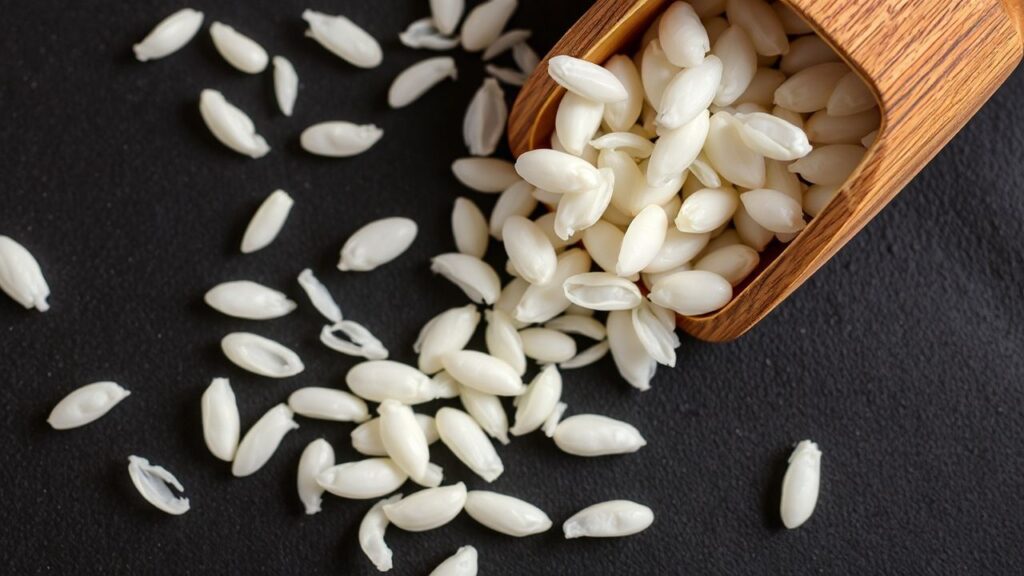
The alchemy of risotto hinges on the starch released by specific types of short-grain rice. These varieties, characterized by a high amylopectin content, are designed to absorb liquid gradually while simultaneously releasing starches that emulsify, creating the signature creamy texture without the need for heavy cream. The most revered among these is Arborio, named after a town in the Po Valley. Its plump grains hold their shape well during the extended cooking process, offering a delightful al dente bite at the core.
Equally esteemed are Carnaroli and Vialone Nano. Carnaroli, often referred to as the “king” of risotto rice, boasts an even higher starch content and superior structural integrity, making it more forgiving and less prone to overcooking. Vialone Nano, while smaller, is prized for its exceptional creaminess. For this particular mushroom and parmesan risotto, any of these three will yield superb results, though Carnaroli might offer a slight edge in terms of refined texture and resistance to mushiness.
The Earthy Heart: Selecting the Perfect Mushrooms
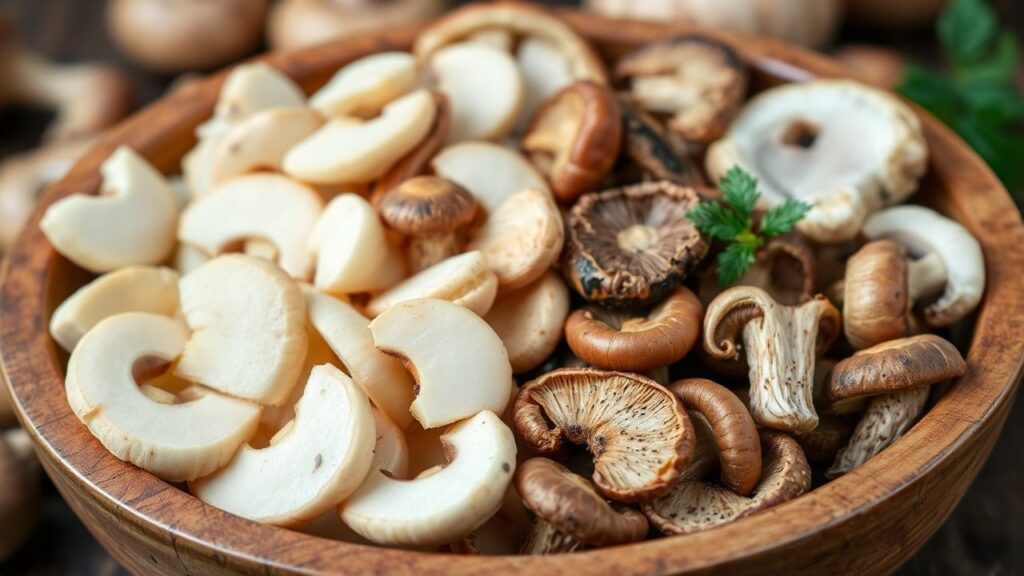
Mushrooms are the soul of this particular risotto, and their selection profoundly impacts the final flavour profile. A judicious blend can introduce layers of complexity and depth. Cremini mushrooms, with their mild, earthy flavour and firm texture, form an excellent base. They are widely available and offer a consistent, pleasing taste.
To elevate the dish, consider incorporating more intensely flavoured varieties. Shiitake mushrooms, with their smoky, almost meaty essence, add a significant umami punch. Their slightly chewy texture also provides a welcome contrast to the creamy rice. For a more refined and sophisticated note, porcini mushrooms (especially dried porcini, rehydrated) are unparalleled. Their intense, woodsy aroma and flavour are a hallmark of gourmet mushroom dishes. If fresh porcini are available, they are an absolute revelation. A combination of cremini for body, shiitake for depth, and a touch of dried porcini for that inimitable aroma will create a truly memorable mushroom risotto.
The Salty Sentinel: Parmigiano-Reggiano
No Italian risotto is complete without the crowning glory of Parmigiano-Reggiano. This hard, granular cheese, aged for a minimum of 12 months, is the gold standard. Its complex flavour profile – nutty, sharp, slightly sweet, and intensely savoury – is indispensable. When grated and stirred into the hot risotto at the end of cooking, it not only adds a delightful richness but also contributes to the dish’s velvety emulsification, a process known as *mantecatura*. Avoid pre-grated cheeses, which often contain anti-caking agents that can hinder proper melting and compromise the texture. The quality of the Parmesan is paramount; it is the flavour enhancer that ties all the elements together.
The Ritual of Creation: Crafting Your Mushroom and Parmesan Risotto
The preparation of risotto is a culinary ballet, a dance of heat, liquid, and patient stirring. It is a process that demands attention, but the rewards are immeasurable.
Ingredients: A Symphony of Flavours
- Rice: 300g (about 1.5 cups) Arborio, Carnaroli, or Vialone Nano rice
- Mushrooms: 400g (about 1 lb) mixed mushrooms (e.g., 200g cremini, 150g shiitake, 50g dried porcini reconstituted – reserve soaking liquid)
- Onion: 1 medium shallot or white onion, finely minced
- Garlic: 2 cloves, finely minced
- White Wine: 120ml (about 1/2 cup) dry Sauvignon Blanc or Pinot Grigio
- Broth: 1.2-1.5 litres (about 5-6 cups) hot vegetable or chicken broth (low sodium preferred)
- Parmigiano-Reggiano: 80g (about 1 cup), finely grated, plus extra for serving
- Butter: 50g (about 1/4 cup) unsalted, divided
- Olive Oil: 2 tablespoons extra virgin olive oil
- Fresh Parsley: 2 tablespoons, chopped, for garnish
- Salt: To taste
- Black Pepper: Freshly ground, to taste
Preparation Method: A Step-by-Step Guide to Perfection
1. Prepare the Mushrooms: If using dried porcini, place them in a bowl and cover with hot water. Let soak for 20-30 minutes until softened. Drain, reserving the soaking liquid (strain it through a fine-mesh sieve lined with cheesecloth or a coffee filter to remove any grit). Roughly chop the rehydrated porcini. Clean and slice the fresh mushrooms.
2. Sauté the Mushrooms: In a large, heavy-bottomed pan or Dutch oven, heat 1 tablespoon of olive oil and 25g (2 tablespoons) of butter over medium-high heat. Add the fresh mushrooms and sauté until they release their liquid and begin to brown, about 5-7 minutes. Add the rehydrated porcini and cook for another 2-3 minutes. Season lightly with salt and pepper. Remove the mushrooms from the pan and set aside.
3. Build the Soffritto: Add the remaining 1 tablespoon of olive oil and 25g (2 tablespoons) of butter to the same pan over medium heat. Add the minced shallot or onion and cook gently until softened and translucent, about 5-7 minutes. Do not let it brown. Add the minced garlic and cook for another minute until fragrant.
4. Toast the Rice: Add the Arborio rice to the pan. Stir continuously for 1-2 minutes, ensuring each grain is coated in the fat and begins to look slightly translucent around the edges. This toasting process, known as *tostatura*, is crucial for preventing the rice from becoming gummy.
5. Deglaze with Wine: Pour in the dry white wine. Stir constantly, scraping up any browned bits from the bottom of the pan, until the wine has evaporated almost completely. The sharp aroma of alcohol will dissipate, leaving a subtle fruity note.
6. The Gradual Embrace of Broth: This is where the magic truly begins. Ensure your broth is simmering gently in a separate pot. Begin adding the hot broth to the rice, one ladleful (about 120-150ml or 1/2 cup) at a time. Stir the rice continuously and gently until the liquid is almost completely absorbed before adding the next ladleful. This constant stirring releases the starch from the rice, creating the characteristic creamy texture. Continue this process, adding broth and stirring, for about 18-20 minutes. The rice should be tender but still have a slight bite (al dente). You may not need all of the broth, or you might need a little extra. Taste a grain of rice to check for doneness.
7. Incorporate the Mushroom Magic: Once the rice is nearly cooked, stir in the sautéed mushrooms and the strained reserved porcini soaking liquid. Continue to stir and cook for another 2-3 minutes, allowing the flavours to meld and the rice to absorb the residual liquid.
8. The Grand Finale: Mantecatura: Remove the pan from the heat. This is the most critical step for achieving true risotto creaminess. Add the grated Parmigiano-Reggiano and the remaining 25g (2 tablespoons) of butter. Stir vigorously for about 1-2 minutes, or until the cheese and butter are fully melted and emulsified into the rice, creating a luscious, creamy sauce. The risotto should be fluid enough to spread gently on the plate, not stiff or soupy. Adjust seasoning with salt and freshly ground black pepper to taste.
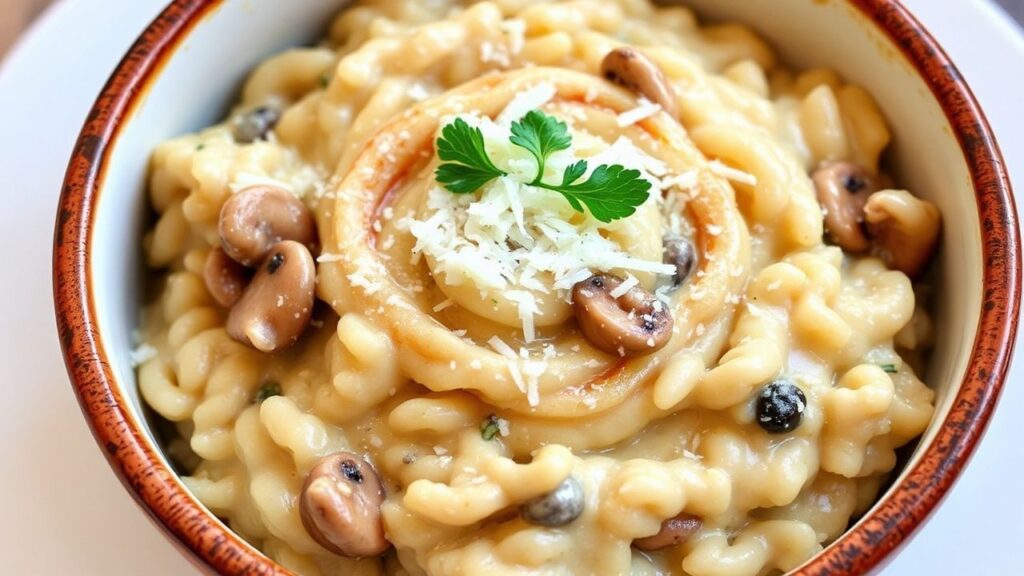
9. Serve Immediately: Risotto waits for no one. Serve the mushroom and parmesan risotto immediately in warm shallow bowls. Garnish with a sprinkle of fresh chopped parsley and an extra dusting of Parmigiano-Reggiano.
Nutritional Insights: A Richer Understanding
While risotto is often considered an indulgence, understanding its nutritional profile provides context for its place in a balanced diet. The following figures are approximate per serving (assuming 4 servings).
| Nutrient | Approximate Amount |
|---|
| :—————- | :—————– |
| Calories | 550-650 kcal |
|---|
| Protein | 18-22 g |
| Fat | 25-35 g |
|---|
| Saturated Fat | 12-16 g |
| Carbohydrates | 60-70 g |
|---|
| Dietary Fiber | 4-6 g |
| Sodium | 600-900 mg (varies with broth and seasoning) |
|---|
| Cholesterol | 70-90 mg |
Keep in mind that the nutritional content can vary significantly based on the type and quantity of mushrooms used, the amount of butter and cheese, and the type of broth. For a lighter version, consider using a lower-fat broth, reducing the butter in the *mantecatura*, and being mindful of the cheese quantity. The fibre content comes primarily from the mushrooms and the rice itself.
Elevating Your Risotto Game: Expert Pro-Tips
Achieving restaurant-quality risotto at home requires an understanding of nuanced techniques that elevate the dish from good to sublime.
The *mantecatura* phase, as mentioned, is critical. It is the emulsification of fat (butter and cheese) with the starchy liquid released by the rice. This process is best achieved off the heat, allowing the residual warmth to gently melt the butter and cheese while the vigorous stirring creates a stable emulsion. Adding them while the risotto is still over high heat can cause the cheese to become stringy or oily, compromising the velvety texture.
A Real-World Case Study: The “Puntarelle Risotto” Experiment
Consider the innovative approach of restaurants that dare to push the boundaries of traditional risotto. During a recent visit to a highly-regarded restaurant in Rome, I encountered a dish that, while not strictly mushroom and parmesan, exemplifies the principles of creative risotto making. The chef served a *Risotto al Puntarelle e Acciughe* – a risotto featuring the crisp, slightly bitter Roman chicory, *puntarelle*, and anchovies. The *puntarelle*, typically served raw in a vinaigrette, were lightly blanched and then incorporated into a classic risotto base, their sharp bitterness providing a fascinating counterpoint to the creamy rice and the salty funk of finely minced anchovies. The *mantecatura* here was subtle, using less butter and a lighter hand with the Parmigiano-Reggiano, allowing the unique flavours of the *puntarelle* and anchovies to shine. This dish, though a departure from the mushroom and parmesan, underscored the fundamental truth: a well-made risotto is a versatile canvas for bold flavours. The chef explained that the key was to temper the *puntarelle*’s bitterness with a touch of honey in the *soffritto* and to ensure the anchovies were integrated early to dissolve and imbue the rice with their saline depth. This demonstrated how even subtle adjustments in technique and ingredient pairings can lead to extraordinary results.
The temperature of the broth is another often-overlooked detail. Adding cold broth to hot rice will shock the grains, halting the cooking process and leading to an unevenly cooked risotto. Always ensure your broth is at a rolling simmer before ladling it into the rice. This consistent heat is crucial for the gradual hydration and starch release that defines a perfect risotto.
Conclusion: A Dish of Depth and Delight
The mushroom and parmesan risotto is more than just a recipe; it is an invitation to engage with the culinary arts on a deeper level. It is a dish that rewards patience, precision, and a genuine appreciation for the interplay of simple, high-quality ingredients. From the selection of the perfect rice and earthy mushrooms to the final, crucial *mantecatura*, each step contributes to a symphony of flavour and texture. It is proof of the enduring power of Italian cuisine, a dish that can comfort, impress, and nourish the soul. Mastering this classic risotto will not only expand your culinary repertoire but also imbue you with a profound understanding of the foundational techniques that underpin so many beloved dishes.
Frequently Asked Questions
What kind of mushrooms are best for mushroom risotto?
The best mushrooms for risotto are those that offer a good balance of earthy flavour and texture. A combination of common cremini (or brown mushrooms) provides a solid base, while adding shiitake mushrooms introduces a deeper, umami-rich, almost smoky note. For an extra layer of complexity and an unparalleled aroma, rehydrated dried porcini mushrooms are indispensable. Their intense, woodsy flavour is a hallmark of gourmet mushroom dishes. When using dried porcini, be sure to strain the soaking liquid through a fine sieve or cheesecloth to remove any grit before adding it to the risotto, as this liquid is packed with flavour.
Can I use other types of rice for risotto?
While Arborio, Carnaroli, and Vialone Nano are the traditional and highly recommended rice varieties for risotto due to their high amylopectin content which releases starch for creaminess, other short-grain rice varieties can be used in a pinch. However, they may not yield the same signature creamy texture. For instance, Calrose rice, while a medium-grain rice, has some starchiness that can work, but it’s not ideal. Long-grain rice varieties like Basmati or Jasmine are unsuitable as they do not have the necessary starch content and will not achieve the characteristic texture. Stick to the recommended Italian short-grain varieties for the best results.
How can I make my risotto creamier without adding cream?
The true creaminess of risotto comes from the starch released by the rice itself, a process expertly managed through slow cooking and constant stirring. The key technique is the *mantecatura*, the final stage where butter and finely grated Parmigiano-Reggiano cheese are vigorously stirred into the hot rice off the heat. This emulsifies the fats and cheese with the starchy liquid, creating a luxurious, velvety texture. Ensuring you use the correct type of rice (Arborio, Carnaroli, or Vialone Nano) and a patient, consistent stirring method during the broth addition is fundamental. The quality and fineness of the grated cheese also play a significant role in achieving this smooth emulsion.
My risotto is too thick/thin. How can I adjust it?
Adjusting the consistency of risotto is a common challenge. If your risotto is too thick or dry, you can loosen it by stirring in a little more hot broth, one ladleful at a time, until it reaches your desired flowing consistency. The goal is for the risotto to spread gently on the plate, not to hold a stiff shape. Conversely, if your risotto is too thin or soupy, it generally means too much liquid was added too quickly, or it wasn’t cooked long enough for the starch to thicken it. In this situation, you can try cooking it gently over low heat for a few more minutes, stirring continuously, to allow some of the excess liquid to evaporate and the starch to thicken. However, it’s often best to aim for the correct consistency during the initial cooking phase by carefully controlling the broth addition.
See also: Risotto