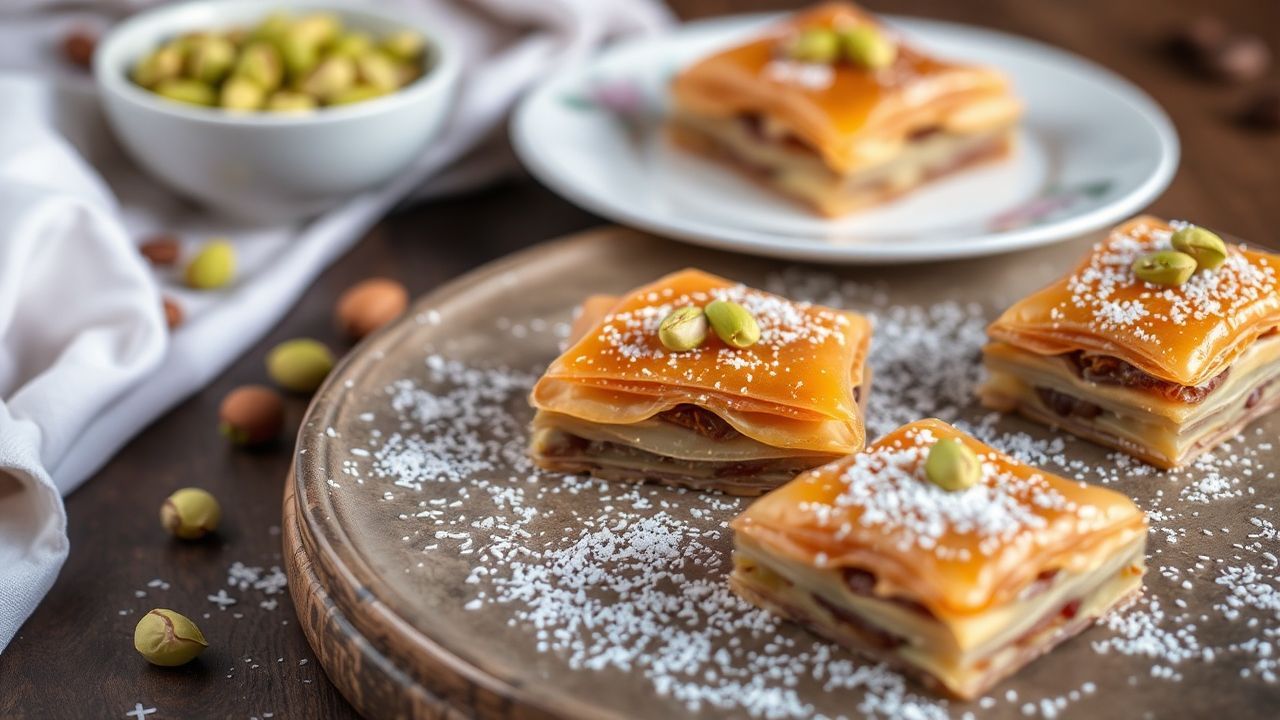

“The sweetest joys in life are often the most ephemeral, a fleeting symphony of textures and aromas that linger long after the last bite. Baklava, in its most exquisite form, is such a joy.” – A renowned Istanbul patissier.
- The Genesis of a Sweet Legacy: A Brief History of Baklava
- Deconstructing Perfection: The Anatomy of Turkish Pistachio Baklava
- The Craft of Creation: A Masterclass in Pistachio Baklava
- Ingredients: The Building Blocks of Excellence
- Preparation Method: A Step-by-Step Guide
- Prepare the Syrup:
- Prepare the Pistachios:
- Clarify the Butter:
- Assemble the Baklava Base:
- Add the Pistachio Filling:
- Cut the Baklava:
- Bake the Baklava:
- Syrup the Baklava:
- Rest and Serve:
- Nutritional Profile: A Glimpse into Indulgence
- Elevating Your Baklava: Expert Tips for Restaurant-Quality Results
- The Enduring Allure of Pistachio Baklava
- Frequently Asked Questions
For centuries, the aroma of butter, nuts, and honey has wafted from the kitchens of the Levant, proof of a culinary heritage as rich and layered as the pastries themselves. Among these treasures, Turkish baklava, particularly the iteration adorned with the vibrant green jewels of pistachios, stands as a paragon of dessert artistry. This isn’t merely a sweet treat; it’s a cultural emblem, a symbol of hospitality, and a meticulously crafted edible masterpiece. The journey to achieving the perfect pistachio baklava is one of patience, precision, and a profound respect for tradition. It demands an understanding of the delicate interplay between paper-thin phyllo, fragrant clarified butter, the earthy sweetness of pistachios, and a glistening, aromatic syrup. Mastering this classic dessert unlocks a portal to a world of flavor that transcends mere sustenance, offering an experience that is both grounding and utterly transcendent.
At a Glance: Keys to Exquisite Pistachio Baklava
- Phyllo Perfection: The secret to shatteringly crisp layers lies in the quality and handling of phyllo dough, ensuring it remains pliable and moist during assembly.
- Nut Quality: Sourcing the finest, intensely flavored pistachios is paramount, as they are the soul of this particular baklava.
- Syrup Balance: Achieving the ideal syrup consistency—not too thin, not too thick—is crucial for both flavor and texture, allowing it to permeate the pastry without making it soggy.
- Patience is a Virtue: Allowing the baklava to rest and absorb the syrup is a non-negotiable step for optimal flavor development and texture.
The Genesis of a Sweet Legacy: A Brief History of Baklava
The origins of baklava are a subject of much scholarly debate, with claims tracing its lineage back to the ancient Assyrians, Greeks, and Romans. However, the form we recognize today, with its intricate layering and syrupy sweetness, is largely attributed to the kitchens of the Ottoman Empire. Istanbul, as the heart of this vast empire, became a crucible for culinary innovation, where chefs refined existing dessert traditions and introduced new techniques. The use of paper-thin dough, known as *yufka* (the precursor to modern phyllo), was a significant advancement, allowing for an unparalleled lightness and crispness. The incorporation of nuts, particularly walnuts and pistachios, provided both texture and a delightful counterpoint to the sweetness of the syrup.
The Ottoman Empire’s vast reach facilitated the spread of baklava across its territories, leading to regional variations. While Greece is famed for its walnut-heavy baklava, and other regions might favor almonds or hazelnuts, Turkish baklava, especially the Gaziantep style, is synonymous with intensely flavored pistachios. Gaziantep, a city in southeastern Turkey, is often hailed as the undisputed capital of baklava, its pistachios renowned for their superior aroma and vibrant color. This regional specialization underscores the importance of local ingredients in shaping culinary identity. The meticulous preparation of baklava was, and still is, an art form, often passed down through generations, with family recipes guarded as precious heirlooms.
Deconstructing Perfection: The Anatomy of Turkish Pistachio Baklava
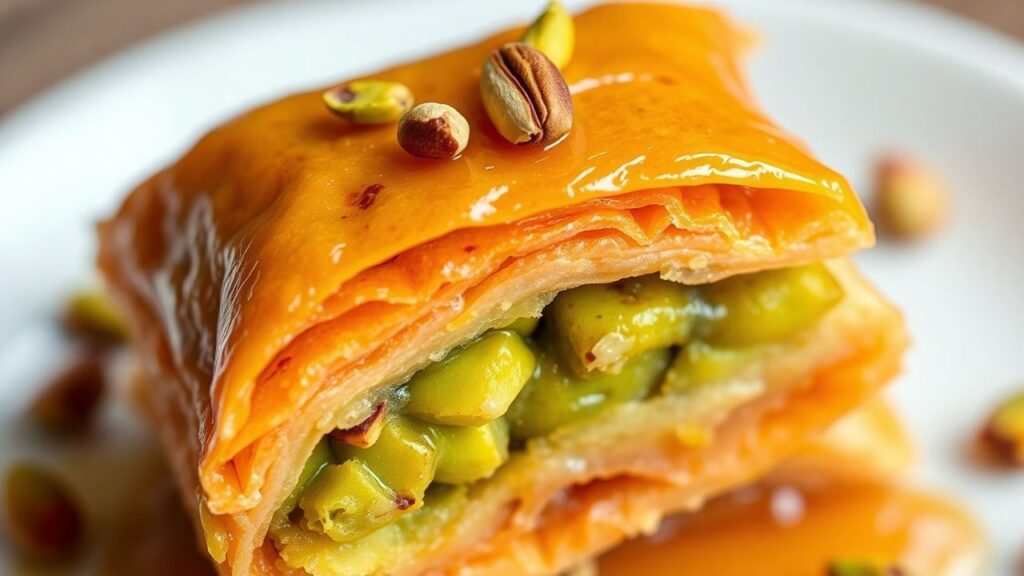
At its core, Turkish pistachio baklava is a symphony of carefully orchestrated elements. The foundation is the phyllo dough (yufka), an almost impossibly thin sheet of unleavened flour and water dough, stretched to near translucence. When baked, these delicate layers transform into a shatteringly crisp lattice, offering a satisfying crunch with every bite. The fat component is equally critical; traditionally, clarified butter (ghee) is used. Clarifying the butter removes milk solids, preventing them from burning at the high temperatures required for baking and imparting a richer, nuttier flavor. The pistachios are the undisputed stars of this particular baklava. High-quality Turkish pistachios, ideally from Gaziantep, are prized for their deep green hue, intense aroma, and sweet, slightly resinous flavor. They are typically coarsely ground, providing pockets of satisfying chew and texture within the crisp pastry.
The syrup binds these components together, providing moisture and a luscious sweetness. A classic Turkish baklava syrup is a simple sugar and water base, often infused with lemon juice to prevent crystallization and enhance the overall flavor profile. Some variations might include a hint of orange blossom water or rose water for an aromatic flourish, though for pistachio baklava, the focus is often on letting the pure flavors of nut and honey (or sugar syrup) shine. The interplay between the crispness of the phyllo, the richness of the butter, the nutty depth of the pistachios, and the sweet, sticky syrup is what elevates baklava from a mere dessert to an unforgettable sensory experience. The textural contrast is as important as the flavor harmony.
The Craft of Creation: A Masterclass in Pistachio Baklava
Crafting authentic Turkish pistachio baklava is an endeavor that rewards patience and precision. While the ingredient list might seem straightforward, the technique is where true mastery lies. This recipe aims to guide you through each step, ensuring a result that rivals the finest patisseries.
Ingredients: The Building Blocks of Excellence
For the Baklava Base:
- Phyllo Dough: 1 kg (approximately 2.2 lbs) high-quality phyllo dough, thawed according to package instructions. Ensure it’s fresh and pliable.
- Clarified Butter (Ghee): 500g (approximately 1.1 lbs) unsalted butter, clarified.
- Pistachios: 500g (approximately 1.1 lbs) raw, shelled pistachios, preferably Turkish, coarsely ground.
- Cinnamon: 1 teaspoon ground cinnamon (optional, for a subtle warmth).
For the Syrup:
- Granulated Sugar: 800g (approximately 4 cups)
- Water: 500ml (approximately 2 cups)
- Lemon Juice: 2 tablespoons fresh lemon juice.
- Honey: 100g (approximately 1/2 cup) (optional, adds depth but can make syrup thicker).
- Orange Blossom Water or Rose Water: 1 teaspoon (optional, for aroma).
Preparation Method: A Step-by-Step Guide
-
Prepare the Syrup:
In a medium saucepan, combine the sugar and water. Bring to a boil over medium-high heat, stirring until the sugar is completely dissolved. Once boiling, reduce the heat to a simmer and add the lemon juice. Continue to simmer gently for 10-15 minutes, without stirring, until the syrup has thickened slightly. If using honey, stir it in during the last 5 minutes of simmering. Remove from heat. If using floral water, stir it in now. Let the syrup cool completely. A cooled syrup is crucial for achieving crisp baklava.
-
Prepare the Pistachios:
If your pistachios are not already shelled and unsalted, prepare them accordingly. Coarsely grind the pistachios using a food processor or by hand. You want a mixture of fine and slightly larger pieces, not a powder. If using, mix the ground pistachios with the cinnamon in a bowl.
-
Clarify the Butter:
Melt the unsalted butter in a saucepan over low heat. Skim off the foam that rises to the surface. Continue to cook gently until the milk solids at the bottom turn a light golden brown and the butter becomes clear. Carefully pour the clear butter (ghee) into a separate bowl, leaving the browned solids behind. This process yields a higher smoke point and a more nuanced flavor.
-
Assemble the Baklava Base:
Preheat your oven to 180°C (350°F). Generously butter a large rectangular baking pan (approximately 35×45 cm or 14×18 inches) with clarified butter. Carefully unroll the phyllo dough. Keep the unused sheets covered with a damp (not wet) kitchen towel to prevent them from drying out. Lay one sheet of phyllo dough in the prepared pan. Brush it generously with clarified butter. Repeat this process, layering and buttering each sheet, for approximately 10-12 sheets. Ensure each layer is thoroughly coated for maximum crispness.
-
Add the Pistachio Filling:
Spread about half of the prepared pistachio mixture evenly over the buttered phyllo layers. Then, continue layering and buttering phyllo sheets for another 10-12 sheets, again ensuring each layer is well-buttered. Spread the remaining pistachio mixture over this second layer of phyllo. Finally, top with another 10-12 layers of phyllo, buttering each sheet meticulously. The more layers, the more luxurious the baklava, but ensure you don’t overstuff.
-
Cut the Baklava:
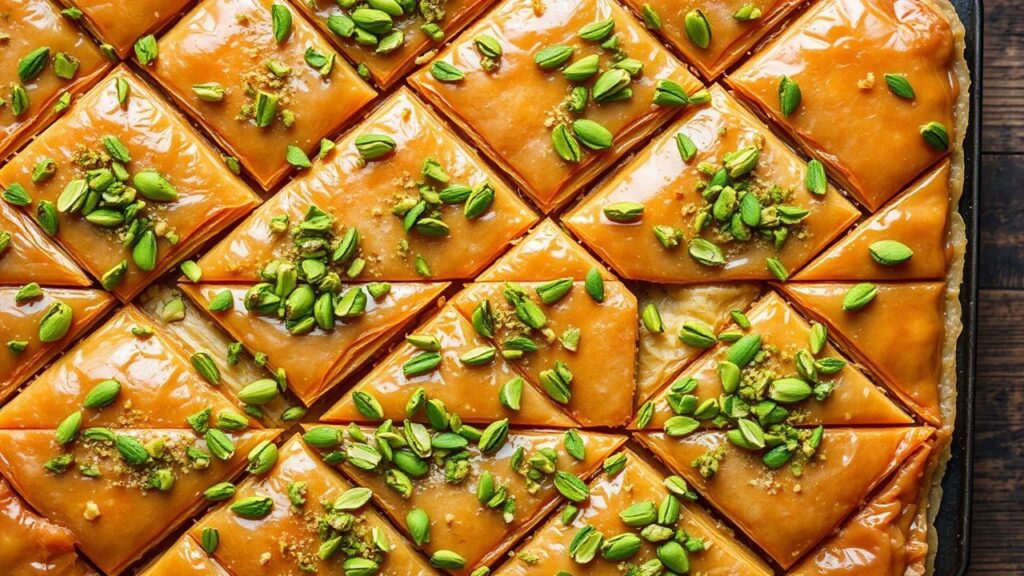
Using a sharp knife, cut the baklava into desired shapes. Traditional shapes are diamonds or squares. Cut all the way through to the bottom of the pan. This step is crucial before baking, as the crisp phyllo becomes difficult to cut cleanly once baked and syruped.
-
Bake the Baklava:
Place the pan in the preheated oven and bake for 45-60 minutes, or until the baklava is a deep golden brown and the edges are visibly crisp. The exact time will depend on your oven and the thickness of your baklava.
-
Syrup the Baklava:
Once the baklava is golden brown and out of the oven, immediately and slowly pour the *cooled* syrup evenly over the hot baklava. You should hear a satisfying sizzle. Ensure the syrup penetrates all the layers. If you notice any dry spots, gently spoon more syrup over them. The contrast in temperature (hot baklava, cool syrup) is essential for crispness.
-
Rest and Serve:
Allow the baklava to cool completely at room temperature for at least 4-6 hours, or preferably overnight. This resting period is vital for the syrup to be fully absorbed and for the baklava to achieve its signature texture. Garnish with additional finely chopped pistachios just before serving, if desired. For an authentic experience, serve with a small cup of strong Turkish coffee or tea.
Nutritional Profile: A Glimpse into Indulgence
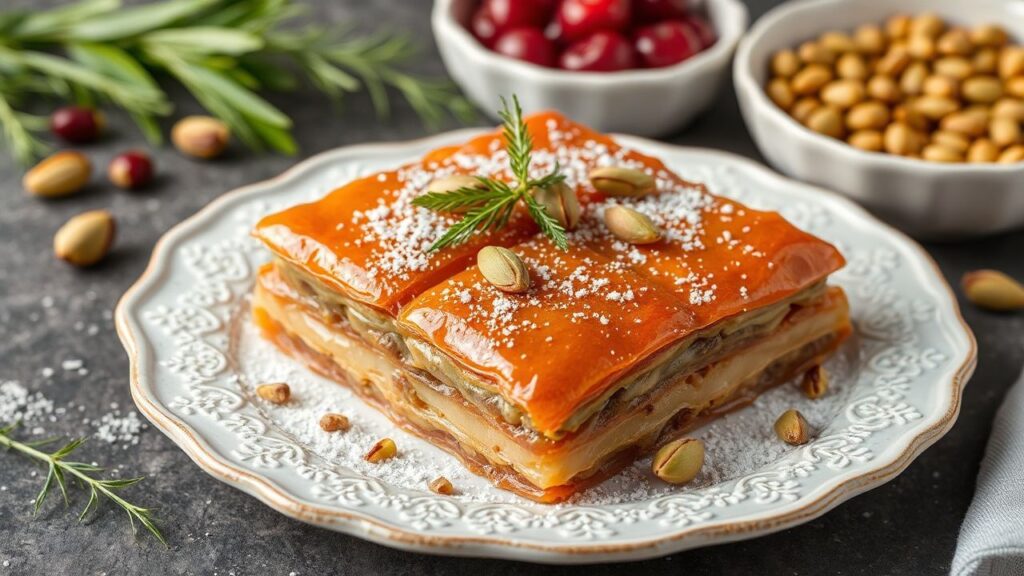
Baklava is an indulgent dessert, rich in both flavor and calories. A typical serving (approximately 2-3 pieces, depending on size) can be estimated as follows. Please note that these are approximate values and can vary significantly based on ingredient quantities and specific preparation methods.
| Nutrient | Per Serving (approx.) |
|---|---|
| Calories | 350-450 kcal |
| Total Fat | 20-30g |
| Saturated Fat | 8-12g |
| Cholesterol | 50-70mg |
| Sodium | 50-100mg |
| Total Carbohydrates | 40-50g |
| Dietary Fiber | 2-3g |
| Sugars | 30-40g |
| Protein | 5-7g |
| Vitamin A | 8-10% DV |
| Calcium | 4-6% DV |
| Iron | 3-5% DV |
| Potassium | 5-7% DV |
The high calorie and sugar content stem from the generous use of butter and the sweet syrup. However, the pistachios contribute beneficial fats, protein, fiber, and various micronutrients, including Vitamin E, B vitamins, and minerals like magnesium and phosphorus. Enjoying baklava in moderation is key to appreciating its exquisite taste without compromising well-being.
Elevating Your Baklava: Expert Tips for Restaurant-Quality Results
Achieving that coveted, professional-quality baklava requires attention to detail beyond the basic recipe. These insights, honed through years of culinary experience, will help you refine your technique and impress even the most discerning palates.
The type of pistachios used significantly impacts the final flavor. While any good quality pistachio will work, those from the Antep region of Turkey are renowned for their intense aroma, vibrant green color, and slightly sweeter, more complex flavor profile. These characteristics translate directly into a superior baklava. When grinding them, aim for a texture that is neither a fine powder (which can become pasty) nor whole nuts (which might not distribute evenly). A coarse grind ensures a delightful textural contrast within each bite.
The clarified butter is not just a cooking medium; it’s a flavor enhancer. Properly clarified butter has a higher smoke point, allowing for a crispier bake without burning. Furthermore, the process removes water and milk solids, resulting in a purer, richer, and nuttier flavor that complements the pistachios beautifully. When brushing, be generous but even. Every single layer of phyllo needs to be coated to achieve that signature crispness.
The syrup is often where baklava recipes falter. A common mistake is using a hot syrup on hot baklava, which can result in a soggy pastry. The contrast of hot baklava and cool syrup is critical. The syrup should be completely cooled (ideally chilled) before pouring. The sugar-to-water ratio is also vital; too much water and the syrup will be thin and won’t coat properly; too little and it will be overly thick and cloying. Simmering without stirring after the initial sugar dissolution prevents crystallization, ensuring a smooth, clear syrup. The addition of lemon juice is not just for flavor; it acts as an acid to prevent the sugar from crystallizing into an undesirable gritty texture.
Finally, the resting period cannot be overstated. Baklava is not a dessert to be rushed. Allowing it to sit for at least 4-6 hours, or ideally overnight, permits the syrup to fully permeate the layers. This process transforms the crisp phyllo into a tender, yet still delightfully crisp, structure that is infused with flavor. It allows the different components to meld into a harmonious whole. Cutting the baklava *before* baking is also a critical step often overlooked; attempting to cut it after it has baked and cooled can lead to crumbling and a loss of definition.
Consider the baking time and temperature. A slightly lower temperature for a longer duration can yield a more evenly cooked and crisp result. Some chefs advocate for a dual-baking approach: a initial bake at a moderate temperature, followed by a brief period at a higher temperature at the end to achieve that deep, golden-brown hue and ultimate crispness. Experimentation with your oven is key. Many ovens have hot spots; rotating the pan midway through baking can ensure uniform browning. If you notice certain areas browning too quickly, you can loosely tent them with foil.
The aroma of baklava is as integral to the experience as its taste and texture. While some recipes omit it, a whisper of orange blossom water or rose water in the syrup, added *after* it has been removed from the heat, can impart an elegant floral note that complements the richness of the nuts and butter. This is a subtle addition; too much can overpower the delicate flavors of the pistachios. A small amount, about a teaspoon, is usually sufficient for a standard batch.
For those seeking an even more authentic experience, consider incorporating a small amount of finely ground walnuts alongside the pistachios. While pure pistachio baklava is the pinnacle for many, a blend can add another layer of complexity and texture. However, for the purposes of this guide, we focus on the unadulterated splendor of the emerald nut.
The Enduring Allure of Pistachio Baklava
Turkish pistachio baklava is more than just a dessert; it is a culinary heritage preserved in layers of pastry and nuts, proof of the enduring power of tradition and the pursuit of perfection. From the careful selection of the finest pistachios to the patient layering of phyllo and the precise balance of syrup, each step in its creation is a ritual. The result is a pastry that delights the senses, offering a complex interplay of textures and flavors that speaks volumes of its rich history and cultural significance. To master this dessert is to connect with a lineage of bakers who have, for centuries, sought to capture the essence of sweetness and hospitality in every delicate, golden-brown square.
The vibrant green of the pistachios against the deep amber of the syrup is visually arresting, a promise of the sensory journey to come. The initial crunch as you bite through the layers, followed by the yielding tenderness of the phyllo and the rich, nutty filling, is an experience that is both satisfying and utterly addictive. It is a dessert that commands attention, a centerpiece for celebrations and a comforting indulgence for quiet moments. Its global appeal is proof of its universal language of sweetness and craftsmanship, a language spoken fluently in every corner of the world where this magnificent pastry is shared.
Frequently Asked Questions
H2: What makes Turkish baklava different from other regional variations?
Turkish baklava, particularly the style originating from Gaziantep, is distinguished by its predominant use of pistachios. While other regional variations might use walnuts, almonds, or hazelnuts, Turkish pistachio baklava prioritizes the intense flavor and vibrant green color of high-quality Turkish pistachios. Furthermore, Turkish baklava often features a higher ratio of phyllo layers to nut filling compared to some other styles, resulting in an exceptionally crisp and delicate texture. The syrup used is typically a simple sugar-based syrup, sometimes with a hint of lemon, designed to be poured while the baklava is hot and the syrup is cool, ensuring maximum crispness. The overall flavor profile tends to be a purer expression of nut, butter, and sweetness, without the more complex spice blends sometimes found in other versions.
H2: How can I ensure my baklava stays crisp?
Maintaining the crispness of baklava is a common challenge, but several key factors contribute to success. Firstly, properly clarified butter is essential, as it has a higher smoke point and fewer milk solids that can lead to sogginess. Secondly, generous and even buttering of each phyllo layer creates a barrier that helps each layer crisp up independently. Thirdly, and perhaps most crucially, is the temperature contrast when syrupy: pour a completely cooled syrup over hot, freshly baked baklava. This rapid cooling of the syrup as it hits the hot pastry creates steam that helps to crisp the layers rather than making them absorb excess moisture. Finally, allowing the baklava to rest and absorb the syrup fully at room temperature (not in a sealed container immediately after baking) is vital. Once cooled, if you intend to store it for more than a day or two, a loosely covered container at room temperature is preferable to airtight storage, which can trap humidity and soften the pastry.
H2: Can I make baklava ahead of time?
Yes, baklava is an excellent dessert to make ahead of time, and in fact, it often benefits from a resting period. The ideal scenario is to bake the baklava one day and serve it the next. This allows the syrup to fully penetrate the layers, melding the flavors and textures beautifully. Ensure the baklava has cooled completely at room temperature before storing it. It can typically be stored at room temperature for 2-3 days in a loosely covered container. Avoid refrigerating baklava, as the moisture in the refrigerator can make the phyllo dough soggy and the nuts lose their crunch. If you need to store it for longer, you can freeze portions, tightly wrapped in plastic wrap and then in an airtight container or freezer bag. Thaw at room temperature.
H2: What is the best way to store leftover baklava?
The best method for storing leftover baklava is at room temperature in a loosely covered container. Avoid airtight containers, as they can trap moisture and lead to a soggy texture. A simple pastry box or a container with a slightly ajar lid works well. Baklava is best enjoyed within 2-3 days of preparation. If you notice it starting to lose its crispness, you can sometimes refresh it by placing it in a very low oven (around 100°C or 200°F) for a few minutes, but this should be done with caution as it can easily burn. For longer storage, freezing is the most effective option. Wrap individual portions tightly in plastic wrap, then place them in an airtight container or heavy-duty freezer bag. Thaw overnight at room temperature.
See also: Baklava