
The Unfolding Narrative of Brazil’s Gastronomic Heartbeat: Feijoada
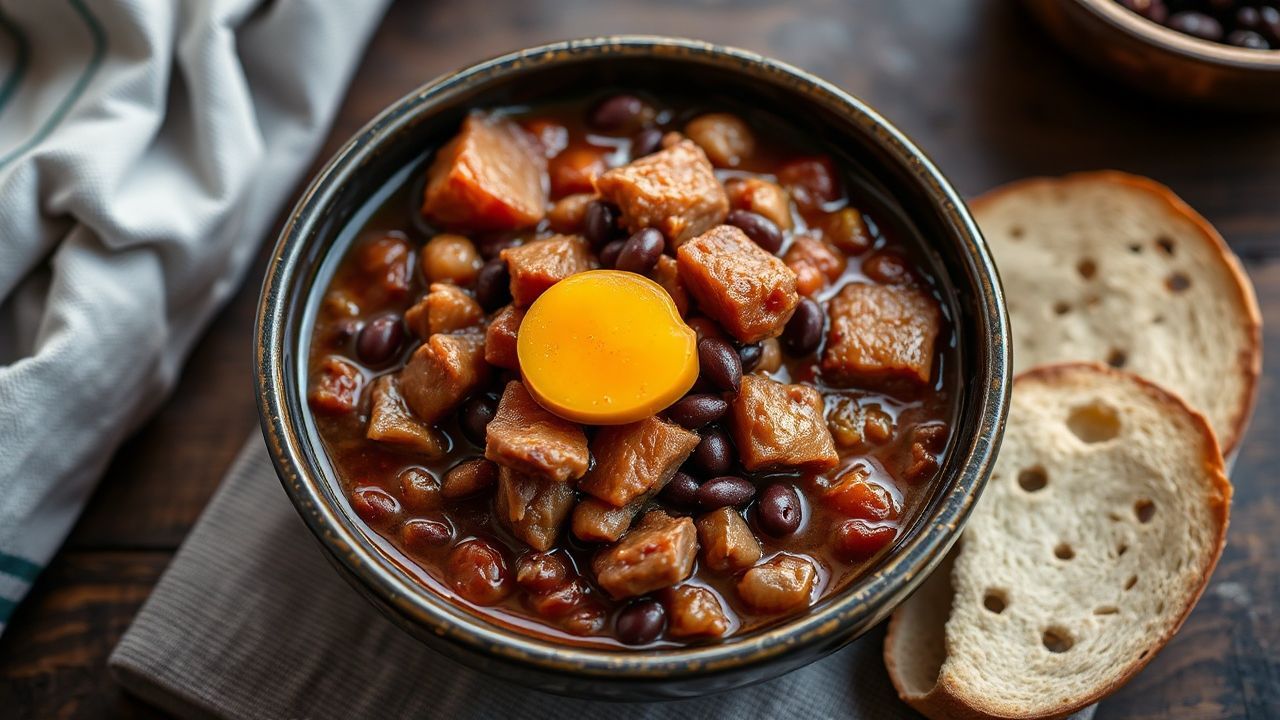
What does it truly mean for a dish to embody a nation’s spirit? For Brazil, the answer is undeniably Feijoada. More than just a culinary creation, this hearty, slow-cooked stew of black beans and various cuts of pork and beef is a profound cultural touchstone, a weekly ritual, and proof of the country’s complex history. To understand feijoada is to begin to understand Brazil itself – its resilience, its fusion of influences, and its unwavering commitment to communal joy. This is not merely a recipe; it is an invitation to participate in a vibrant tradition, to coax forth layers of flavor that speak of generations of adaptation and celebration.
- The Unfolding Narrative of Brazil’s Gastronomic Heartbeat: Feijoada
- The Anatomy of a Perfect Feijoada: Ingredients and Their Roles
- The Foundation: Black Beans
- The Heart of the Matter: Meats and Cured Provisions
- Aromatic Foundations and Enhancements
- The Essential Accompaniments
- The Art of Slow Cooking: Mastering the Feijoada Method
- Step 1: Preparing the Beans and Meats
- Step 2: The Simmering Symphony
- Step 3: Refining the Broth and Finishing Touches
- Nutritional Profile: A close look into Feijoada’s Bounty
- Elevating Your Feijoada: Expert Tips for Restaurant-Quality Results
- Serving and Savoring: The Feijoada Ritual
- Frequently Asked Questions About Feijoada
At a Glance: The Essence of Feijoada
- Cultural Significance: Feijoada transcends mere sustenance, serving as a national symbol and a cornerstone of social gatherings, particularly on Saturdays.
- Flavor Profile: A complex interplay of savory, smoky, and deeply umami notes, achieved through slow cooking and a medley of cured and fresh meats.
- Historical Roots: Evolving from humble beginnings, its lineage is intertwined with the nation’s history, reflecting influences from indigenous, European, and African culinary traditions.
- Versatility: While a classic preparation exists, regional variations and personal touches allow for a spectrum of feijoada experiences.
The genesis of feijoada is often a point of passionate debate among Brazilians. While popular lore frequently attributes its creation to enslaved Africans in colonial Brazil, using discarded pork scraps from their masters’ tables, historical research suggests a more nuanced evolution. It is more likely that feijoada, as we recognize it today, is a descendant of European stews, particularly Portuguese cozido and French cassoulet, which were adapted and enriched with local ingredients and techniques over centuries. The availability of abundant pork, both fresh and cured, and the staple black bean, a native legume, provided the perfect canvas. This fusion exemplifies Brazil’s broader cultural narrative, where disparate elements coalesce into something uniquely its own. The dish’s journey from the kitchens of the elite to the tables of every Brazilian household is a story of adaptation, resourcefulness, and the democratizing power of delicious food.
The Anatomy of a Perfect Feijoada: Ingredients and Their Roles
Crafting an authentic and deeply satisfying feijoada requires an understanding of its constituent parts. The magic lies not just in the ingredients themselves, but in their judicious selection and preparation. This is a dish that rewards patience and a commitment to quality.
The Foundation: Black Beans
The soul of feijoada resides in the black bean (feijão preto). These small, dark legumes, when properly cooked, transform into a creamy, earthy base that absorbs and amplifies the flavors of the meats.
- Quantity: 500 grams (approximately 2.5 cups or 1.1 lbs) dried black beans
- Preparation: Thoroughly rinsed and soaked overnight (at least 8-12 hours) in plenty of cold water. This crucial step not only rehydrates the beans but also helps to soften them and reduce cooking time, leading to a more tender result.
The Heart of the Matter: Meats and Cured Provisions
The richness and complexity of feijoada are derived from a carefully curated selection of pork and beef. A traditional feijoada often includes a variety of cured, smoked, and fresh meats, each contributing a distinct layer of flavor and texture. The interplay between these elements is what elevates the dish from a simple stew to a gastronomic masterpiece.
- Cured Pork:
- 200 grams (approximately 7 oz) Pork Belly, cut into 2-inch cubes
- 150 grams (approximately 5 oz) Smoked Pork Ribs, cut into individual ribs or 2-inch pieces
- 100 grams (approximately 3.5 oz) Cured Pork Loin or Salted Pork Shoulder, soaked in water for at least 12 hours, changing the water several times to remove excess salt, then cut into 1-inch cubes. This pre-treatment is vital for controlling the final saltiness.
- Smoked Sausages:
- 200 grams (approximately 7 oz) Linguiça Calabresa or other smoked pork sausage, sliced into ½-inch rounds. This type of sausage, with its characteristic smoky paprika flavor, is quintessential.
- 150 grams (approximately 5 oz) Paio, a cured, smoked pork sausage, sliced into ½-inch rounds. Similar to linguiça but often with a coarser grind and a more intense smoke flavor.
- Fresh Pork:
- 200 grams (approximately 7 oz) Fresh Pork Shoulder or Pork Loin, cut into 1.5-inch cubes. This adds a tender, unadulterated pork flavor.
- Beef (Optional but Recommended):
- 150 grams (approximately 5 oz) Beef Brisket or Chuck Roast, cut into 1.5-inch cubes. This adds depth and another dimension of savory goodness.
Aromatic Foundations and Enhancements
These elements build the aromatic backbone of the stew, providing depth and balancing the richness of the meats.
- 2 large Onions, finely chopped
- 6-8 cloves Garlic, minced
- 2 Bay Leaves
- 1 teaspoon Cumin Seeds (optional, for an earthy note)
- Freshly ground Black Pepper to taste
- Salt to taste (use with caution, as cured meats are salty)
- 1-2 tablespoons Vegetable Oil or Pork Fat (for sautéing)
- 1 Orange, halved (to be simmered with the beans, then discarded; its acidity brightens the stew)
The Essential Accompaniments
Feijoada is never served alone. These traditional accompaniments are integral to the experience, offering contrasting textures and flavors that complement the rich stew.
- White Rice: Steamed and fluffy, providing a neutral base.
- Farofa: Toasted cassava flour, often sautéed with butter, onions, and bacon. It adds a delightful crunch and absorbs the stew’s juices.
- Couva: Braised collard greens or kale, finely shredded and sautéed with garlic. Their slight bitterness cuts through the richness.
- Orange Slices: Fresh, juicy orange slices are crucial for palate cleansing and adding a burst of acidity.
- Molho de Pimenta: A simple hot sauce, often made with malagueta peppers, vinegar, and garlic.
The Art of Slow Cooking: Mastering the Feijoada Method
The process of making feijoada is a labor of love, proof of the beauty of slow cooking. Each step is designed to coax out the maximum flavor and achieve a perfect, unctuous texture.
Step 1: Preparing the Beans and Meats
1. Bean Prep: Drain the soaked black beans and rinse them thoroughly. Place them in a large, heavy-bottomed pot or Dutch oven. Cover with fresh cold water, ensuring the water level is at least 3 inches above the beans. Add the halved orange.
2. Initial Meat Treatment: In a separate pot, place the salted pork shoulder (if using) and cover with water. Bring to a boil, then drain and rinse. This parboiling step is crucial for removing excess salt. Repeat if necessary, especially for heavily salted cuts.
3. Pre-cooking Tougher Meats: Add the pork belly, smoked pork ribs, fresh pork shoulder, and beef brisket (if using) to the pot with the beans. If you did not parboil the salted pork, add it now. Ensure all meats are submerged.
Step 2: The Simmering Symphony
1. Initial Simmer: Bring the pot with beans and meats to a rolling boil over high heat. Skim off any foam or impurities that rise to the surface. Once boiling, reduce the heat to low, cover the pot tightly, and let it simmer gently.
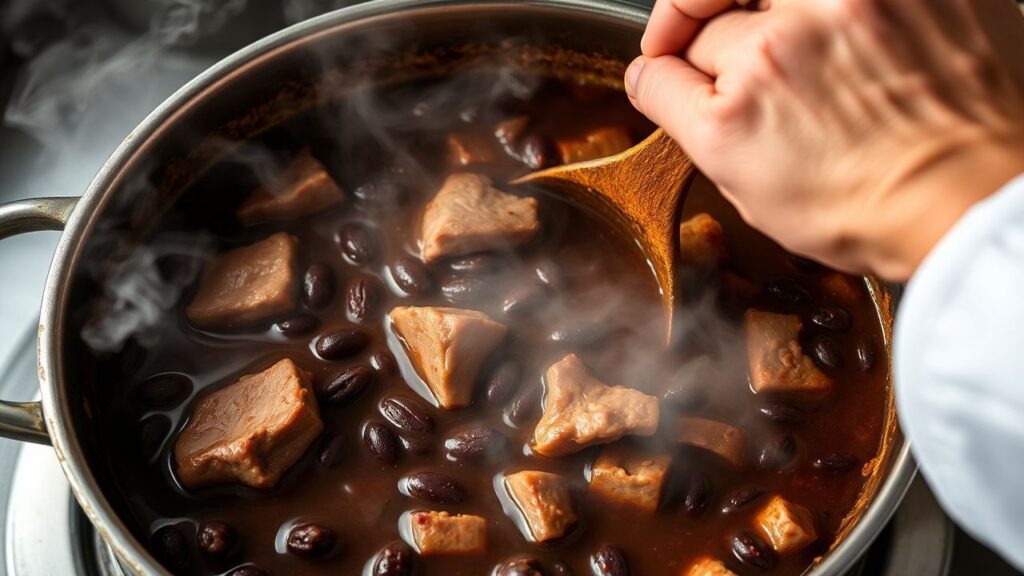
2. Long and Slow: This is where patience is rewarded. Simmer for at least 2 to 3 hours, or until the beans are tender and beginning to break down, and the meats are yielding. Stir occasionally to prevent sticking. The orange will infuse the beans with a subtle brightness.
3. Adding Sausages: After 2-3 hours, or when the beans and tougher meats are nearing tenderness, add the sliced linguiça and paio to the pot. These sausages cook more quickly and do not require the same extended simmering time.
4. Continued Simmering: Continue to simmer for another 30-60 minutes, or until the sausages are cooked through and all the meats are exceptionally tender. The broth should have thickened naturally from the breakdown of beans and meats.
Step 3: Refining the Broth and Finishing Touches
1. Remove Orange and Bay Leaves: Once the stew is cooked, carefully remove and discard the orange halves and bay leaves.
2. Aromatics: While the stew simmers, in a separate pan, heat the vegetable oil or pork fat over medium heat. Add the chopped onions and sauté until softened and translucent, about 5-7 minutes. Add the minced garlic and cumin seeds (if using) and cook for another 1-2 minutes until fragrant, being careful not to burn the garlic.
3. Incorporating Aromatics: Add the sautéed onion and garlic mixture to the feijoada pot. Stir well to combine.
4. Seasoning: Taste the feijoada and season with freshly ground black pepper. Add salt only if absolutely necessary, remembering the saltiness of the cured meats. The goal is a rich, savory broth, not an overly salty one. If the broth is too thin, you can mash some of the beans against the side of the pot to thicken it further, or simmer uncovered for a short period.
5. Resting: For optimal flavor integration, it is highly recommended to let the feijoada rest for at least 30 minutes off the heat before serving, or even better, prepare it a day in advance and gently reheat it. The flavors meld and deepen beautifully overnight.
Nutritional Profile: A close look into Feijoada’s Bounty
Feijoada is undeniably a rich and hearty dish, packed with protein and essential nutrients, but also significant in calories and sodium due to the nature of its ingredients. Understanding its nutritional breakdown is key for mindful enjoyment.
Nutritional Information (Per Serving – approximate, based on 6 servings):
- Calories: 800-1200 kcal (highly variable depending on meat cuts and portion size)
- Protein: 50-70g
- Fat: 50-80g (significant portion from saturated fats in pork)
- Carbohydrates: 40-60g (primarily from beans)
- Fiber: 10-15g (from beans)
- Sodium: 800-1500mg (highly dependent on cured meats; soaking and parboiling can reduce this)
- Iron: High (from beans and meats)
- Zinc: High (from beans and meats)
- B Vitamins: Significant amounts (from pork)
The black beans themselves are a nutritional powerhouse, offering complex carbohydrates, significant dietary fiber, and a good source of iron and other minerals. The meats provide high-quality protein, iron, zinc, and B vitamins, particularly B12. However, the high content of cured and fatty meats contributes to a substantial fat and sodium load.
For those seeking a lighter rendition, consider using leaner cuts of pork and beef, reducing the proportion of cured sausages, and increasing the bean-to-meat ratio. Thoroughly soaking and parboiling salted meats is also a critical step in managing sodium levels. The accompaniments also play a role; opting for more couva and less farofa can further balance the meal.
Elevating Your Feijoada: Expert Tips for Restaurant-Quality Results
While the fundamental recipe for feijoada is straightforward, a few nuanced techniques can elevate your creation from good to truly exceptional. These are the subtle differences that mark the hand of a seasoned cook.
- The Soak is Paramount: Never rush the bean soaking process. Overnight soaking is ideal. For older beans, soaking for up to 24 hours, with water changes, can significantly improve their texture and reduce cooking time.
- Meat Selection is Key: Don’t shy away from a variety of pork cuts. The combination of fatty belly, smoky ribs, and leaner loin creates a complex flavor profile. If you can source *orelha* (pig’s ear) or *pé* (pig’s foot), adding them during the initial simmer will contribute an incredible depth of gelatin and richness to the broth. These are often considered delicacies in authentic feijoada.
- The Power of Pork Fat: Rendering some of your own pork fat (lard) from the pork belly can add an unparalleled depth of flavor to the sautéing of onions and garlic. If not using fresh pork belly, a good quality lard can be a worthy substitute for cooking the aromatics.
- A Day in Advance: Feijoada, like many stews, benefits immensely from being made a day ahead. The flavors have ample time to meld and deepen, and the stew often achieves a more desirable consistency. Gently reheat over low heat, stirring occasionally.
- The Orange’s Subtle Magic: Don’t underestimate the impact of the orange. Its acidity, though subtle, cuts through the richness of the beans and meats, brightening the entire dish. It’s a small detail with a significant effect on the final balance.
- Toasting Spices: If using whole cumin seeds or other whole spices, toasting them lightly in a dry pan before adding them to the sautéed aromatics will release their essential oils and intensify their flavor.
Serving and Savoring: The Feijoada Ritual
The presentation and serving of feijoada are as much a part of the experience as its preparation. It is a communal dish, meant to be shared and enjoyed with gusto.
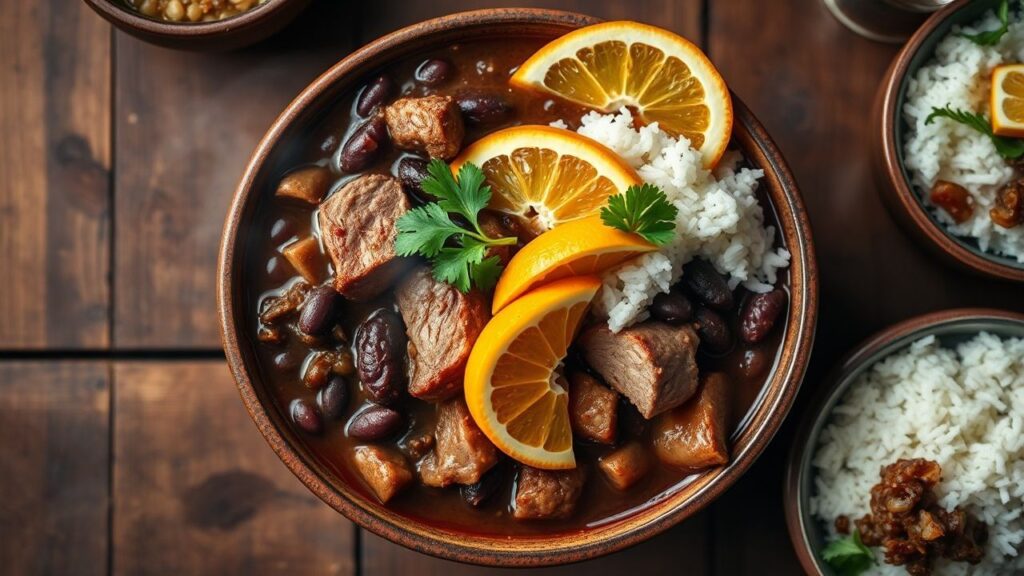
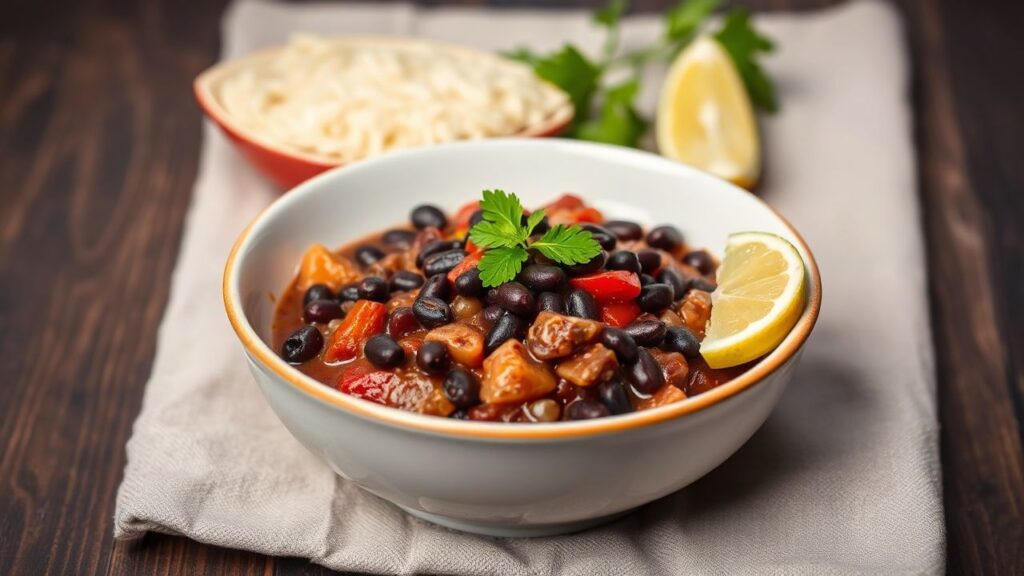
Traditionally, feijoada is served in its cooking pot, allowing diners to serve themselves. The accompaniments are presented in separate bowls, allowing each person to customize their plate. A generous ladleful of the rich bean and meat stew forms the base, followed by fluffy white rice, a scattering of crunchy farofa, and a tangle of bright green couva. The freshly sliced orange is an essential palate cleanser, and a dash of pimenta adds a welcome kick for those who enjoy it.
The act of eating feijoada is a sensory experience. The interplay of textures – the creamy beans, the tender meats, the crisp farofa, the wilted greens – combined with the symphony of savory, smoky, and slightly acidic flavors, creates a deeply satisfying meal. It’s a dish that encourages conversation, laughter, and connection, embodying the warmth and hospitality of Brazilian culture.
A Note on Regional Variations
While this recipe adheres to a classic, widely recognized feijoada, it’s important to acknowledge that variations exist across Brazil. In some regions, other beans might be used, or different cuts of meat might be favored. For instance, some coastal areas might incorporate seafood elements, though this is less common in the archetypal feijoada. Understanding these regional nuances enriches one’s appreciation for the dish’s adaptability and its deep roots within the country’s diverse culinary landscape. The essence, however, remains: a slow-cooked, deeply flavorful stew that celebrates abundance and community.
Frequently Asked Questions About Feijoada
What is the history of Feijoada?
The precise origins of feijoada are debated, but it is widely believed to have evolved from European stews, particularly Portuguese cozido, adapted in Brazil using local ingredients. While the romanticized narrative of enslaved Africans creating it from scraps persists, historical evidence suggests a more gradual development, influenced by indigenous, European, and African culinary traditions over centuries. Its transformation into a national dish reflects Brazil’s complex history and the fusion of its diverse cultural influences.
How can I make Feijoada less salty?
To reduce the saltiness of feijoada, the most effective methods involve pre-treating the cured and salted meats. This includes soaking them in cold water for at least 12-24 hours, changing the water multiple times. Parboiling these meats in fresh water for about 15-20 minutes before adding them to the stew also helps to leach out excess salt. Always taste the broth before adding any additional salt during the cooking process, as the cured meats will release salt into the stew as it simmers.
Can I make Feijoada vegetarian or vegan?
Yes, it is possible to create a delicious vegetarian or vegan version of feijoada, though it will differ significantly from the traditional preparation. The key is to replicate the depth of flavor and texture without meat. This can be achieved by using a variety of hearty vegetables such as smoked tofu, mushrooms (especially shiitake for umami), eggplant, and root vegetables. Smoked paprika, liquid smoke, and vegetable bouillon can help impart a smoky, savory character. While it won’t be an authentic feijoada, it can be a satisfying plant-based stew inspired by its principles.
See also: Feijoada