
The Unseen Foundation of Culinary Dexterity
The culinary world thrives on a delicate balance of artistry and precision, where every ingredient, no matter how humble, deserves meticulous preparation. While the glitz of a perfectly plated dish often garners the most attention, the true bedrock of exceptional cooking lies in the fundamental skills that precede it. At the forefront of these essential techniques are the claw grip and bridge hold, two hand positions that are not merely about safety, but are the silent architects of efficiency, consistency, and ultimately, culinary success. For home cooks and seasoned professionals alike, a profound understanding and consistent application of these grips can transform the often-intimidating act of knife work into a fluid, confident, and even elegant process. This guide explore the mechanics, paramount importance, and practical application of mastering the claw grip and bridge hold, underscoring that every remarkable meal begins with the unwavering mastery of safe and precise cutting.
- The Unseen Foundation of Culinary Dexterity
- The Paramount Importance of Safe Cutting Techniques
- Deconstructing the Claw Grip: A Fingerprint of Safety
- Mastering the Bridge Hold: Stability for Tricky Ingredients
- The Synergy: Combining Grips for Optimal Control
- Elevating Your Cutting Technique: Beyond the Basic Grips
- Proper Knife Selection and Maintenance
- The Cutting Board: Your Stable Foundation
- Body Mechanics and Posture
- Practical Application: Step-by-Step Mastery
- Step 1: Preparing the Onion for Stability
- Step 2: Implementing the Claw Grip for Slicing
- Step 3: Executing Vertical Cuts with the Claw
- Step 4: The Final Dice
- Benefits Beyond Injury Prevention
- Frequently Asked Questions
- Q1: What is the most critical aspect of the claw grip for beginners?
- Q2: How can I tell if I’m using the bridge hold correctly, especially with small items like garlic?
- Q3: Are there specific exercises or drills to improve my grip strength and dexterity for these techniques?
- Conclusion: The Art of Confident Cutting
Key Insights & Takeaways
- The claw grip protects fingertips by curling them inward, using knuckles as a blade guide.
- The bridge hold stabilizes smaller or round ingredients by creating a stable platform with the thumb and pinky.
- Consistent practice of these grips dramatically reduces the risk of common kitchen injuries.
- Mastering these techniques enhances cutting speed, precision, and the overall aesthetic of prepared ingredients.
The Paramount Importance of Safe Cutting Techniques
In the United States alone, it’s estimated that over 100,000 kitchen knife injuries occur annually, with a significant portion involving lacerations to the hands. This statistic is not merely a number; it represents countless hours of pain, potential long-term damage, and a disheartening interruption to a passion for cooking. The majority of these injuries stem from a lack of proper technique, particularly in how one holds both the knife and the food being cut. The claw grip and bridge hold are not simply suggestions; they are fundamental safety protocols born from years of culinary experience and a deep understanding of human anatomy and tool interaction.
By adopting the claw grip, your fingertips are curled inward, creating a protective shield. Your knuckles then become the natural resting point for the knife blade, offering a consistent and safe guide. This simple adjustment dramatically minimizes the chances of the blade slipping and coming into contact with your fingers. Similarly, the bridge hold provides an unparalleled level of stability for ingredients that might otherwise roll or shift precariously. This stability is crucial for achieving uniform cuts, which in turn leads to more even cooking and a more visually appealing dish. The synergy between these two grips ensures that your hands are actively engaged in controlling the process, rather than passively being at risk from the blade.
Deconstructing the Claw Grip: A Fingerprint of Safety
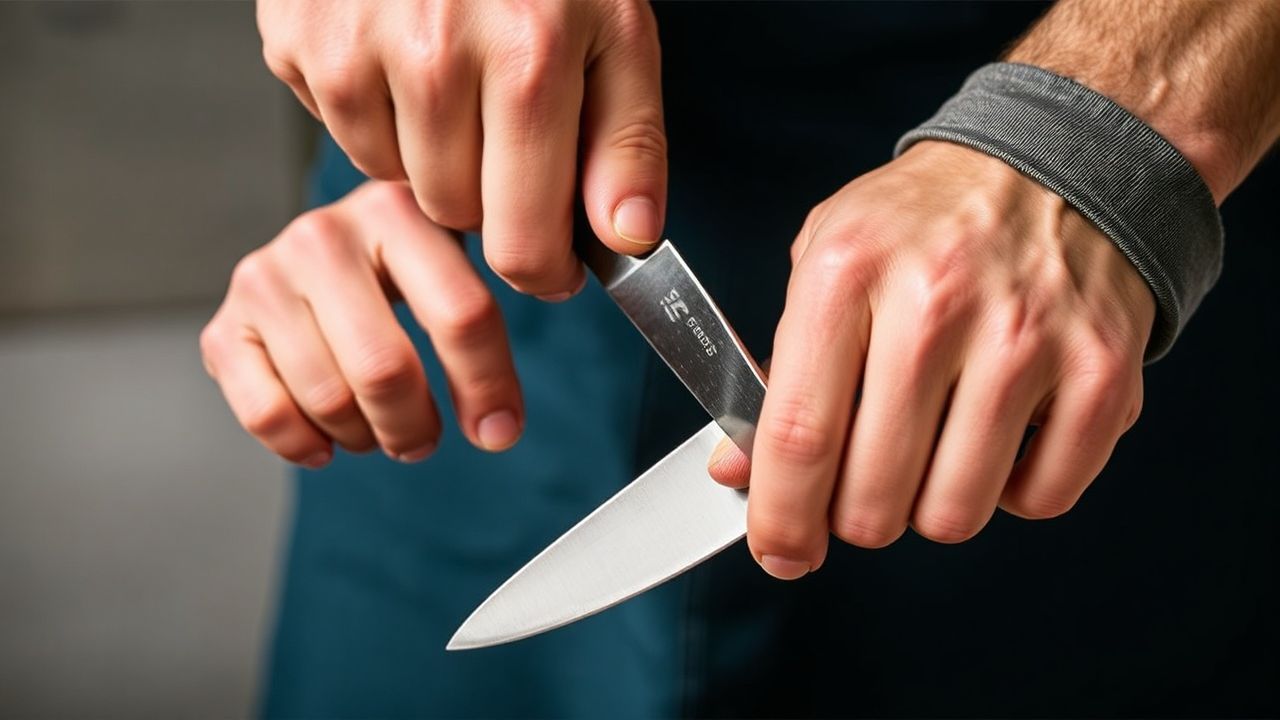
The claw grip is, perhaps, the most widely recognized and universally taught hand position for safe knife work. Its effectiveness lies in its intuitive design, which essentially turns your guiding hand into a built-in safety mechanism. To execute the claw grip properly, begin by imagining you are holding a delicate bird’s egg. You would curl your fingers inward, protecting the contents. Apply this same principle to your guiding hand: curl your fingertips inward, tucking them under. The key is to ensure that your fingernails, the most vulnerable part of your fingertips, are facing upwards and away from the blade’s path.
The prominent part of your curled fingers that will now protrude slightly are your knuckles. These knuckles serve as the primary point of contact and guidance for the knife blade. As you bring the knife to the ingredient, the flat side of the blade should rest gently against your knuckles. This creates a physical barrier and a precise guide, dictating the depth and angle of your cut. Your thumb should be tucked comfortably behind your curled fingers, adding to the overall stability and ensuring it remains out of harm’s way. This meticulous positioning ensures that the knife is always controlled by your knuckles, not by the soft flesh of your fingertips.
Mastering the Bridge Hold: Stability for Tricky Ingredients
While the claw grip is a staple for general chopping, the bridge hold becomes indispensable when dealing with smaller, round, or irregularly shaped ingredients that have a tendency to roll. Think of items like cherry tomatoes, shallots, garlic cloves, or even small potatoes. The bridge hold transforms your guiding hand into a stable platform, preventing these items from shifting during the cutting process.
To form the bridge hold, you’ll typically use your thumb and pinky finger to create the “legs” of the bridge, anchoring the ingredient to the cutting board. Your curled fingers, similar to the claw grip, will rest on top of the ingredient, providing downward pressure and stability. The knife blade then glides along the knuckles of your curled fingers, much like in the claw grip. The critical difference here is the active stabilization of the ingredient itself by your thumb and pinky. This dual action – stabilizing the food from below and guiding the knife from above – offers an exceptional level of control, making even the most challenging items manageable and safe to cut. For instance, when slicing a shallot, your thumb and pinky can cradle it on the board, preventing it from rolling, while your curled fingers guide the knife precisely along your knuckles.
The Synergy: Combining Grips for Optimal Control
The true power of these techniques is realized when they are used in conjunction, or when transitioning smoothly between them. For instance, when dicing an onion, you might start by creating a flat surface using the bridge hold to stabilize the onion as you slice it in half. Once halved, you can then revert to the claw grip to dice the onion quarters efficiently and safely. This adaptability is what distinguishes a novice from a skilled cook.
The process of learning these grips involves developing muscle memory. Initially, it might feel awkward and slower than your old habits. However, with consistent practice, these movements become second nature. The muscle memory developed through the claw grip and bridge hold translates into faster, more confident, and ultimately, more enjoyable food preparation. It’s a learned skill that pays dividends in safety, efficiency, and the sheer pleasure of cooking.
Elevating Your Cutting Technique: Beyond the Basic Grips
While mastering the claw grip and bridge hold are foundational, several other elements contribute to safe and effective cutting.
Proper Knife Selection and Maintenance
The Importance of a Sharp Blade
A common misconception is that a dull knife is safer because it cuts less effectively. In reality, a dull knife is significantly more dangerous. When a knife is dull, it requires more downward force to cut through ingredients. This increased pressure makes it far more likely for the knife to slip off the ingredient and onto your guiding hand. A sharp knife, conversely, requires less force, bites into the food with precision, and is therefore more controllable. Invest in quality knives and ensure they are regularly sharpened. Professional sharpening services are often a worthwhile investment for maintaining the optimal edge.
Choosing the Right Knife
For most kitchen tasks, a sharp chef’s knife with an 8-10 inch blade is ideal. Its weight, balance, and blade shape are designed for versatility. Ensure the handle provides a comfortable and secure grip, even when wet. Avoid overly ornate or slippery handles, as these can compromise your hold during demanding tasks.
The Cutting Board: Your Stable Foundation
A cutting board that slides around is a recipe for disaster. Always use a cutting board that is stable and provides good traction. Wooden cutting boards are excellent for their knife-edge friendliness and stability, provided they are well-maintained. High-quality plastic boards are also a good option. To enhance stability, place a damp paper towel or a non-slip mat underneath your cutting board. This simple step prevents the board from shifting, allowing you to focus entirely on your knife skills.
Body Mechanics and Posture
Safe cutting isn’t just about your hands; it’s about your entire body. Stand comfortably with your feet shoulder-width apart, facing the cutting board. Ensure your elbow is comfortably positioned at your side, not awkwardly extended. Maintain a straight wrist, which allows for better control and reduces strain. The knife should move in a controlled manner, guided by your arm and wrist, not just your fingers. This holistic approach to body mechanics prevents fatigue and improves the precision of your cuts.
Practical Application: Step-by-Step Mastery
Let’s break down the process of mastering these grips with a practical example: dicing an onion.
Step 1: Preparing the Onion for Stability
Start by trimming off the top of the onion, leaving the root end intact. This root end will act as an anchor, holding the layers together as you cut. Slice the onion in half vertically through the root. Place one half flat-side down on your cutting board. This creates a stable base, eliminating the rolling issue.
Step 2: Implementing the Claw Grip for Slicing
Now, employ the claw grip with your guiding hand. Curl your fingertips inward, with your knuckles poised to guide the blade. Place the flat side of your sharp chef’s knife against your knuckles. Begin making horizontal slices through the onion, moving from the root towards the stem end, but not cutting all the way through the root itself. These horizontal cuts create the layers for dicing.
Step 3: Executing Vertical Cuts with the Claw
Rotate the onion so it’s positioned for vertical cuts. Maintain your claw grip, ensuring your knuckles are still guiding the blade. Make vertical slices, again moving from the stem end towards the root, stopping just before you reach the root. The spacing of these vertical cuts will determine the size of your dice. Closer cuts mean a finer dice.
Step 4: The Final Dice
With the horizontal and vertical cuts made, you can now proceed with the final dicing cuts. Hold the onion with your claw grip, and make downward cuts perpendicular to your previous slices. The onion will now break apart into uniform dice, with your knuckles consistently guiding the blade and your fingertips safely tucked away. The intact root end holds everything together until the final cuts are made.
Benefits Beyond Injury Prevention
While safety is the primary driver for adopting the claw grip and bridge hold, the benefits extend far beyond merely avoiding cuts.
Enhanced Precision and Uniformity
The consistent guidance provided by the knuckles in both grips ensures that each cut is as uniform as the last. This uniformity is critical for even cooking. When vegetables are diced or sliced evenly, they cook at the same rate, preventing some pieces from becoming mushy while others remain undercooked. This leads to a better final dish, both in terms of texture and flavor development. Consider a stir-fry: uniform vegetable cuts absorb sauces more evenly and present a more appealing, professional appearance.
Increased Speed and Efficiency
As muscle memory develops and confidence grows, your cutting speed will naturally increase. What might have once been a slow, hesitant process becomes a fluid motion. The stability provided by the grips reduces the need to constantly reposition ingredients or adjust your grip, streamlining the entire prep process. This efficiency is invaluable, especially when preparing meals for a family or entertaining guests.
Culinary Confidence and Creativity
When you feel confident in your knife skills, you are more likely to experiment with different recipes and techniques. The fear of injury often holds aspiring cooks back from tackling more complex dishes. By mastering these fundamental grips, you unlock a new level of culinary confidence, allowing you to explore new culinary horizons and express your creativity more freely in the kitchen.
Frequently Asked Questions
Q1: What is the most critical aspect of the claw grip for beginners?
A1: The most critical aspect for beginners is to ensure the fingertips are curled inward sufficiently so that the knuckles, not the soft pads of the fingers, are the primary contact point for the knife blade. It’s about creating a physical barrier. Many beginners tend to keep their fingers too straight, leaving them vulnerable. Practice holding the knife with the blade resting against your knuckles without actually cutting, focusing on that secure, tucked-in finger position.
Q2: How can I tell if I’m using the bridge hold correctly, especially with small items like garlic?
A2: For small items like garlic cloves, the key indicators of a correct bridge hold are stability and control. You should feel the garlic clove firmly anchored to the cutting board by your thumb and pinky, preventing it from rolling or slipping. Your curled fingers should be providing gentle downward pressure, and the knife blade should be guided smoothly along your knuckles. If the garlic moves excessively or you feel unstable, readjust your thumb and pinky placement to create a more secure “bridge.”
Q3: Are there specific exercises or drills to improve my grip strength and dexterity for these techniques?
A3: While direct practice with ingredients is the most effective, you can supplement with exercises that improve general hand strength and dexterity. Consider squeezing a stress ball or using grip strengthener tools to build forearm and hand muscle. For dexterity, practicing finger stretches and intricate finger movements can be beneficial. However, the most crucial “drill” is consistent, mindful practice of the claw grip and bridge hold with actual food items. Focus on the feel and control rather than just speed.
Conclusion: The Art of Confident Cutting
Mastering the claw grip and bridge hold is far more than a procedural checklist; it’s an investment in your culinary journey. These techniques are the silent guardians that protect your most valuable kitchen tools – your hands – while simultaneously empowering you to achieve a level of precision and efficiency previously thought unattainable. By integrating these grips into your daily cooking, you move beyond simply preparing food to truly crafting it with intention and confidence. Remember the foundational principle: a sharp knife, a stable board, and a mindful hand are the pillars of safe and effective knife work. Embrace the practice, be patient with yourself, and witness how these fundamental skills not only elevate your cooking but also significantly enhance your safety and enjoyment in the kitchen.
RELATED TOPICS: Knife Skills, Culinary Techniques, Kitchen Safety, Food Preparation, Culinary Arts
See also: Mastering the Claw Grip & Bridge Hold: Safe Cutting Tips