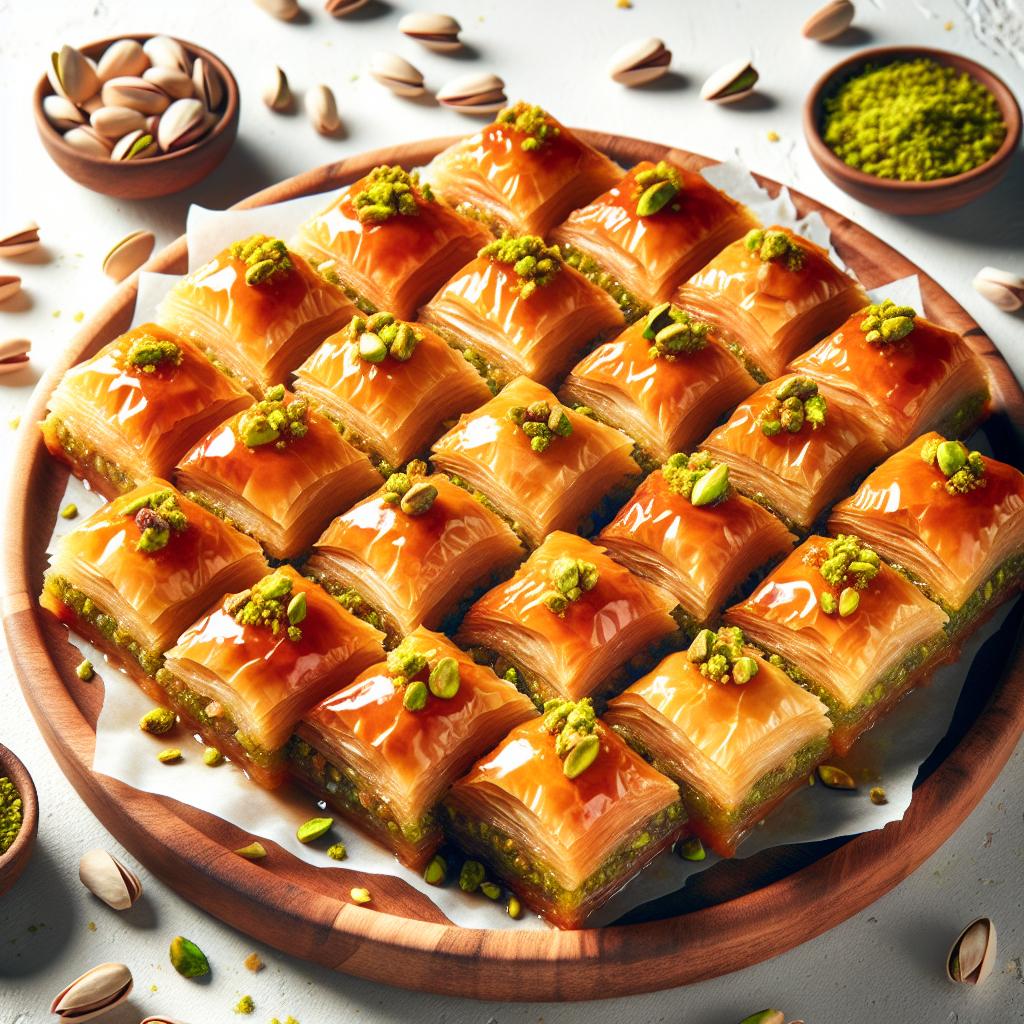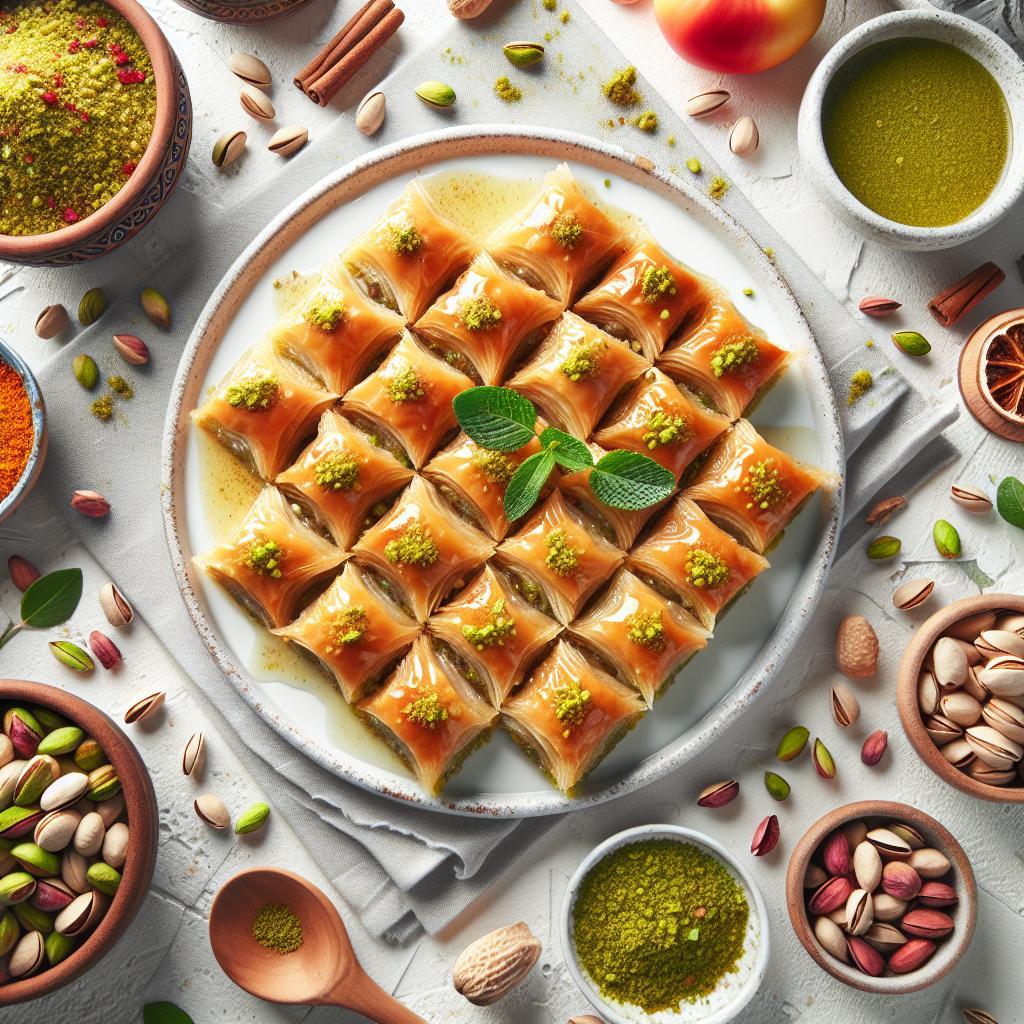

Beneath a shimmering veil of honeyed sweetness and delicate crunch lies a centuries-old treasure of culinary artistry-Turkish pistachio baklava. This iconic dessert, with its intricate layers of golden filo pastry and vibrant jewel-like pistachios, is more than just a treat; it is a rich tapestry woven from history, culture, and craftsmanship. In this article, we embark on a journey to unveil the golden layers of Turkish pistachio baklava, exploring its origins, the meticulous process behind its creation, and the sensory symphony that has captivated palates around the world. Prepare to discover how tradition and taste converge in every luscious bite of this extraordinary delicacy.
Turkish Pistachio Baklava: The Art of Crafting the Perfect Flaky Phyllo Dough
Turkish Pistachio Baklava is a timeless treasure from the heart of Anatolia, revered for its delicate layers of crisp, buttery phyllo dough and the rich, nutty essence of the freshest pistachios. Mastering this dessert unlocks a sensory journey that blends craftsmanship with heritage. My journey with this recipe began in a bustling Istanbul bazaar, where the scent of freshly baked baklava mingled with the sweet notes of syrup – an experience I’m thrilled to share with you today.
Prep and Cook Time
- Preparation: 1 hour 30 minutes (including dough resting)
- Cooking: 45 minutes
- Total Time: 2 hours 15 minutes
Yield
Serves 12 generous portions
Difficulty Level
Advanced – requires patience and attention to detail
Ingredients
- For the Phyllo Dough:
- 3 cups all-purpose flour, sifted
- 1 cup warm water (more if needed)
- 1 tsp salt
- 2 tbsp olive oil
- 1 tbsp white vinegar
- For the Filling:
- 2 cups finely chopped Turkish pistachios, unsalted
- ½ cup granulated sugar
- For the Butter Layer:
- 1½ cups unsalted butter, melted and slightly cooled
- For the Syrup:
- 2 cups granulated sugar
- 1 cup water
- ½ cup honey
- 1 tbsp lemon juice
- 1 cinnamon stick
Instructions
- Prepare the phyllo dough: In a large bowl, combine the flour and salt. Mix water, olive oil, and vinegar in a separate bowl and gradually add to the flour while kneading. Continue kneading for about 10 minutes until smooth and elastic. Cover with a damp cloth and let rest for at least 1 hour.
- Make the syrup: In a saucepan, combine sugar, water, honey, lemon juice, and cinnamon stick. Bring to a boil over medium heat, stirring until sugar dissolves. Reduce heat and simmer for 15 minutes. Remove cinnamon and let cool completely.
- Roll out the dough: Divide dough into 12 equal balls. On a floured surface, roll each ball paper-thin, about the size of a large dinner plate. Keep the sheets covered with a damp cloth to prevent drying.
- Assemble the baklava: Preheat oven to 350°F (175°C). Brush a 9×13 inch baking dish generously with melted butter. Layer 6 phyllo sheets, brushing each with butter. Spread half the pistachio mixture evenly. Layer 6 more sheets, each brushed with butter. Top with remaining pistachios and finish with a final 6 phyllo sheets, again brushed with butter.
- Cut before baking: Using a sharp knife, cut baklava into diamond shapes or squares. This allows the syrup to soak evenly post-baking.
- Bake: Place in preheated oven and bake for about 45 minutes or until the phyllo layers are golden brown and crisp.
- Soak with syrup: Remove baklava from oven and immediately pour the cooled syrup evenly over the hot pastry. Let it soak at room temperature for at least 4 hours, preferably overnight, to soak the layers completely while maintaining flakiness.
Tips for Success
- Why Turkish pistachios? Their larger size and buttery flavor enhance the authentic taste and texture dramatically.
- Phyllo dough handling: Keeping sheets covered with a damp cloth is essential to prevent cracking. Work quickly and lightly brush butter to maintain crispiness.
- Syrup temperature balance: Pouring cold syrup over hot baklava or vice versa can compromise texture-hot pastry with room temperature syrup is ideal.
- Make ahead: Baklava tastes best after resting overnight. Store at room temperature in an airtight container to preserve freshness.
- Substitutions: While pistachios define this recipe, walnuts or a blend can be used for a different but delicious variation.
Serving Suggestions and Storage Tips
Present your Turkish Pistachio Baklava on a decorative plate, garnished with crushed pistachios and a light dusting of powdered sugar or rose petals for a traditional touch. Pair with a small cup of strong Turkish coffee or fragrant black tea to balance the sweet richness. Serve at room temperature to showcase the crackling phyllo and luscious syrup.
Store leftovers in an airtight container at room temperature for up to 5 days. Avoid refrigeration as the phyllo can soften. If preferred, gently warm before serving to revive crispness.
| Nutrient | Per Serving |
|---|---|
| Calories | 350 kcal |
| Protein | 6 g |
| Carbohydrates | 45 g |
| Fat | 18 g |
For a complementary recipe that pairs wonderfully with this baklava, explore our Traditional Turkish Coffee Recipe. Additionally, learn more about the rich history of baklava at Encyclopedia Britannica.

Q&A
Q&A: Unveiling the Golden Layers of Turkish Pistachio Baklava
Q1: What makes Turkish pistachio baklava so special compared to other types of baklava?
A: Turkish pistachio baklava is a symphony of texture and flavor, where ultra-thin, flaky layers of phyllo dough cradle the rich, fragrant pistachios-often from the prized Gaziantep region. Unlike other varieties that may use walnuts or almonds, pistachios give this baklava its signature nutty sweetness and a vibrant emerald hue, elevating it to a golden masterpiece.
Q2: How is the perfect baklava dough achieved?
A: The magic lies in painstaking craftsmanship. Traditional baklava dough is stretched paper-thin by hand, sometimes over several hours, until it’s translucent yet strong enough to hold its precious filling. The even layering of these delicate sheets, brushed with pure melted butter, ensures that every bite crackles with buttery crispness and shatters in graceful layers.
Q3: Why are pistachios from Gaziantep considered the best for baklava?
A: Gaziantep pistachios bask in a unique climate and soil composition, which imbues them with an intensely rich flavor and a natural sweetness. Their distinctive aroma and slight earthiness make them the crown jewel of Turkish baklava, contributing to its unrivaled taste and texture.
Q4: What role does the syrup play in Turkish pistachio baklava?
A: The syrup is the golden kiss that binds the layers together. Made from sugar, water, sometimes a touch of lemon juice or rose water, it’s poured hot over the baked pastry, seeping through the cracks and crystallizing to a perfect balance of sweet and sticky. This ensures every bite is decadently moist without being soggy.
Q5: Can baklava be enjoyed at any time of day?
A: Absolutely! Turkish pistachio baklava is a versatile delight-whether paired with a strong cup of Turkish coffee after a meal or enjoyed as an indulgent afternoon snack, its rich, nutty sweetness is evergreen. Its golden layers invite slow savoring, making each moment a celebration.
Q6: What cultural significance does baklava hold in Turkish tradition?
A: Baklava is more than a dessert; it’s a symbol of hospitality, celebration, and craftsmanship, often served at weddings, religious festivals, and special occasions. Each flaky layer tells a story of patience, tradition, and the shared joy of sweetness that transcends generations.
Q7: How can home cooks replicate the authentic taste of Turkish pistachio baklava?
A: While the artistry takes time, home cooks can focus on quality ingredients-fresh pistachios, good butter, and a simple syrup-and patience in layering. Using pre-made phyllo dough helps, but the essence lies in gentle buttering, layering, and a slow bake to achieve that golden, crisp finish with a luscious filling.
Unveiling the golden layers of Turkish pistachio baklava reveals a dessert rich in history, flavor, and artisanal beauty-truly a jewel of the culinary world.
Concluding Remarks
As the final golden layers of Turkish pistachio baklava unfold before our senses, we are reminded that this iconic dessert is much more than a sweet indulgence-it is a storied tapestry woven with history, culture, and meticulous craftsmanship. Each flaky, buttery sheet, each sprinkle of vibrant pistachios, and every delicate drizzle of honey tells a tale of tradition passed down through generations. Exploring baklava is not just a culinary journey; it is an invitation to savor the rich heritage of Turkey, one delicious bite at a time. So, the next time you encounter this dazzling dessert, remember: beneath its shimmering surface lies a world of flavor that has captivated hearts for centuries.