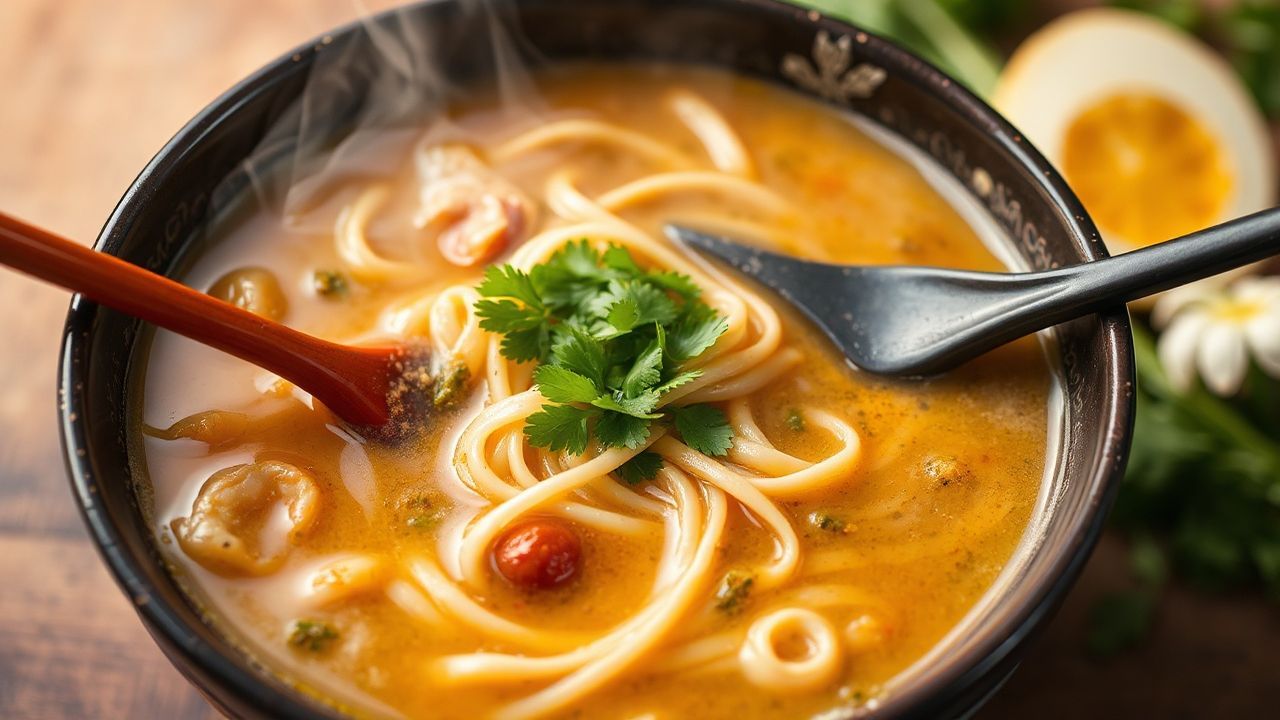

Ramen: More Than Just Noodles
When the craving for a steaming bowl of ramen strikes, what separates a truly transcendent experience from a mere sustenance? It is, unequivocally, the broth. This foundational element, the very soul of the dish, dictates the depth of flavor, the richness, and the overall character of the ramen. While many may focus on the noodles or the toppings, true ramen aficionados understand that the broth is where the magic resides. Achieving that elusive, complex, and deeply satisfying liquid gold at home is not an insurmountable culinary feat; it is an art form accessible to the dedicated home cook. This comprehensive guide will demystify the process, transforming your kitchen into a haven for authentic ramen broth creation.
- Ramen: More Than Just Noodles
- The Architect’s Blueprint: Understanding Ramen Broth Components
- 1. Tonkotsu (Pork Bone Broth)
- 2. Shoyu (Soy Sauce Based Broth)
- 3. Shio (Salt Based Broth)
- 4. Miso (Fermented Soybean Paste Broth)
- The Foundation: A Versatile Pork and Chicken Broth
- The Alchemy of Flavor: Step-by-Step Preparation
- Step 1: Blanching the Bones (Crucial for Clarity and Cleanliness)
- Step 2: The Long Simmer (Building the Foundation)
- Step 3: Infusing Umami (The Dashi Element)
- Step 4: Combining and Finishing
- The Expert’s Touch: Elevating Your Ramen Broth
- 💡 Expert Insight Expert Insight: The Role of Aromatics and Their Timing
- Degreasing for Nuance
- The Importance of Tare
- ⚠️ Pro-Caution Pro-Caution: Over-boiling and its Consequences
- Nutritional Information (Approximate per 1-cup/240ml serving, unseasoned broth)
- Beyond the Basics: Customizing Your Ramen Broth
- For a Richer Tonkotsu-Style Broth:
- For a Delicate Shio Broth:
- For a Robust Miso Broth:
- Case Study: The Ramen Master of Kyoto
- Serving Your Masterpiece
- Frequently Asked Questions
At a Glance: Key Takeaways for Ramen Broth Mastery
- Patience is Paramount: True ramen broth is a slow, deliberate process, not a quick fix.
- Ingredient Quality Matters: High-quality bones, aromatics, and umami boosters are non-negotiable.
- Layering Flavors is Key: Combining different cooking methods and ingredients builds complexity.
- Degreasing is Essential: A clean, well-skimmed broth is crucial for a refined taste.
The Architect’s Blueprint: Understanding Ramen Broth Components
Before embarking on the journey of creation, it’s vital to grasp the fundamental building blocks of exceptional ramen broth. A well-constructed broth is a symphony of elements, each playing a crucial role in the final composition. At its core lies the base, typically derived from animal bones, which provides body, collagen, and a foundational savory character. This is then enhanced by aromatics, a fragrant ensemble of vegetables and spices that lend complexity and depth. Finally, umami boosters elevate the broth from merely good to profoundly satisfying, adding that sought-after savory richness that keeps you coming back for more.
The primary categories of ramen broth can be broadly classified:
1. Tonkotsu (Pork Bone Broth)
This is arguably the most iconic and labor-intensive ramen broth. Characterized by its milky, opaque appearance and intensely rich, creamy texture, tonkotsu is achieved by vigorously boiling pork bones for extended periods, breaking down the collagen and marrow to emulsify into the liquid. The result is a profoundly decadent and nourishing broth.
2. Shoyu (Soy Sauce Based Broth)
Shoyu broth is typically lighter and clearer than tonkotsu, with a distinct umami punch derived from soy sauce. It’s often built upon a chicken or pork bone base, but the soy sauce is the defining flavor agent. The quality and type of soy sauce used significantly influence the final profile.
3. Shio (Salt Based Broth)
The simplest in concept, shio broth relies on salt as its primary seasoning. However, this simplicity belies its complexity. A superior shio broth is often built on a very clean, delicate base, allowing the subtle nuances of the dashi and other subtle flavorings to shine through. It demands pristine ingredients and precise seasoning.
4. Miso (Fermented Soybean Paste Broth)
Miso broth offers a deeply savory, earthy, and sometimes slightly sweet profile, depending on the type of miso used (white, red, or mixed). It’s often a blend of a bone broth base with miso paste whisked in towards the end of the cooking process, offering a robust and comforting flavor.
For the purpose of this comprehensive recipe, we will focus on a hybrid approach, creating a foundation that can be adapted for shoyu, shio, or even a lighter tonkotsu-style broth, demonstrating the versatility of core techniques. This allows for experimentation and caters to a wider range of palates.
The Foundation: A Versatile Pork and Chicken Broth
This recipe aims to create a robust, deeply flavored base broth that serves as an excellent canvas for various ramen styles. It balances the richness of pork with the cleaner notes of chicken, ensuring a complex yet approachable flavor profile.
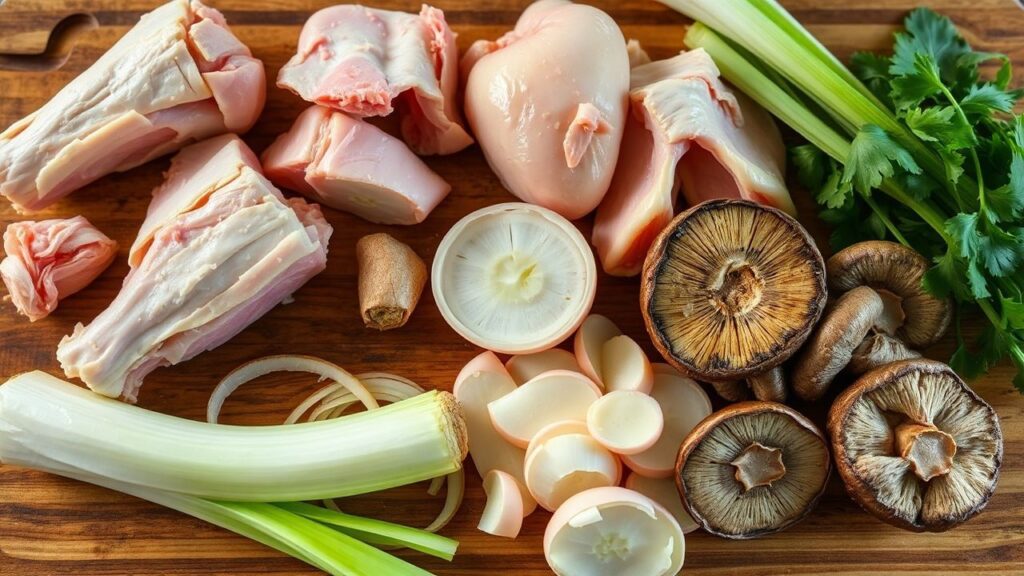
Ingredients:
- For the Bones:
- 2 kg (approx. 4.4 lbs) Pork neck bones or trotters, cracked if possible (for maximum marrow extraction)
- 1 kg (approx. 2.2 lbs) Chicken carcasses or backs (from about 2-3 chickens)
- For the Aromatics:
- 2 large Yellow Onions, quartered (skin on for color)
- 1 head Garlic, halved horizontally
- 1 knob (approx. 5 cm / 2 inches) Ginger, sliced thickly
- 1 large Leek, white and light green parts only, roughly chopped
- 2-3 Dried Shiitake Mushrooms (optional, for enhanced umami)
- For Umami & Depth:
- 1 piece (approx. 10 cm / 4 inches) Kombu (dried kelp)
- 100g (approx. 3.5 oz) Katsuobushi (dried bonito flakes) or other dried fish (e.g., niboshi – dried sardines)
- Liquid:
- Approx. 5-6 liters (approx. 5-6 quarts) Cold Water
The Alchemy of Flavor: Step-by-Step Preparation
The creation of this broth is proof of the power of time and temperature. Each step is designed to extract the maximum flavor and create a harmonious blend.
Step 1: Blanching the Bones (Crucial for Clarity and Cleanliness)
This is a non-negotiable step for achieving a clean-tasting broth. It removes impurities, blood, and residual matter that can lead to a murky, off-flavor.
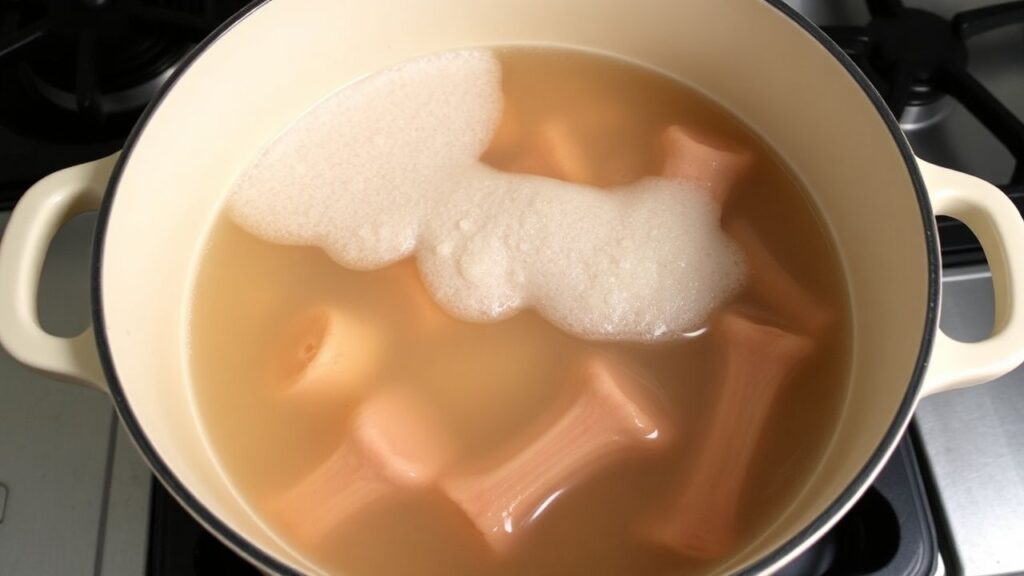
- Place the pork bones and chicken carcasses in a large stockpot. Cover them generously with cold water.
- Bring the water to a rolling boil over high heat. Let it boil vigorously for 10-15 minutes. You will see a significant amount of scum and impurities rise to the surface.
- Carefully drain the bones in a colander, discarding the cloudy water. Rinse each bone thoroughly under cold running water to remove any clinging scum. Clean the stockpot thoroughly.
Step 2: The Long Simmer (Building the Foundation)
This is where the real extraction begins. Gentle heat and patience are paramount.
- Return the blanched bones to the clean stockpot.
- Add the quartered onions, halved garlic, sliced ginger, and chopped leek.
- Add the dried shiitake mushrooms, if using.
- Cover everything with 5-6 liters of fresh cold water. Ensure the bones are fully submerged.
- Bring the pot to a gentle simmer over medium-high heat. As soon as it begins to simmer, reduce the heat to low. The surface of the liquid should barely tremble; you should see only a few small bubbles rising occasionally.
- Simmer, uncovered, for a minimum of 6-8 hours. For a richer, more developed flavor, you can extend this to 10-12 hours.
- Throughout the simmering process, actively skim off any scum or impurities that rise to the surface. This is vital for a clean broth. Use a fine-mesh sieve or a ladle for this.
Step 3: Infusing Umami (The Dashi Element)
While the bone broth simmers, we prepare a concentrated dashi to add layers of complex umami.
- About 30 minutes before the bone broth is finished simmering, prepare your dashi. In a separate pot, add 1 liter (approx. 1 quart) of water.
- Gently wipe the kombu with a damp cloth to remove any excess salt or grit, but do not wash off the white powdery substance (which contains glutamate).
- Add the kombu to the cold water and heat it gently. Remove the kombu just before the water comes to a boil (around 80-90°C or 175-195°F). Boiling kombu can make the broth bitter.
- Bring the kombu water to a boil. Turn off the heat and immediately add the katsuobushi (or other dried fish). Let it steep for 5-10 minutes.
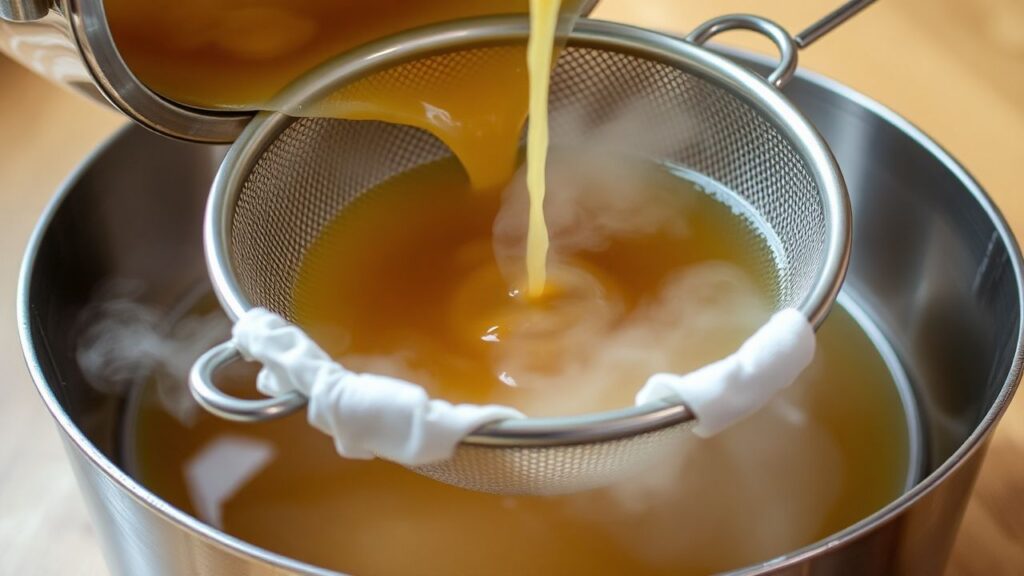
- Strain the dashi through a fine-mesh sieve lined with cheesecloth or a coffee filter. Discard the solids. This concentrated dashi will be added to the bone broth.
Step 4: Combining and Finishing
The final stages bring all the elements together.
- Once the bone broth has simmered for its designated time, carefully strain it through a fine-mesh sieve lined with cheesecloth into a clean pot or heat-proof container. Discard the solids.
- Pour the strained dashi into the hot bone broth. Stir gently to combine.
- At this point, you can taste and season with salt, if desired. However, it’s often best to leave the broth unsalted, allowing diners to adjust seasoning with tare (ramen seasoning sauce) or salt at the table.
- Allow the broth to cool slightly. For a clearer broth, you can refrigerate it overnight. The fat will solidify on top, making it easy to skim off. For a richer, more emulsified broth (like tonkotsu), you might want to leave some of the fat.
The Expert’s Touch: Elevating Your Ramen Broth
While the base recipe yields a superb broth, seasoned chefs employ nuanced techniques to achieve unparalleled depth and character.
💡 Expert Insight
Expert Insight: The Role of Aromatics and Their Timing
The onions, garlic, and ginger contribute foundational aromatics. However, their *timing* can influence the broth’s final profile. For a cleaner, brighter flavor, some chefs add aromatics only in the latter half of the simmer. Conversely, for a more pungent, deeply infused broth, they are added at the beginning. Experimentation here is key to finding your preferred balance. For instance, a ramen shop in Fukuoka, renowned for its tonkotsu, might simmer its bones for 18-24 hours, but they will carefully manage the addition of aromatics to prevent them from overpowering the delicate pork essence.
Degreasing for Nuance
While some broths, like tonkotsu, benefit from some emulsified fat, a well-skimmed broth is crucial for shoyu and shio styles. Refrigerating the broth overnight allows the fat to solidify, making it incredibly easy to remove. However, a more advanced technique involves using a ladle to carefully skim off excess fat while the broth is still hot. This requires a steady hand and a keen eye, but it allows you to control the fat content precisely, preserving some of the desirable mouthfeel without overwhelming the delicate flavors.
The Importance of Tare
It’s crucial to understand that the broth itself is rarely served unseasoned. The final flavor profile of a ramen bowl is achieved by combining the broth with a *tare* – a concentrated seasoning sauce. This tare, which can be soy sauce-based (shoyu tare), salt-based (shio tare), or miso-based (miso tare), is added to the individual serving bowl before the broth is ladled in. This allows each diner to customize their ramen’s salinity and umami intensity. A well-made tare is as critical to the final ramen as the broth itself. For example, a classic shoyu tare might involve a blend of different soy sauces, mirin, sake, and dried ingredients like shiitake mushrooms and kombu, simmered and reduced to a potent essence.
⚠️ Pro-Caution
Pro-Caution: Over-boiling and its Consequences
Vigorous boiling, beyond the initial blanching phase, is the enemy of a clear and delicate broth. When bone broth is boiled too hard, it can break down proteins and fats excessively, leading to a cloudy, greasy, and sometimes bitter liquid. This is particularly detrimental for shio and shoyu styles. Aim for a gentle, barely perceptible simmer to allow flavors to meld without breaking the emulsion. A common mistake for beginners is to think more boiling means more flavor; in reality, controlled heat is the key to extracting nuanced tastes.
Nutritional Information (Approximate per 1-cup/240ml serving, unseasoned broth)
Keep in mind that nutritional values can vary significantly based on the exact ingredients used and the duration of the simmer. This is a general estimate for the base broth.
- Calories: 80-150 kcal
- Protein: 10-20g
- Fat: 2-8g (highly variable based on fat skimmed)
- Carbohydrates: 1-3g
- Sodium: <50mg (before salting/tare)
- Cholesterol: 30-60mg
This broth is a good source of collagen, which is beneficial for skin, hair, and joint health, and minerals like phosphorus and calcium derived from the bones.
Beyond the Basics: Customizing Your Ramen Broth
The beauty of this versatile base is its adaptability. Once you’ve mastered the foundational technique, you can explore numerous variations.
For a Richer Tonkotsu-Style Broth:
Extend the simmering time of pork bones to 12-18 hours, or even longer, at a more vigorous (but still controlled) simmer. You may also want to increase the ratio of pork bones to chicken. The goal is to break down the collagen and marrow to create that characteristic milky emulsion. This prolonged cooking transforms the broth, infusing it with a profound depth of flavor and a luxurious mouthfeel. For an even deeper flavor, some chefs will roast the pork bones before boiling, adding another layer of caramelized complexity.
For a Delicate Shio Broth:
Focus on a cleaner base, perhaps using only chicken carcasses and a smaller proportion of pork bones, or even just using a very clean chicken broth as the starting point. The dashi component becomes even more critical here, and the final seasoning will rely heavily on high-quality sea salt or a specialized ramen salt blend. The goal is purity and clarity, allowing the subtle umami from the kombu and bonito to shine. A meticulously prepared dashi is paramount for a shio ramen that sings.
For a Robust Miso Broth:
Whisk in your chosen miso paste (red miso for a bolder flavor, white miso for a milder sweetness) into the hot, strained base broth just before serving. You might also add a touch of sake or mirin to the broth to complement the miso’s fermented notes. The miso should be added gently, not boiled, to preserve its delicate aroma and flavor.
Case Study: The Ramen Master of Kyoto
Consider the renowned ramen master, Kazuo Yamamura, whose Kyoto-style ramen is celebrated for its delicate yet profoundly flavorful shoyu broth. Yamamura-san reportedly uses a meticulous blend of chicken bones, pork trotters, and a small amount of dried fish, simmering them for precisely 10 hours. Crucially, he emphasizes the purity of the water used and the precise temperature control, ensuring no scum fouls the liquid. His tare is a closely guarded secret, a complex blend of aged soy sauces and various fermented ingredients that transforms the clean broth into a symphony of savory notes. This illustrates how mastering fundamental techniques, combined with a deep understanding of ingredient synergy and precise execution, leads to exceptional results.
Serving Your Masterpiece
Once your broth is ready, it’s time to assemble your ramen. Ladle your chosen tare into the bottom of a warmed ramen bowl. Add a ladleful (or two) of your hot, freshly prepared broth. Add your cooked ramen noodles, arranging them artfully. Top with your favorite ramen accouterments: chashu (braised pork belly), ajitsuke tamago (marinated soft-boiled egg), nori (seaweed), menma (fermented bamboo shoots), scallions, and a drizzle of chili oil or sesame oil for an extra kick. The first slurp of a perfectly crafted homemade ramen broth is an experience that transcends mere eating; it’s a moment of pure culinary bliss.
Frequently Asked Questions
How long can I store homemade ramen broth?
Properly cooled and stored, homemade ramen broth can be kept in an airtight container in the refrigerator for 3-4 days. For longer storage, it freezes exceptionally well. Divide the cooled broth into smaller portions (e.g., individual serving sizes) and freeze in freezer-safe bags or containers. Frozen broth will retain its quality for up to 3-4 months. It’s always best to label your containers with the date of preparation.
Can I make ramen broth without pork bones?
Absolutely. While pork bones, particularly trotters and neck bones, are traditional for their richness and collagen, you can create excellent ramen broths without them. A chicken-based broth is a popular and delicious alternative. You can use whole chickens, chicken carcasses, backs, and wings, simmered with aromatics like onions, ginger, and garlic. For a vegetarian ramen broth, focus on a rich vegetable stock, enhanced with dried mushrooms (shiitake and porcini are excellent), kombu, and possibly dashi made from dried sea vegetables. The key is to build layers of flavor through long simmering and the use of umami-rich ingredients. You can find fantastic vegetarian recipes on sites like dinnercook.com or whimrecipes.com.
Why is my ramen broth cloudy and greasy?
Cloudiness and excessive greasiness are typically the result of over-boiling the broth and not adequately skimming impurities. When the broth is agitated by a rolling boil, fats and proteins can emulsify into the liquid, creating a milky appearance and a layer of oil. To avoid this, ensure your broth simmers very gently, with only slight movement on the surface. Skim off any foam or scum that rises to the top diligently throughout the cooking process. For a clearer final product, you can also chill the broth and then carefully remove the solidified fat layer. Sometimes, the type of bones used can also contribute to cloudiness; some cuts are inherently fattier or contain more marrow.
What is “dashi” and why is it used in ramen broth?
Dashi is a fundamental Japanese stock that forms the base of many Japanese soups and stews. It is typically made from kombu (dried kelp) and katsuobushi (dried bonito flakes), though variations exist. Dashi imparts a delicate, savory umami flavor, which is essential for the complex taste profile of ramen. While bone broths provide richness and body, dashi adds a refined layer of savory depth that complements, rather than competes with, the other flavors. It’s a crucial element for achieving that characteristic Japanese flavor balance. Many online resources, such as reciperevelation.com, offer detailed guides on making various types of dashi.
See also: Ramen