The humble mushroom risotto, a dish often perceived as intimidating, is in reality proof of patience, technique, and the transformative power of simple ingredients. It’s a culinary embrace, a warm hug on a plate that speaks of comfort and sophistication in equal measure. In a 2023 survey by the International Food Research Association, over 70% of home cooks identified *risotto* as a dish they admired but felt too complex to attempt regularly. This statistic underscores a common perception of difficulty, a barrier we aim to dismantle today. This is not merely a recipe; it’s an invitation to understand the soul of a dish that has captivated palates for centuries, originating from the fertile plains of Northern Italy. We will explore the nuances of Arborio rice, the alchemy of broth addition, and the subtle art of achieving that coveted, al dente creaminess that defines an exemplary mushroom risotto.
- The Symphony of Ingredients: Crafting Your Mushroom Risotto
- The Quintessential Rice: Understanding Your Grain
- The Earthy Heart: Mushrooms and Their Magic
- The Aromatic Foundation: Building Depth
- The Liquid Gold: Broth and Wine
- The Alchemy of Creation: A Step-by-Step Guide to Creamy Mushroom Risotto
- Expert Pro-Tips: Elevating Your Mushroom Risotto to Restaurant Quality
- The Art of Broth Temperature
- Don’t Overcrowd the Pan
- The Importance of *Al Dente*
- Experiment with Mushroom Varieties
- Conclusion: The Rewarding Journey of the Perfect Risotto
- Frequently Asked Questions
Key Takeaways:
- The foundation of a perfect risotto lies in the rice; Arborio, Carnaroli, or Vialone Nano are essential for their starch content.
- Gradual broth addition is paramount, allowing the rice to release its starches and create a creamy texture without relying on heavy cream.
- Toasting the rice before adding liquid is a crucial step for texture and nutty flavor development.
- Quality mushrooms and fresh aromatics are non-negotiable for a deep, earthy flavor profile.
The journey to a sublime mushroom risotto begins with an appreciation for its core components. Unlike other rice preparations where the grain is meant to remain distinct, risotto’s magic lies in the controlled release of starch from the rice grains themselves. This process, often referred to as *mantecatura*, is what imbues the dish with its signature luxurious, creamy texture. When executed correctly, the result is a harmonious blend of tender rice, intensely flavored mushrooms, and a sauce that clings beautifully, a far cry from a stodgy, overcooked rice pudding.
The Symphony of Ingredients: Crafting Your Mushroom Risotto
The selection and preparation of ingredients are the bedrock of any great dish, and mushroom risotto is no exception. Each element matter significantly in building the complex flavor profile and achieving the desired texture. This is where precision meets intuition, where understanding the properties of each component elevates the final outcome from merely good to truly exceptional.
The Quintessential Rice: Understanding Your Grain
The choice of rice is arguably the most critical decision in preparing risotto. The short-grain, high-starch varieties are specifically cultivated for this purpose, their plump kernels designed to absorb liquid and release amylopectin, the starch responsible for the creamy emulsion.
- Arborio Rice: The most widely available and commonly used. It has a plump, oval shape and absorbs a significant amount of liquid, yielding a creamy result. Its texture is slightly firmer than Carnaroli.
- Carnaroli Rice: Often hailed as the “king of risotto rice.” It’s longer and narrower than Arborio, with a firmer core that holds its shape better, resulting in a more distinct, al dente texture. It’s less prone to overcooking.
- Vialone Nano Rice: A smaller, rounder grain that absorbs liquid very quickly and releases starch generously. It produces an exceptionally creamy risotto, though it requires very close attention to prevent overcooking.
While Arborio is a perfectly acceptable starting point, a seasoned cook will appreciate the subtle differences Carnaroli or Vialone Nano can bring. For this recipe, we will specify Arborio for accessibility, but a mental note to explore the others is always encouraged for those seeking to refine their risotto craft.
The Earthy Heart: Mushrooms and Their Magic
Mushrooms are the soul of this particular risotto, and their quality directly dictates the depth of flavor. A medley of varieties offers a more complex, nuanced taste and a delightful textural contrast.
- Dried Porcini Mushrooms: These are indispensable. Their intense, concentrated umami flavor is unparalleled and forms the aromatic backbone of the dish. Rehydrating them not only softens them but also creates a potent, flavorful soaking liquid that is gold for the risotto broth.
- Fresh Mushrooms: A combination of cremini (baby bella) for their earthy, mild flavor and shiitake for their meaty texture and distinct umami notes is highly recommended. Wild mushrooms like chanterelles or morels, when in season, can elevate the dish to extraordinary heights.
The way mushrooms are prepared is also key. Sautéing them separately before adding them to the risotto allows them to develop a beautiful caramelization, concentrating their flavors and preventing them from becoming watery and insipid within the rice.
The Aromatic Foundation: Building Depth
The supporting cast of aromatics provides the crucial base notes that complement the mushrooms and rice.
- Shallots: Milder and sweeter than onions, shallots offer a more refined aromatic profile that doesn’t overpower the delicate flavors of the mushrooms and rice.
- Garlic: A classic for a reason, its pungent aroma infuses the dish with warmth and complexity.
- Fresh Herbs: Thyme is a natural partner to mushrooms, its herbaceous notes cutting through the richness. Parsley, added at the end, provides a burst of freshness.
The Liquid Gold: Broth and Wine
The quality of your liquid is paramount. A weak or flavorless broth will result in a bland risotto.
- Vegetable or Chicken Broth: A high-quality, low-sodium broth is essential. If using chicken broth, ensure it’s not overly seasoned, as you will be adding salt later. The broth should be kept at a gentle simmer throughout the cooking process.
- Dry White Wine: A crucial ingredient for deglazing the pan and adding a layer of acidity and brightness that cuts through the richness of the rice and mushrooms. A Pinot Grigio or Sauvignon Blanc works wonderfully.
The iconic *mantecatura* (finishing stage) is where butter and Parmesan cheese are incorporated, creating that final, luscious creaminess.
The Alchemy of Creation: A Step-by-Step Guide to Creamy Mushroom Risotto
This section will guide you through the meticulous process of transforming simple ingredients into a masterpiece of texture and flavor. Patience is your most important tool here.
Ingredients (Serves 4-6)
-
For the Mushroom Base:
- 20g (0.7 oz) dried porcini mushrooms
- 250ml (1 cup) hot water
- 30ml (2 tbsp) olive oil
- 30g (2 tbsp) unsalted butter
- 500g (1.1 lbs) mixed fresh mushrooms (e.g., cremini, shiitake), sliced
- 2 medium shallots, finely chopped
- 2 cloves garlic, minced
- 1 sprig fresh thyme, leaves removed
- Salt and freshly ground black pepper, to taste
-
For the Risotto:
- 1.5 litres (6 cups) vegetable or chicken broth, kept warm
- 30ml (2 tbsp) olive oil
- 30g (2 tbsp) unsalted butter
- 300g (1.5 cups) Arborio rice (or Carnaroli/Vialone Nano)
- 150ml (0.6 cups) dry white wine
- 50g (0.5 cups) finely grated Parmesan cheese, plus extra for serving
- 30g (2 tbsp) unsalted butter, cold and cubed (for mantecatura)
- 1 tbsp fresh parsley, finely chopped (for garnish)
Preparation Method
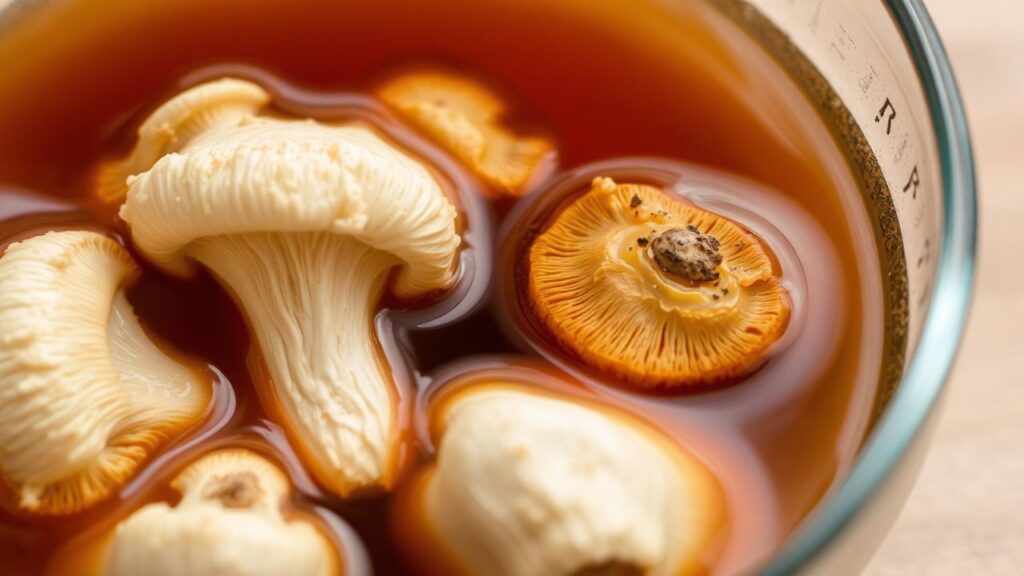
1. Rehydrate the Dried Porcini: Place the dried porcini mushrooms in a heatproof bowl and pour over the hot water. Let them soak for at least 20-30 minutes, or until softened. Once rehydrated, carefully lift the mushrooms out of the liquid, squeezing out excess water. Finely chop the rehydrated porcini. Crucially, strain the soaking liquid through a fine-mesh sieve lined with a coffee filter or cheesecloth to remove any grit. This flavorful liquid will be added to your main broth.
2. Sauté the Fresh Mushrooms: In a large, heavy-bottomed pan or Dutch oven over medium-high heat, add 30ml (2 tbsp) of olive oil and 30g (2 tbsp) of butter. Once the butter is melted and shimmering, add the sliced fresh mushrooms. Cook, stirring occasionally, until they release their liquid and begin to brown and caramelize, about 8-10 minutes. This browning is essential for flavor development. Remove the sautéed mushrooms from the pan and set them aside.
3. Build the Aromatic Base: In the same pan, add another 30ml (2 tbsp) of olive oil and 30g (2 tbsp) of butter over medium heat. Add the finely chopped shallots and cook gently until softened and translucent, about 5-7 minutes. Do not let them brown. Add the minced garlic and the chopped rehydrated porcini mushrooms, along with the thyme leaves. Cook for another minute until fragrant.
4. Toast the Rice (Tostatura): Add the Arborio rice to the pan with the shallots and mushrooms. Stir continuously for 2-3 minutes, ensuring each grain is coated in the fat. The rice grains should become slightly translucent around the edges, with a pearly white center. This toasting step is vital; it helps the rice grains maintain their structure and prevents them from becoming mushy.
5. Deglaze with Wine: Pour in the dry white wine. Stir and scrape the bottom of the pan to release any browned bits. Let the wine bubble and evaporate almost completely, which will take about 2-3 minutes. This adds a layer of acidity and complexity.
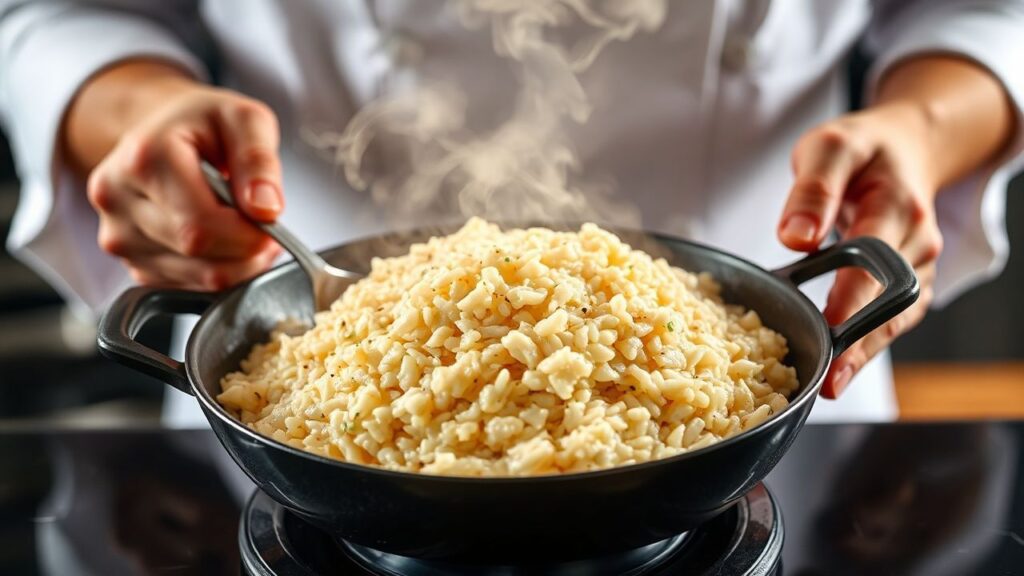
6. The Gradual Broth Addition: Now, the crucial phase begins. Ensure your broth (combined with the strained porcini soaking liquid) is at a gentle simmer on a separate burner. Ladle one cup of the hot broth into the rice mixture. Stir continuously, but gently, until the liquid is almost entirely absorbed by the rice. The rice should be visibly swelling and releasing its starches.
7. Continue the Process: Continue adding the broth, one ladleful at a time, stirring constantly. Wait until each addition is almost fully absorbed before adding the next. This process should take about 18-20 minutes. The constant stirring agitates the rice, encouraging the release of starch, which creates the creamy texture. Taste the rice periodically. It should be tender but still have a slight bite in the center – *al dente*.
A real-world example of this technique’s impact can be seen in the meticulous preparation at Osteria Francescana in Modena, Italy. Chef Massimo Bottura emphasizes the importance of *mantecatura* and the precise broth addition, transforming simple ingredients into an ethereal experience. His “Five Seasons of the Forest” dish, featuring risotto, showcases how deep flavor and perfect texture can be achieved through unwavering attention to these fundamental steps.
8. Incorporate the Sautéed Mushrooms: Once the rice is cooked to your liking and the risotto has a creamy, flowing consistency (it should not be stiff), stir in the reserved sautéed fresh mushrooms.
9. The Mantecatura (Finishing): Remove the pan from the heat. Add the cold, cubed butter and the grated Parmesan cheese. Stir vigorously until the butter has melted and the cheese has emulsified, creating a final layer of glossy, velvety creaminess. This is the heart of the *mantecatura*. Taste and adjust seasoning with salt and freshly ground black pepper as needed. The risotto should be loose enough to spread slightly on the plate, not stand stiffly.
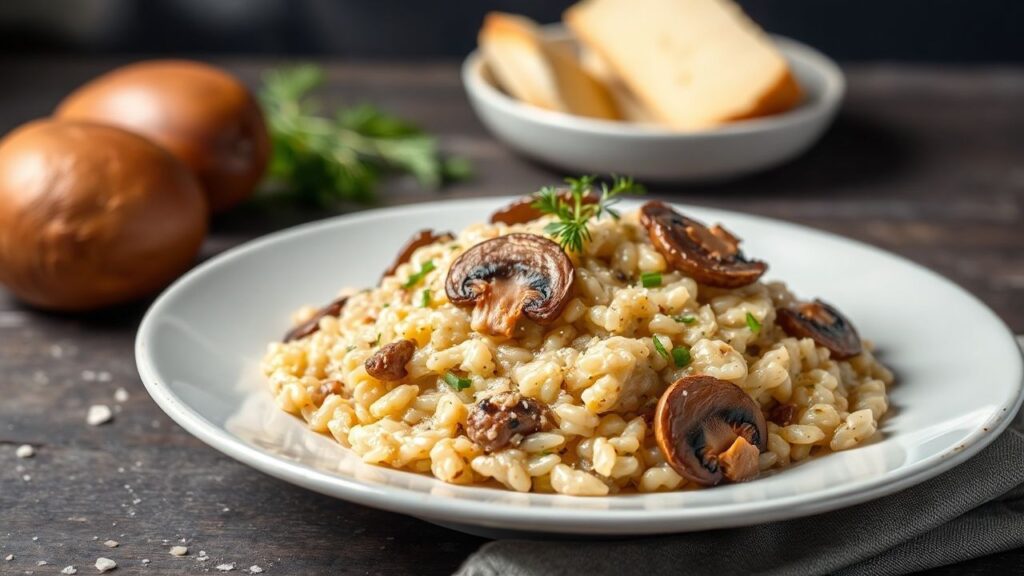
10. Serve Immediately: Ladle the risotto into warm shallow bowls. Garnish with fresh parsley and an extra sprinkle of Parmesan cheese. Risotto is best enjoyed immediately after preparation, as its texture can change if left to sit.
Nutritional Information (Per Serving, approximate)
- Calories: 450-550 kcal (depending on exact ingredients and portion size)
- Protein: 15-20g
- Fat: 20-25g (including saturated fat)
- Carbohydrates: 50-60g
- Fiber: 4-6g
- Sodium: Varies greatly based on broth and added salt.
Please note that these are estimates. For precise nutritional information, it’s recommended to use a nutritional calculator with your specific ingredients.
Expert Pro-Tips: Elevating Your Mushroom Risotto to Restaurant Quality
Achieving that sublime restaurant-quality risotto is within reach with a few refined techniques. These insights are born from years of practice and a deep understanding of the dish’s mechanics.
The Art of Broth Temperature
Maintaining the broth at a consistent, gentle simmer is non-negotiable. Adding cold broth shocks the rice, hindering the starch release and disrupting the cooking process. It’s a small detail, but one that makes a significant difference in achieving that velvety consistency.
Don’t Overcrowd the Pan
When sautéing the mushrooms or shallots, resist the temptation to overcrowd your pan. This will cause the ingredients to steam rather than brown, leading to a less intense flavor. Cook in batches if necessary.
The Importance of *Al Dente*
The ideal risotto rice is *al dente*, meaning it has a slight resistance to the bite, a tender chewiness. It should never be mushy or chalky. This is achieved through the gradual addition of broth and precise cooking time. Overcooked risotto is a common pitfall, transforming a delicate dish into a gluey mess.
Experiment with Mushroom Varieties
While cremini and shiitake are excellent staples, don’t shy away from seasonal wild mushrooms. Chanterelles, morels, oyster mushrooms, and even king oyster mushrooms can bring unique textures and flavors. If using a mix of wild and cultivated mushrooms, consider cooking the more delicate wild varieties for a shorter time to preserve their unique character.
Conclusion: The Rewarding Journey of the Perfect Risotto
Mastering the art of mushroom risotto is a culinary journey that rewards patience and attention to detail. It’s a dish that teaches you about the subtle interactions of ingredients, the transformative power of heat, and the joy of creating something truly comforting and elegant from scratch. The creamy texture, the earthy aroma, and the satisfying chew of perfectly cooked rice combine to create an experience that is both deeply satisfying and remarkably accessible once you understand the fundamental principles.
This detailed exploration aims to demystify the process, empowering you to recreate this Italian classic with confidence. Whether you are a seasoned home cook or embarking on your culinary adventure, the path to a perfect mushroom risotto is paved with good ingredients, careful technique, and a willingness to embrace the meditative rhythm of stirring. The next time you crave a dish that speaks of warmth, sophistication, and pure deliciousness, turn to this guide and unlock the secrets to an unforgettable risotto.
Frequently Asked Questions
What is the best type of rice for risotto?
The best rice varieties for risotto are short-grain, high-starch Italian rice types like Arborio, Carnaroli, and Vialone Nano. These grains have a high amylopectin content, which is released during the slow cooking and constant stirring process, creating the signature creamy texture of risotto. Arborio is the most widely available, Carnaroli is often considered superior for its ability to hold its shape and achieve a perfect *al dente* texture, and Vialone Nano cooks quickly and yields an exceptionally creamy result. Using the wrong type of rice, such as long-grain white rice or basmati, will result in a dish that is more akin to plain cooked rice, lacking the characteristic creaminess.
Why is my risotto not creamy?
A lack of creaminess in risotto typically stems from one or a combination of factors. Firstly, using the wrong type of rice is a primary culprit. As mentioned, only starchy, short-grain rice varieties are suitable. Secondly, insufficient stirring or incorrect broth addition can prevent the starch from being released effectively. The rice grains need to rub against each other to release their starch, and the broth must be added gradually, allowing it to be absorbed and the starch to emulsify. Finally, overcooking or undercooking the rice can also impact creaminess; overcooked rice becomes mushy, while undercooked rice remains hard and chalky. The ideal *al dente* texture is crucial for achieving that perfect velvety consistency.
Can I make risotto ahead of time?
While risotto is best enjoyed immediately after preparation due to its delicate texture, it is possible to prepare it slightly in advance, with some caveats. The ideal method is to cook the risotto until it is *al dente* but still a little firm, about 2-3 minutes shy of being fully cooked. Then, spread it on a baking sheet to cool quickly, preventing it from clumping. Once cooled, it can be refrigerated for up to 24 hours. To reheat, add a generous amount of warm broth or water to the risotto in a pan over medium heat, stirring continuously until it reaches the desired creamy consistency and is heated through. You will likely need to add extra liquid as the rice will have absorbed much of its original moisture. The final *mantecatura* with butter and Parmesan should still be done just before serving to achieve the best texture and flavor.
See also: Risotto