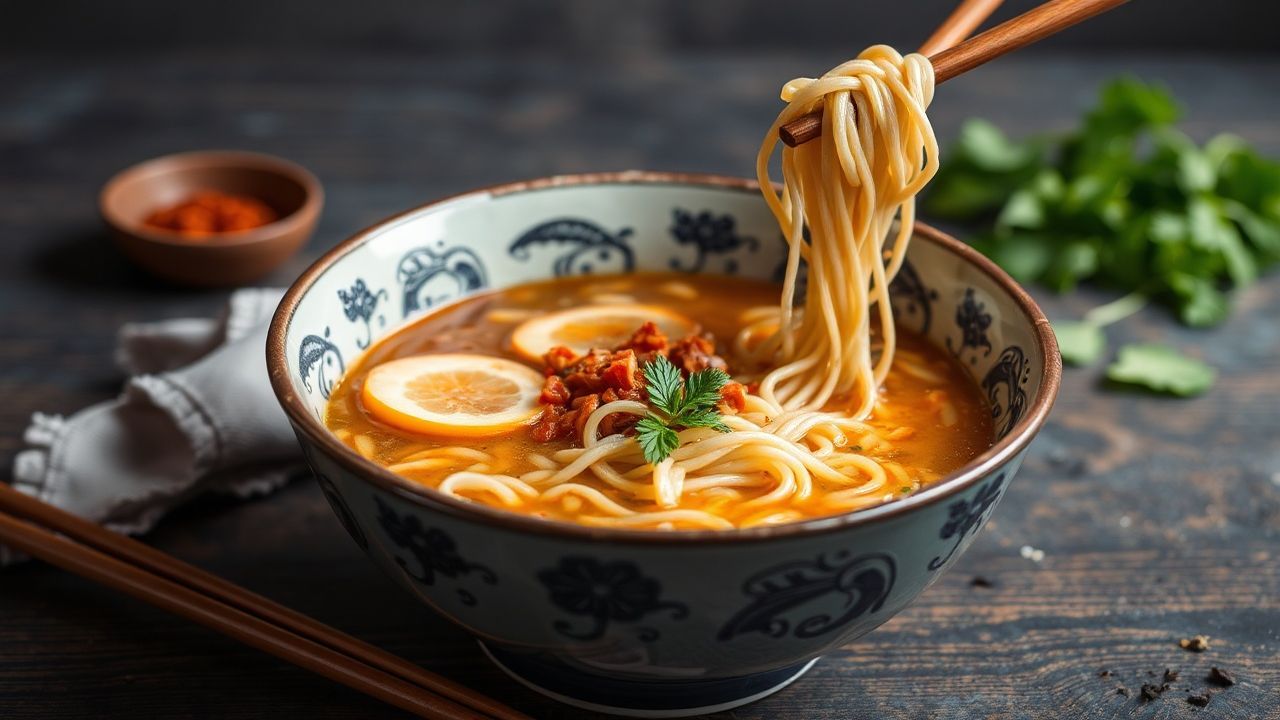

The aroma of simmering broth, the springy texture of perfectly cooked noodles, the vibrant dance of toppings – ramen is a culinary embrace, a dish that transcends mere sustenance to become an experience. For decades, this Japanese noodle soup has held a special place in the hearts (and stomachs) of many, its comforting warmth a balm in a busy world. Yet, for those embracing a vegan lifestyle, the traditional rendition, often reliant on pork or chicken bones for its signature umami depth, presented a formidable barrier. This is where the art of the vegan ramen emerges, not as a compromise, but as a vibrant testament to culinary innovation, proving that profound flavor and soul-satisfying textures are entirely achievable without a single animal product. The journey to a truly exceptional vegan ramen is one of meticulous ingredient selection, thoughtful technique, and an understanding of how to coax the deepest, most complex flavors from the plant kingdom.
- The Foundation: Crafting a Resonant Vegan Broth
- The Aromatic Symphony: Building the Base
- Umami Boosters: The Secret Weapons
- The Simmering Ritual: Patience and Precision
- The Heartbeat of the Bowl: Perfecting Vegan Ramen Noodles
- Understanding the Dough: Flour, Water, and Alkalinity
- Kneading and Resting: Developing the Structure
- Rolling and Cutting: Achieving the Perfect Strand
- Cooking the Noodles: The Final Hurdle
- The Art of the Ensemble: Toppings and Finishing Touches
- Umami-Rich Protein Powerhouses
- Vegetable Vibrancy and Textural Contrast
- The Finishing Flourish: Oils and Aromatics
- A Case Study in Culinary Evolution: The Rise of Vegan Ramen Restaurants
- Nutritional Profile: A Wholesome Indulgence
- Expert Tips for Elevating Your Vegan Ramen Game
- Frequently Asked Questions About Vegan Ramen
Key Takeaways:
- Achieving umami depth in vegan ramen broths relies on layering fermented ingredients and robust vegetables.
- Noodle texture is paramount; understanding hydration and alkalinity is crucial for authentic chewiness.
- Strategic use of fats and aromatics elevates the richness and mouthfeel of vegan ramen.
- Toppings are not mere garnishes but integral components that contribute texture, flavor, and visual appeal.
The quest for the perfect vegan ramen begins with the broth, the very soul of the dish. Traditional ramen broths derive their complexity from long simmering of animal bones, releasing collagen and fat that create a rich, viscous mouthfeel and a profound depth of flavor. Replicating this with plant-based ingredients requires a different, yet equally sophisticated, approach. It’s about building layers of flavor, understanding the synergistic power of different vegetables, fungi, and fermented products. The goal is not to mimic pork or chicken, but to create something distinctively delicious and satisfying in its own right.
The Foundation: Crafting a Resonant Vegan Broth
The bedrock of any exceptional ramen, vegan or otherwise, is its broth. For a vegan iteration, this means moving beyond a simple vegetable stock. We need to cultivate a symphony of flavors that sing with umami – that elusive fifth taste that provides a sense of savory richness and satisfaction. This is achieved through a deliberate combination of ingredients, each contributing a unique note to the final composition.
The Aromatic Symphony: Building the Base
The initial aromatic foundation is critical. A generous quantity of mirepoix – a blend of onions, carrots, and celery – forms the initial sweetness and depth. However, for vegan ramen, we elevate this by incorporating ingredients rich in glutamates, the compounds responsible for umami. Dried shiitake mushrooms are indispensable; their concentrated flavor, particularly when rehydrated, imparts a profound, almost meaty earthiness. Kombu, a type of edible kelp, is another non-negotiable. Its slow release of glutamates during simmering creates a subtle, oceanic savoriness that underpins the entire broth.
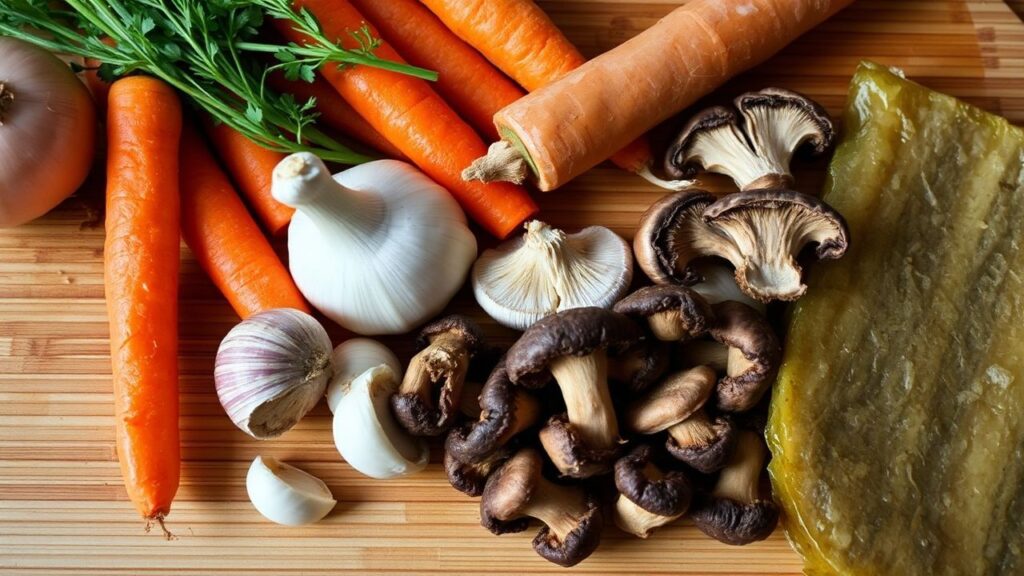
Beyond these core elements, consider the power of roasted garlic and ginger. Roasting these aromatics transforms their sharpness into a mellow sweetness and adds a layer of complexity that raw ingredients cannot replicate. A touch of leek greens, often discarded in Western cooking, offers a delicate oniony sweetness that complements the other aromatics beautifully. The key here is not to simply boil these ingredients, but to coax out their essence through gentle simmering, allowing the flavors to meld and deepen over time.
Umami Boosters: The Secret Weapons
Once the aromatic base is established, we introduce the umami boosters that truly define a great vegan ramen broth. Soy sauce (or tamari for gluten-free options) is a fundamental component, providing saltiness and fermented depth. However, its impact can be amplified. Miso paste, particularly red or brown varieties, introduces a complex, fermented funk and creamy texture. Nutritional yeast is a revelation for vegan cooking, offering a cheesy, savory note that can replicate some of the richness lost from animal products.
For an even more profound umami experience, consider the subtle yet impactful addition of tomato paste, which, when cooked down, develops a rich, concentrated sweetness and glutamates. Some chefs even advocate for a small amount of dried porcini mushrooms alongside the shiitakes for an extra layer of earthy intensity. The careful balancing of these elements – the salty, the sweet, the fermented, and the earthy – is what elevates a simple vegetable stock into a truly captivating ramen broth.
The Simmering Ritual: Patience and Precision
The actual simmering process is where the magic happens. A low, steady simmer is crucial. High heat can break down delicate flavor compounds and create a cloudy, less refined broth. The goal is a slow, patient extraction of flavor. A typical simmering time for a robust vegan ramen broth can range from two to four hours. During this time, skim any impurities that rise to the surface to ensure a clear and pristine broth.
The ratio of water to solids is also important. A good starting point is roughly 2-3 liters of water for every 500 grams of mixed vegetables and mushrooms. This allows for sufficient flavor extraction without the broth becoming too diluted. Seasoning is best done towards the end of the simmering process. Taste and adjust, adding soy sauce, salt, and potentially a touch of sugar or mirin to balance the flavors. A well-made vegan ramen broth should be rich, savory, complex, and deeply satisfying.
The Heartbeat of the Bowl: Perfecting Vegan Ramen Noodles
While the broth is the soul, the noodles are the heartbeat of ramen. Their texture, their chew, their ability to absorb the flavorful broth – these are critical elements. Traditional ramen noodles are typically made with wheat flour, water, salt, and *kansui*, an alkaline solution that gives them their characteristic springiness and yellowish hue. Replicating this without animal products is straightforward, but achieving the *perfect* texture requires attention to detail.
Understanding the Dough: Flour, Water, and Alkalinity
The choice of flour is paramount. High-gluten bread flour is generally preferred for its protein content, which contributes to chewiness. Some recipes incorporate a small percentage of all-purpose flour for a slightly softer bite. The water content is also critical; too much water yields a soft, gummy noodle, while too little results in a brittle, easily broken strand. Hydration levels typically range from 30% to 35% of the flour weight.
The addition of *kansui* is what truly distinguishes ramen noodles. It’s a mixture of potassium carbonate and sodium carbonate, and its alkalinity reacts with the gluten in the flour, creating a firmer, chewier texture and a distinct aroma. For vegan ramen, *kansui* is perfectly suitable. It’s readily available online or in specialty Asian markets. A typical *kansui* solution for ramen noodles is around 1% of the flour weight.
Kneading and Resting: Developing the Structure
Kneading ramen noodle dough is an intense affair. It’s not about developing a smooth, elastic dough like that for pizza or bread. Instead, the goal is to thoroughly hydrate the flour and develop the gluten structure without overworking it. Many recipes call for a short, vigorous kneading, followed by a period of resting, where the dough is often wrapped tightly and left at room temperature for at least 30 minutes, or even refrigerated overnight. This resting period allows the gluten to relax, making the dough easier to work with and contributing to a better texture.
Some chefs employ a technique of folding and pressing the dough repeatedly, rather than traditional kneading, to achieve the desired structure. This is particularly effective when using a pasta machine. The dough should feel firm and slightly resistant to the touch.

Rolling and Cutting: Achieving the Perfect Strand
Once the dough has rested, it’s time for rolling and cutting. A pasta machine is an invaluable tool here. Start with the widest setting and gradually pass the dough through thinner settings until you reach the desired thickness. For ramen, this is typically between 1.2mm and 1.5mm. If you don’t have a pasta machine, a rolling pin can be used, but achieving consistent thickness will be more challenging.
The cutting stage is equally important. Most pasta machines come with spaghetti cutters, but dedicated ramen cutters are available, offering a slightly flatter, more rectangular noodle. Aim for a noodle that has a good surface area to cling to the broth. Once cut, the noodles should be lightly tossed with a dusting of potato starch or cornstarch to prevent them from sticking together.
Cooking the Noodles: The Final Hurdle
Cooking ramen noodles is a race against time. They cook very quickly, usually in 60 to 120 seconds, depending on their thickness. It’s crucial to cook them in a large pot of vigorously boiling, unsalted water. The large volume of water prevents the temperature from dropping too drastically when the noodles are added, ensuring even cooking.
Drain the noodles thoroughly immediately after cooking and divide them among your serving bowls. The goal is for them to be *just* cooked, with a firm, springy texture that provides a satisfying chew.
The Art of the Ensemble: Toppings and Finishing Touches
The broth and noodles are the foundation, but the toppings are what bring a vegan ramen bowl to life, offering a spectrum of textures, flavors, and visual appeal. They are not mere afterthoughts; they are integral components that elevate the dish from good to extraordinary.
Umami-Rich Protein Powerhouses
While traditional ramen often features pork belly or chashu, vegan ramen offers a wealth of protein options. Marinated and pan-fried tofu, seasoned with soy sauce, mirin, and a touch of sesame oil, can mimic the richness of meat. Seared king oyster mushroom “scallops” offer a delightfully chewy and meaty texture. For a more adventurous option, tempeh, marinated and baked or fried, provides a firm, nutty bite.
A recent innovation gaining traction is the use of jackfruit, braised in a savory, smoky sauce, to create a pulled-pork-like topping. The key is to imbue these plant-based proteins with deep flavor through marinades and careful cooking techniques.
Vegetable Vibrancy and Textural Contrast
A vibrant array of vegetables adds color, freshness, and textural contrast. Blanched bok choy offers a tender crunch and a slightly bitter counterpoint to the rich broth. Sautéed shiitake mushrooms, distinct from those used in the broth, provide a meaty chew and earthy flavor. Sweet corn kernels add a burst of sweetness and a pop of color.
For an acidic counterpoint, pickled red onions or thinly sliced radish provide a welcome tang. Scallions, both green and white parts, are essential for their fresh, pungent bite. Consider adding a sprinkle of toasted sesame seeds for a nutty aroma and subtle crunch.
The Finishing Flourish: Oils and Aromatics
The final layer of flavor often comes from a drizzle of aromatic oil and a sprinkle of fresh herbs. A black garlic oil, made by pureeing roasted black garlic with a neutral oil, adds an intensely savory, sweet, and slightly smoky dimension. Chili oil, infused with dried chilies and spices, provides a welcome kick of heat.
A swirl of sesame oil can add a delicate nutty aroma. Freshly ground black pepper or a pinch of togarashi (Japanese chili powder blend) can further enhance the complexity. The aim is to create a harmonious balance of flavors and textures that dance on the palate with every spoonful.
A Case Study in Culinary Evolution: The Rise of Vegan Ramen Restaurants
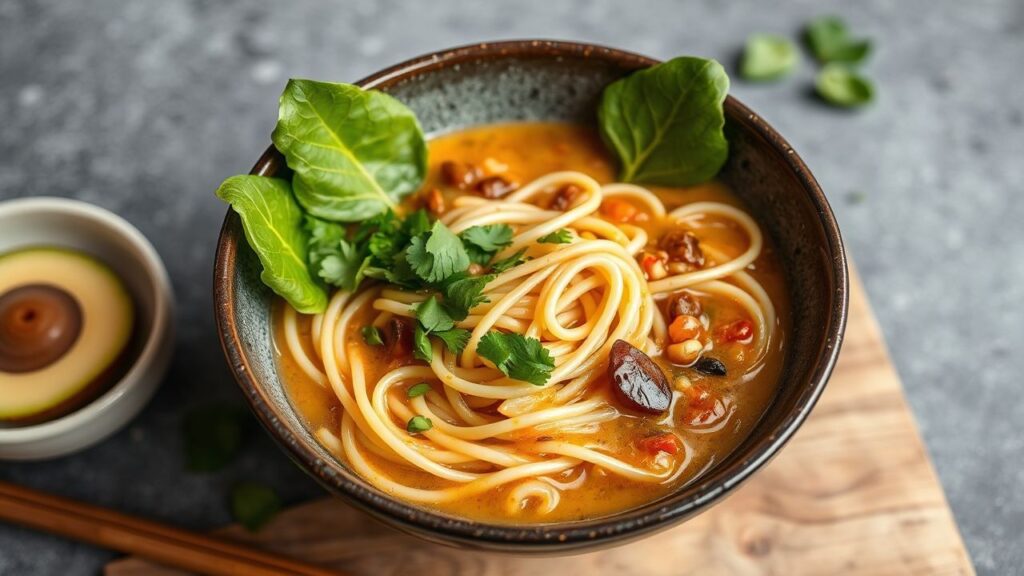
The burgeoning popularity of vegan ramen is not merely a trend; it’s proof of culinary evolution and a reflection of changing consumer preferences. Restaurants dedicated solely to vegan ramen have sprung up globally, each carving out a unique niche. In London, for example, “What The Pitta” initially gained fame for its vegan döner kebabs but has since expanded its menu to include acclaimed vegan ramen variations, demonstrating the versatility of plant-based ingredients in achieving complex flavor profiles. Their approach often involves elaborate, long-simmered vegetable and mushroom broths, meticulously crafted toppings like smoked tofu and crispy fried shallots, and house-made noodles. This success underscores the demand for high-quality, authentic-tasting vegan alternatives that don’t compromise on the sensory experience ramen is known for. The dedication to flavor layering and textural integrity in these establishments highlights the sophisticated techniques now employed in vegan ramen preparation.
Nutritional Profile: A Wholesome Indulgence
A well-constructed vegan ramen bowl can be surprisingly nutritious. While it varies greatly depending on the specific ingredients and portion sizes, a typical serving can offer a good source of protein, fiber, vitamins, and minerals.
Approximate Nutritional Information (per serving, based on a typical recipe):
- Calories: 400-600 kcal
- Protein: 15-25g (from tofu, tempeh, mushrooms, nutritional yeast)
- Fiber: 8-15g (from vegetables, mushrooms, whole wheat noodles if used)
- Healthy Fats: 10-25g (from oils, sesame seeds, avocado if added)
- Vitamins & Minerals: Rich in Vitamin A, Vitamin C, B vitamins, potassium, iron, and magnesium, depending on the vegetables and broth ingredients used.
Keep in mind that the sodium content can be higher due to soy sauce and miso. Opting for reduced-sodium versions of these ingredients can help manage this. The inclusion of a variety of colorful vegetables ensures a broad spectrum of antioxidants and micronutrients.
Expert Tips for Elevating Your Vegan Ramen Game
Achieving restaurant-quality vegan ramen at home requires a keen eye for detail and a willingness to experiment. Here are some professional insights to elevate your creation.
- Umami Layering is Key: Don’t rely on a single ingredient for umami. Combine dried mushrooms, kombu, soy sauce, miso, and nutritional yeast for a complex flavor profile.
- Master the Broth Consistency: Aim for a broth that has a slight body and viscosity. This can be achieved by simmering longer or even incorporating a small amount of pureed silken tofu or cashew cream at the very end, though this is a more advanced technique.
- Noodle Texture is Non-Negotiable: Freshly made noodles are ideal, but if using store-bought, ensure they are of good quality and cook them precisely to al dente.
- Fat is Flavor: Don’t shy away from healthy fats. A drizzle of toasted sesame oil or a flavorful chili oil adds richness and mouthfeel.
- Garnish with Purpose: Every topping should contribute to the overall flavor and texture profile. Think about balance – something crunchy, something savory, something fresh, something acidic.
- Don’t Be Afraid to Experiment: Vegan ramen is a canvas. Explore different vegetable combinations, unique protein sources, and regional flavor profiles.
Frequently Asked Questions About Vegan Ramen
What makes vegan ramen broth different from traditional ramen broth?
The primary difference lies in the absence of animal products. Traditional ramen broths rely on simmering animal bones (pork, chicken) for extended periods to extract collagen, gelatin, and fat, which create a rich, viscous, and deeply savory flavor profile. Vegan ramen broths achieve a similar depth and complexity by meticulously layering plant-based ingredients like dried mushrooms (shiitake, porcini), kombu (seaweed), roasted aromatics (onions, garlic, ginger), fermented products (soy sauce, miso), and umami-rich vegetables. The goal is to build layers of savory, earthy, and slightly sweet notes that are satisfying in their own right, rather than attempting a direct imitation of animal-based broths.
Can I make vegan ramen noodles without *kansui*?
While *kansui* is traditional and provides that signature springy texture and slight chew, it is possible to make acceptable vegan ramen noodles without it. However, the texture will be different. You can achieve a reasonably good noodle by using high-gluten bread flour, a precise water-to-flour ratio, and ensuring thorough kneading and resting. Some recipes suggest using a small amount of baking soda dissolved in water as a partial substitute, but this can sometimes impart a subtle metallic taste if not used judiciously. For the most authentic texture, sourcing *kansui* is highly recommended.
What are the best vegan protein toppings for ramen?
The world of vegan protein toppings for ramen is diverse and exciting. Marinated and pan-fried or baked tofu is a versatile classic, capable of absorbing a wide range of flavors. Seared king oyster mushrooms offer a remarkably meaty and chewy texture, often prepared to resemble scallops or thinly sliced meat. Tempeh, a fermented soybean product, provides a firm, nutty bite when marinated and cooked. For a pulled-pork-like texture, braised and shredded jackfruit is an increasingly popular and effective option, especially when infused with smoky and savory sauces. Beyond these, consider pan-fried seitan for a very dense, chewy protein, or even edamame for a simpler, protein-rich addition.
See also: Vegan ramen