
Vegetarian cuisine is a cornerstone of Middle Eastern culinary traditions, not merely an afterthought but a vibrant, integral part of its identity. For centuries, the region’s rich agricultural bounty and deeply ingrained cultural practices have fostered a sophisticated palate for plant-based dishes. Astonishingly, a 2021 report by the Food and Agriculture Organization of the United Nations (FAO) highlighted that vegetarianism and flexitarianism are on the rise globally, with the Middle East showing a significant trend towards plant-forward eating, driven by health consciousness, environmental awareness, and a profound appreciation for the region’s naturally abundant produce. This article explores the heart of Middle Eastern vegetarian cooking, offering not just recipes, but a gateway to understanding the soul of its gastronomy.
- 1. Hummus: The Quintessential Dip
- Ingredients:
- Preparation Method:
- Nutritional Info (per serving, approx. 1/4 of recipe):
- Expert Pro-Tips:
- 2. Baba Ghanoush: The Smoky Eggplant Delight
- 3. Tabbouleh: The Herbaceous Salad
- 4. Fattoush: The Crunchy Bread Salad
- 5. Falafel: The Crispy Chickpea Fritters
- 6. Mujaddara: Lentils and Rice Comfort
- 7. Stuffed Grape Leaves (Dolmades/Warak Enab) – Vegetarian Version
- 8. Shakshuka: Eggs Poached in Spicy Tomato Sauce
- 9. Ful Medames: The Hearty Fava Bean Stew
- 10. Koshari: The National Dish of Egypt
- The Enduring Appeal of Middle Eastern Vegetarian Cuisine
- Frequently Asked Questions
- What are the most common vegetables used in Middle Eastern vegetarian recipes?
- Are Middle Eastern vegetarian dishes typically spicy?
- What is the role of tahini in Middle Eastern vegetarian cooking?
- Can I make these recipes gluten-free?
- What is the best way to serve a Middle Eastern vegetarian meal?
The beauty of Middle Eastern vegetarian dishes lies in their profound respect for ingredients. Humble legumes, sun-ripened vegetables, fragrant herbs, and robust grains are transformed through simple yet masterful techniques into dishes that are both nourishing and extraordinarily flavorful. This culinary philosophy is rooted in a deep understanding of seasonality and a commitment to minimizing waste, principles that resonate powerfully with contemporary global food movements.
The true essence of Middle Eastern vegetarian cooking is its inherent celebration of nature’s bounty, transforming simple, wholesome ingredients into deeply satisfying and culturally rich experiences.
The Pillars of Middle Eastern Vegetarian Cuisine
Before embarking on this culinary expedition, it’s vital to understand the foundational elements that define Middle Eastern vegetarian cooking. These are not just ingredients; they are the building blocks of flavor and texture that define countless beloved dishes.
Legumes: The Hearty Foundation
Chickpeas, lentils, and fava beans are the undisputed stars. They provide essential protein, fiber, and a satisfying heartiness that makes vegetarian meals substantial and fulfilling. Their versatility is unparalleled, serving as the base for dips, stews, salads, and patties.
Grains and Starches: The Canvas
Bulgur, couscous, rice, and freekeh offer delightful textural contrast and serve as the perfect vehicle for absorbing the rich flavors of accompanying ingredients. They are often prepared simply, allowing other components to shine.
Vegetables: The Spectrum of Flavor
From the sweetness of roasted bell peppers and eggplant to the crispness of cucumbers and tomatoes, and the earthy notes of root vegetables, the variety is immense. Herbs like parsley, mint, cilantro, and dill are used generously, adding layers of freshness and aromatic complexity.
Dairy and Fats: The Richness and Binding
Yogurt, particularly strained varieties, matter significantly, offering tanginess and a creamy texture. Olive oil, the liquid gold of the region, is indispensable for sautéing, dressing, and finishing dishes. Tahini, a paste made from ground sesame seeds, is another essential, providing a nutty depth to dips and sauces.
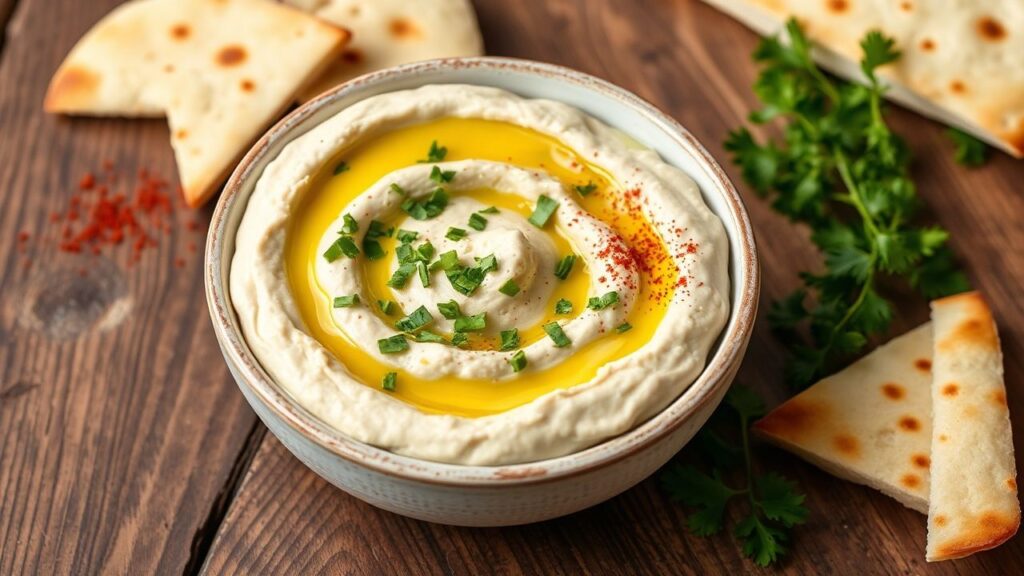
1. Hummus: The Quintessential Dip
No exploration of Middle Eastern vegetarian food is complete without the iconic hummus. This creamy, savory dip is more than just an appetizer; it’s a cultural ambassador.
Ingredients:
- 400g (14 oz) canned chickpeas, drained and rinsed (reserve liquid)
- 100g (3.5 oz) tahini
- 60ml (4 tbsp) fresh lemon juice
- 2 cloves garlic, minced
- 60ml (4 tbsp) extra virgin olive oil, plus more for drizzling
- Salt to taste
- Pinch of ground cumin (optional)
- Fresh parsley, chopped, for garnish
- Paprika or sumac, for garnish
Preparation Method:
- Combine the drained chickpeas, tahini, lemon juice, and minced garlic in a food processor.
- Process until the mixture begins to form a paste.
- While the processor is running, slowly drizzle in the extra virgin olive oil.
- Add a few tablespoons of the reserved chickpea liquid, one tablespoon at a time, until the desired creamy consistency is reached. You might not need all of it.
- Season generously with salt and add a pinch of cumin if desired. Process again until smooth and fluffy.
- Spoon the hummus into a serving bowl. Create a well in the center and drizzle generously with olive oil.
- Garnish with chopped fresh parsley and a sprinkle of paprika or sumac.
Nutritional Info (per serving, approx. 1/4 of recipe):
Calories: 250-300, Protein: 8-10g, Fat: 20-25g, Carbohydrates: 15-20g, Fiber: 5-7g.
Expert Pro-Tips:
To achieve exceptionally smooth hummus, consider peeling the chickpeas before processing. This is a labor-intensive step but yields a silken texture that is truly restaurant-quality. For an added layer of flavor, lightly toast your tahini before using it.
2. Baba Ghanoush: The Smoky Eggplant Delight
Baba Ghanoush offers a captivating smoky flavor profile derived from charring the eggplant, complemented by the richness of tahini.
Ingredients:
- 2 medium eggplants
- 100g (3.5 oz) tahini
- 60ml (4 tbsp) fresh lemon juice
- 2 cloves garlic, minced
- 60ml (4 tbsp) extra virgin olive oil, plus more for drizzling
- Salt to taste
- Fresh parsley, chopped, for garnish
- Pomegranate seeds (optional), for garnish
Preparation Method:
- Preheat your broiler or grill to high heat. Pierce the eggplants several times with a fork.
- Place the eggplants directly on the grill grates or under the broiler. Char them, turning occasionally, until the skin is blackened and the flesh is very soft and collapsed (about 20-30 minutes).
- Once cooled slightly, carefully slice the eggplants in half lengthwise. Scoop out the smoky flesh into a colander and let it drain for about 15-20 minutes to remove excess liquid. Discard the skins.
- Transfer the drained eggplant flesh to a food processor. Add the tahini, lemon juice, minced garlic, and olive oil.
- Process until the mixture is mostly smooth but still retains a slight texture.
- Season with salt to taste.
- Spoon into a serving bowl, drizzle with olive oil, and garnish with chopped parsley and pomegranate seeds, if using.
Nutritional Info (per serving, approx. 1/4 of recipe):
Calories: 220-270, Protein: 5-7g, Fat: 18-22g, Carbohydrates: 12-16g, Fiber: 4-6g.
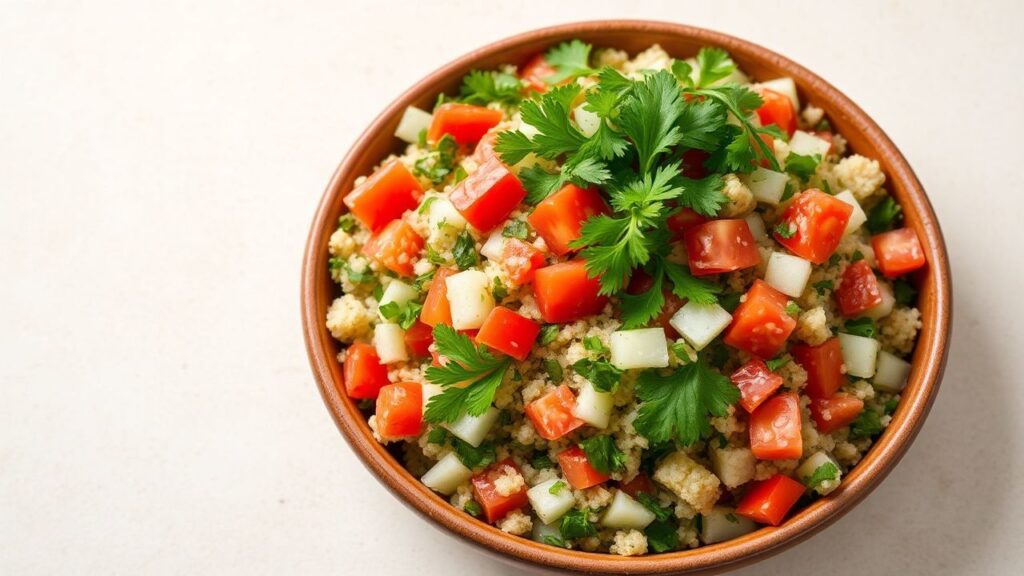
3. Tabbouleh: The Herbaceous Salad
This refreshing Levantine salad is a symphony of fresh herbs, bulgur, and bright citrus, offering a burst of flavor and texture.
Ingredients:
- 200g (1 cup) fine bulgur wheat
- 500ml (2 cups) boiling water
- 2 large bunches fresh parsley, finely chopped
- 1 bunch fresh mint, finely chopped
- 3-4 ripe tomatoes, finely diced
- 1 large cucumber, finely diced
- 1 small red onion, finely diced
- 120ml (1/2 cup) fresh lemon juice
- 60ml (1/4 cup) extra virgin olive oil
- Salt and freshly ground black pepper to taste
Preparation Method:
- Place the bulgur wheat in a medium bowl. Pour the boiling water over it, stir, cover, and let it stand for 20-30 minutes, or until the water is absorbed and the bulgur is tender. Fluff with a fork.
- In a large bowl, combine the finely chopped parsley, mint, diced tomatoes, cucumber, and red onion.
- Add the softened bulgur to the vegetable mixture.
- In a small bowl, whisk together the lemon juice, olive oil, salt, and pepper.
- Pour the dressing over the bulgur and vegetable mixture. Toss gently to combine, ensuring all ingredients are evenly coated.
- Taste and adjust seasoning as needed. Let it sit for at least 15 minutes before serving to allow the flavors to meld.
Nutritional Info (per serving, approx. 1/6 of recipe):
Calories: 180-220, Protein: 4-6g, Fat: 10-14g, Carbohydrates: 20-25g, Fiber: 5-7g.
4. Fattoush: The Crunchy Bread Salad
Fattoush is a beloved salad characterized by its crisp mixed greens, vegetables, and the delightful crunch of fried or baked pita bread pieces.
Ingredients:
- 1 large romaine lettuce, chopped
- 2 ripe tomatoes, chopped
- 1 cucumber, chopped
- 1 green bell pepper, chopped
- 1/2 cup fresh parsley, chopped
- 1/4 cup fresh mint, chopped
- 1/4 cup sumac (for dressing and garnish)
- 1 large pita bread, baked or fried until crisp and broken into pieces
- For the Dressing:
- 120ml (1/2 cup) extra virgin olive oil
- 60ml (1/4 cup) fresh lemon juice
- 2 tbsp pomegranate molasses
- 1 clove garlic, minced
- Salt and freshly ground black pepper to taste
Preparation Method:
- In a large salad bowl, combine the chopped romaine lettuce, tomatoes, cucumber, green bell pepper, parsley, and mint.
- In a small bowl, whisk together the olive oil, lemon juice, pomegranate molasses, minced garlic, salt, and pepper. Stir in 1 tablespoon of sumac.
- Pour the dressing over the salad ingredients and toss gently to coat.
- Just before serving, add the crisp pita bread pieces and toss again lightly to prevent them from becoming soggy.
- Garnish with the remaining sumac.
Nutritional Info (per serving, approx. 1/6 of recipe):
Calories: 200-250, Protein: 3-5g, Fat: 14-18g, Carbohydrates: 15-20g, Fiber: 4-6g.
5. Falafel: The Crispy Chickpea Fritters
Falafel are the undisputed kings of street food – wonderfully crispy on the outside, tender on the inside, and packed with herbaceous flavor.
Ingredients:
- 500g (2.5 cups) dried chickpeas, soaked overnight and drained (do not cook)
- 1 large onion, roughly chopped
- 4-6 cloves garlic, roughly chopped
- 1 large bunch fresh parsley, roughly chopped
- 1 large bunch fresh cilantro, roughly chopped
- 2 tsp ground cumin
- 1 tsp ground coriander
- 1/2 tsp cayenne pepper (optional)
- 1 tsp baking soda
- Salt to taste
- Vegetable oil, for deep frying
Preparation Method:
- In a food processor, combine the drained, soaked chickpeas, chopped onion, garlic, parsley, cilantro, cumin, coriander, and cayenne pepper (if using).
- Process in batches, pulsing until the mixture is finely ground but still has some texture. Do not over-process into a paste.
- Transfer the mixture to a bowl. Stir in the baking soda and salt. Cover and refrigerate for at least 30 minutes (or up to 2 hours) to allow the flavors to meld and the mixture to firm up.
- Heat about 2-3 inches of vegetable oil in a deep pot or Dutch oven to 180°C (350°F).
- Using a falafel scoop or your hands, form the mixture into small patties or balls.
- Carefully place the falafel into the hot oil, working in batches to avoid overcrowding the pot.
- Fry for 3-5 minutes per side, or until golden brown and cooked through.
- Remove with a slotted spoon and drain on paper towels.
Nutritional Info (per serving, approx. 3 falafel balls):
Calories: 250-300, Protein: 10-12g, Fat: 15-20g, Carbohydrates: 20-25g, Fiber: 7-9g.
6. Mujaddara: Lentils and Rice Comfort
Mujaddara is a humble yet profoundly satisfying dish of lentils and rice, elevated by caramelized onions. It’s proof of how simple ingredients can create incredible depth of flavor.
Ingredients:
- 200g (1 cup) brown or green lentils, rinsed
- 150g (3/4 cup) long-grain rice, rinsed
- 1 liter (4 cups) vegetable broth or water
- 2 large onions, thinly sliced
- 60ml (1/4 cup) olive oil, plus more for caramelizing onions
- Salt and freshly ground black pepper to taste
- Fresh parsley, chopped, for garnish
Preparation Method:
- In a large pot, combine the rinsed lentils and vegetable broth or water. Bring to a boil, then reduce heat, cover, and simmer for 20 minutes.
- Add the rinsed rice to the pot with the lentils. Stir, bring back to a simmer, cover, and cook for another 20-25 minutes, or until the rice and lentils are tender and the liquid is absorbed.
- While the lentils and rice are cooking, heat a generous amount of olive oil in a large skillet over medium-low heat. Add the thinly sliced onions and cook slowly, stirring occasionally, for 30-45 minutes, or until deeply golden brown and caramelized. Season with salt.
- Once the lentils and rice are cooked, fluff them with a fork.
- Serve the mujaddara hot, topped generously with the caramelized onions and a sprinkle of fresh parsley.
Nutritional Info (per serving, approx. 1/4 of recipe):
Calories: 350-400, Protein: 12-15g, Fat: 10-15g, Carbohydrates: 50-60g, Fiber: 10-12g.
7. Stuffed Grape Leaves (Dolmades/Warak Enab) – Vegetarian Version
While often made with meat, vegetarian dolmades are a delightful and lighter alternative, bursting with fragrant rice, herbs, and a tangy lemon dressing.
Ingredients:
- 1 jar (approx. 500g) brined grape leaves, rinsed thoroughly and separated
- 200g (1 cup) long-grain rice, rinsed
- 1 large onion, finely chopped
- 1/2 cup fresh parsley, finely chopped
- 1/4 cup fresh mint, finely chopped
- 1/4 cup fresh dill, finely chopped
- 1 tsp ground allspice
- 1/2 tsp ground cinnamon
- Salt and freshly ground black pepper to taste
- 120ml (1/2 cup) extra virgin olive oil
- Juice of 2-3 lemons
- 4 cups vegetable broth or water
Preparation Method:
- In a bowl, combine the rinsed rice, chopped onion, parsley, mint, dill, allspice, cinnamon, salt, and pepper. Add half of the olive oil and mix well.
- To roll the dolmades: Lay a grape leaf flat with the shiny side down and the stem end towards you. Place about 1 tablespoon of the rice mixture near the stem. Fold the sides of the leaf inward over the filling, then roll tightly from the stem end upwards. Repeat with all the leaves and filling.
- Line the bottom of a large, heavy-bottomed pot with any torn or imperfect grape leaves. Arrange the rolled dolmades snugly in layers over the leaves, seam-side down.
- In a separate bowl, whisk together the remaining olive oil, lemon juice, and vegetable broth or water. Pour this liquid over the dolmades, ensuring they are mostly submerged. Place a heatproof plate directly on top of the dolmades to keep them from unraveling during cooking.
- Bring the liquid to a boil, then reduce the heat to low, cover the pot tightly, and simmer for 45-60 minutes, or until the rice is tender and the liquid is absorbed.
- Let the dolmades cool in the pot for at least 30 minutes before serving. Serve chilled or at room temperature with a drizzle of olive oil and lemon juice.
Nutritional Info (per serving, approx. 4 dolmades):
Calories: 180-220, Protein: 3-5g, Fat: 10-14g, Carbohydrates: 20-25g, Fiber: 3-5g.
8. Shakshuka: Eggs Poached in Spicy Tomato Sauce
While traditionally made with eggs, a vegetarian version can be equally delightful by focusing on the rich, spiced tomato base, often served with feta cheese or extra vegetables.
Ingredients:
- 2 tbsp olive oil
- 1 large onion, chopped
- 2 cloves garlic, minced
- 1 red bell pepper, chopped
- 1 green bell pepper, chopped
- 1 tsp ground cumin
- 1 tsp sweet paprika
- 1/2 tsp cayenne pepper (or to taste)
- 800g (28 oz) crushed tomatoes
- Salt and freshly ground black pepper to taste
- Optional additions: 1 can chickpeas, drained; crumbled feta cheese
- Fresh cilantro or parsley, chopped, for garnish
- Crusty bread, for serving
Preparation Method:
- Heat the olive oil in a large, oven-safe skillet over medium heat. Add the chopped onion and cook until softened, about 5-7 minutes.
- Add the minced garlic and chopped bell peppers. Cook for another 5-7 minutes until the peppers begin to soften.
- Stir in the cumin, paprika, and cayenne pepper. Cook for 1 minute until fragrant.
- Pour in the crushed tomatoes. Season with salt and pepper. Bring to a simmer, then reduce heat and let it cook for about 10-15 minutes, allowing the sauce to thicken slightly. If using chickpeas, stir them in now.
- If making a traditional shakshuka, create wells in the sauce and crack eggs into them. However, for a purely vegetarian dish, you can proceed to the next step or top with crumbled feta.
- Transfer the skillet to a preheated oven at 190°C (375°F) and bake for 5-10 minutes, or until the sauce is bubbly and any added eggs are cooked to your liking.
- Garnish with fresh cilantro or parsley and serve immediately with crusty bread for dipping.
Nutritional Info (per serving, approx. 1/4 of recipe, without eggs):
Calories: 150-200, Protein: 3-5g, Fat: 8-12g, Carbohydrates: 15-20g, Fiber: 4-6g.
Pro-Caution: When cooking with hot oil, always exercise extreme caution. Ensure adequate ventilation and never leave hot oil unattended. Use a deep, heavy-bottomed pot to minimize splashing.
9. Ful Medames: The Hearty Fava Bean Stew
A staple breakfast dish throughout the Middle East, particularly Egypt, Ful Medames is a comforting and protein-rich stew of fava beans.
Ingredients:
- 500g (2.5 cups) dried fava beans, soaked overnight and drained
- 1 large onion, quartered
- 4 cloves garlic, peeled
- 1 bay leaf
- Water for cooking
- For Serving:
- Olive oil or butter
- Lemon juice
- Cumin
- Salt and freshly ground black pepper
- Chopped parsley, tomatoes, and/or hard-boiled eggs (optional for non-veg)
Preparation Method:
- Place the soaked and drained fava beans in a large pot. Add the quartered onion, garlic cloves, and bay leaf.
- Cover with plenty of water (about 2-3 inches above the beans). Bring to a boil, then reduce heat, cover, and simmer gently for 2-4 hours, or until the beans are very tender and easily mashed. Add more water if needed during cooking to keep the beans submerged. Skim off any foam that rises to the surface.
- Once tender, drain the beans, discarding the bay leaf, onion, and garlic (or mash them into the beans if you prefer).
- In a serving bowl, mash some of the fava beans with a fork, leaving some whole for texture.
- Stir in a generous amount of olive oil or butter, lemon juice, cumin, salt, and pepper to taste.
- Serve hot, garnished with chopped parsley and diced tomatoes if desired.
Nutritional Info (per serving, approx. 1/4 of recipe):
Calories: 280-330, Protein: 15-18g, Fat: 12-16g, Carbohydrates: 30-35g, Fiber: 10-14g.
10. Koshari: The National Dish of Egypt
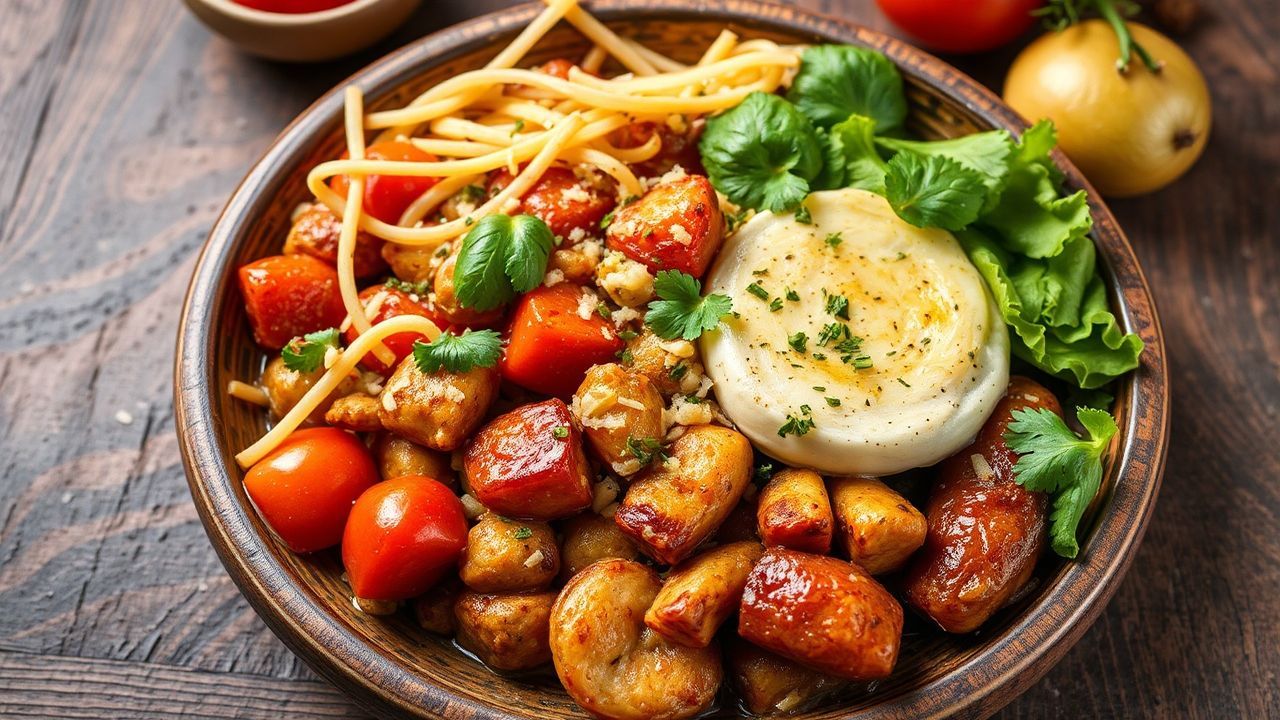
Koshari is a glorious, carb-loaded masterpiece, a vibrant fusion of rice, lentils, pasta, chickpeas, and a tangy tomato-vinegar sauce, crowned with crispy fried onions. It’s a true celebration of texture and flavor.
Ingredients:
- For the Rice and Lentils:
- 150g (3/4 cup) short-grain rice, rinsed
- 100g (1/2 cup) brown or green lentils, rinsed
- 1 liter (4 cups) water
- Salt
- For the Pasta:
- 100g (3.5 oz) small pasta shapes (e.g., elbow macaroni, ditalini)
- Water for boiling
- Salt
- For the Chickpeas:
- 200g (1 cup) cooked chickpeas (canned or home-cooked)
- For the Tomato-Vinegar Sauce:
- 2 tbsp olive oil
- 1 large onion, finely chopped
- 4 cloves garlic, minced
- 1 tsp ground cumin
- 1 tsp ground coriander
- 1/2 tsp cayenne pepper (optional)
- 800g (28 oz) crushed tomatoes
- 120ml (1/2 cup) white vinegar
- Salt and freshly ground black pepper to taste
- For the Crispy Fried Onions:
- 2 large onions, thinly sliced
- Vegetable oil, for frying
Preparation Method:
- Rice and Lentils: In a pot, combine rice, lentils, water, and salt. Bring to a boil, then reduce heat, cover, and simmer for 20-25 minutes, or until cooked and liquid is absorbed.
- Pasta: Cook pasta according to package directions in salted boiling water. Drain and set aside.
- Chickpeas: If using canned chickpeas, drain and rinse. If cooking from dried, ensure they are tender.
- Tomato-Vinegar Sauce: Heat olive oil in a skillet over medium heat. Add finely chopped onion and cook until softened. Add minced garlic, cumin, coriander, and cayenne (if using); cook for 1 minute until fragrant. Stir in crushed tomatoes and vinegar. Bring to a simmer, season with salt and pepper, and cook for 15-20 minutes until thickened.
- Crispy Fried Onions: Heat about 1 inch of vegetable oil in a pan over medium-high heat. Fry the thinly sliced onions in batches until golden brown and crispy. Remove with a slotted spoon and drain on paper towels.
- Assembly: In individual serving bowls, layer the cooked rice and lentils, pasta, chickpeas, and a generous spoonful of the tomato-vinegar sauce. Top with a handful of crispy fried onions.
Nutritional Info (per serving, approx. 1/4 of recipe):
Calories: 500-600, Protein: 18-22g, Fat: 15-20g, Carbohydrates: 80-90g, Fiber: 12-15g.
The Enduring Appeal of Middle Eastern Vegetarian Cuisine
The recipes detailed above represent just a fraction of the incredible depth and diversity found within Middle Eastern vegetarian cooking. These dishes are not merely sustenance; they are expressions of culture, hospitality, and a profound connection to the land. They embody a culinary philosophy that is both ancient and remarkably relevant today, offering delicious, healthy, and sustainable options for all. As global palates continue to evolve, the diverse mix of Middle Eastern vegetarian cuisine stands ready to be discovered and savored, proving that plant-based eating can be an extraordinary adventure for the senses.
Frequently Asked Questions
What are the most common vegetables used in Middle Eastern vegetarian recipes?
The region’s produce is incredibly diverse, but common vegetables include eggplant, tomatoes, cucumbers, bell peppers, onions, garlic, zucchini, and various leafy greens like spinach and chard. Herbs such as parsley, mint, cilantro, and dill are also used extensively, adding significant flavor and freshness.
Are Middle Eastern vegetarian dishes typically spicy?
While some dishes incorporate chili peppers for heat (like Shakshuka or Koshari sauce), Middle Eastern vegetarian cuisine is generally more focused on aromatic spices like cumin, coriander, sumac, and cinnamon, as well as the natural sweetness of ingredients and the tanginess of lemon and vinegar. Spiciness can often be adjusted to personal preference.
What is the role of tahini in Middle Eastern vegetarian cooking?
Tahini, a paste made from ground sesame seeds, is a crucial ingredient. It provides a creamy texture and a distinct nutty flavor to dips like hummus and baba ghanoush, and it’s also used in dressings and sauces, adding richness and depth.
Can I make these recipes gluten-free?
Many of these recipes can be adapted. For instance, substituting bulgur with quinoa or rice in Tabbouleh, or omitting the pita bread in Fattoush or Koshari. Falafel can be made with chickpea flour instead of a binder if gluten is a concern, though the texture might vary. Always check individual ingredient labels for hidden gluten.
What is the best way to serve a Middle Eastern vegetarian meal?
Middle Eastern vegetarian meals are often served family-style, with a variety of dishes presented together. This allows diners to mix and match flavors and textures. Hummus, baba ghanoush, salads, stews, and bread are typically arranged in the center of the table, encouraging communal dining and exploration.
See also: Vegetarian