
“The true art of cooking lies not just in the ingredients, but in the respect for tradition and the patience to allow flavors to meld and mature.” – Yotam Ottolenghi
- The Enchanting Allure of Moroccan Chicken Tagine with Apricots and Almonds
- The Symphony of Ingredients: Crafting Your Moroccan Chicken Tagine
- The Pillars of Flavor: Spices and Aromatics
- The Star: Chicken
- The Sweet Jewels: Apricots and Honey
- The Textural Contrast: Almonds
- The Liquid Foundation: Broth and Preserved Lemon
- Detailed Ingredients List
- The Art of Preparation: A Step-by-Step Journey to Moroccan Chicken Perfection
- Harnessing the Aromatic Foundation
- Searing for Depth: The Chicken’s First Embrace
- Building the Flavor Base: The Onion and Spice Mélange
- The Simmering Transformation
- The Slow Dance of Flavors: Braising
- Introducing the Sweetness: Apricots and Final Touches
- Finishing Touches: Texture and Aroma
- Serving the Moroccan Masterpiece
- Nutritional Snapshot: A Wholesome Indulgence
- Elevating Your Moroccan Chicken: Pro Tips for Restaurant-Quality Results
- The Saffron Ritual: A Touch of Luxury
- The Art of the Sear: Patience is Key
- Preserved Lemon: The Secret Weapon
- The Toasted Almond Nuance
- Balancing Sweetness and Acidity
- FAQ: Your Moroccan Chicken Tagine Questions Answered
The Enchanting Allure of Moroccan Chicken Tagine with Apricots and Almonds
Moroccan cuisine is a vibrant tapestry woven from centuries of cultural exchange, a harmonious blend of Berber, Arab, Andalusian, and Mediterranean influences. At its heart lies the tagine, a distinctive earthenware pot with a conical lid, which not only defines the cooking vessel but also the slow-cooked, deeply aromatic stews prepared within. Among the pantheon of these flavorful creations, the Moroccan Chicken Tagine with Apricots and Almonds stands out as a quintessential representation of the cuisine’s ability to balance sweet and savory notes with an unparalleled elegance. This dish, often found gracing the tables of Moroccan homes and celebrated in the finest restaurants, is more than just a meal; it is an edible narrative of trade routes, ancient spice traditions, and the ingenious use of humble ingredients to create something truly sublime.
At a Glance: Key Takeaways for Mastering Moroccan Chicken Tagine
- The Foundation of Flavor: Achieving authentic taste hinges on the quality and interplay of spices like ginger, turmeric, cinnamon, and saffron, alongside the slow braising process that tenderizes the chicken and melds these complex notes.
- The Sweet & Savory Dance: The judicious use of dried apricots provides a natural, concentrated sweetness and a pleasing chewiness that brilliantly contrasts with the savory depth of the chicken and aromatic broth.
- Textural Harmony: Toasted almonds offer a crucial textural counterpoint, adding a satisfying crunch that elevates each bite and prevents the dish from becoming one-dimensionally soft.
- The Art of Patience: Authentic tagine cooking demands time. The slow simmer allows the flavors to deepen, the chicken to become fall-apart tender, and the sauce to achieve a luxurious, unctuous consistency.
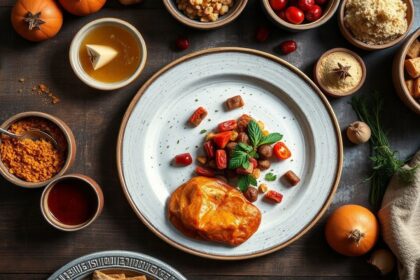
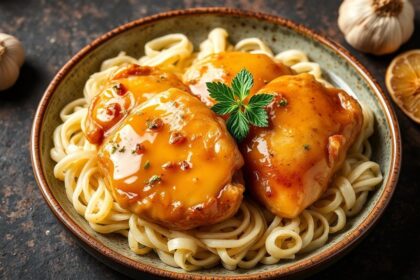
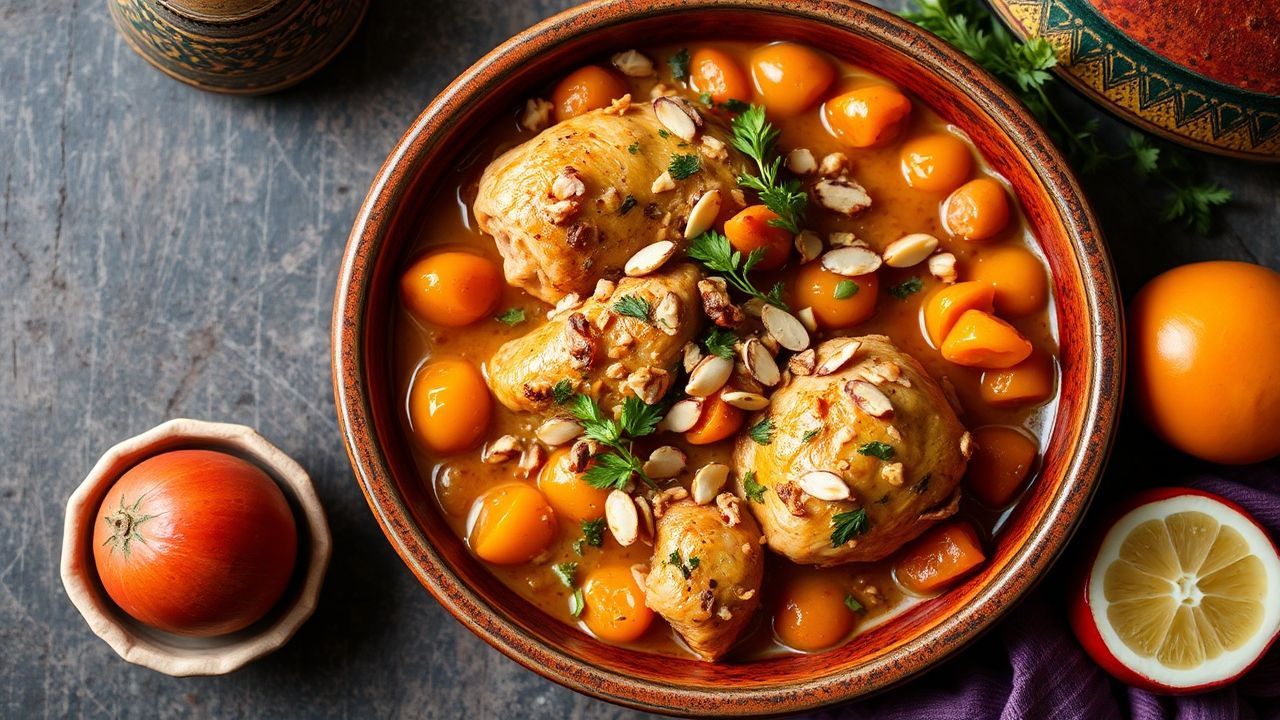
The very essence of Moroccan Chicken, particularly this rendition, is its ability to transport the diner. Imagine the scent of ginger, cinnamon, and saffron wafting from the kitchen, a prelude to the tender morsels of chicken bathed in a rich, amber-hued sauce, studded with plump, rehydrated apricots and crowned with golden, toasted almonds. It’s a dish that speaks of hospitality, of shared meals, and of a culinary heritage that has captivated palates for generations. Understanding the nuances of its preparation is akin to unlocking a culinary secret, one that promises to bring a touch of North African magic to any table. This article will delve deep into the soul of this iconic dish, providing not just a recipe, but an education in the principles that make it so enduringly beloved.
The Symphony of Ingredients: Crafting Your Moroccan Chicken Tagine
The magic of a truly exceptional Moroccan Chicken tagine lies in the careful selection and harmonious combination of its components. It is a culinary alchemy where each ingredient matter significantly, contributing to the dish’s complex flavor profile and exquisite texture. While variations abound, a classic rendition of this Moroccan Chicken masterpiece relies on a foundational set of spices, a quality protein, and the signature sweet elements.
The Pillars of Flavor: Spices and Aromatics
The soul of Moroccan cuisine is undoubtedly its spice palette. For this tagine, a precise balance is key, moving beyond mere heat to create layers of warmth, fragrance, and subtle complexity. Freshly ground spices are always preferable for their vibrant aromas, but high-quality ground spices will also yield excellent results.
- Ginger: Both fresh and ground ginger are essential. Fresh ginger provides a pungent, bright heat, while ground ginger offers a deeper, more mellow warmth that permeates the sauce.
- Turmeric: This earthy, slightly bitter spice is crucial for its distinctive golden hue and its grounding flavor. It contributes significantly to the tagine’s visual appeal and its aromatic depth.
- Cinnamon: A warm, sweet spice that is fundamental to many Moroccan sweet and savory dishes. In this tagine, it provides a subtle sweetness and a sophisticated aromatic note that complements the fruit beautifully.
- Saffron: The “red gold” of spices, saffron threads impart a unique, subtly metallic, honey-like flavor and a magnificent golden color. A small pinch, bloomed in warm water, is all that is needed to elevate the dish. Its presence is a hallmark of refined Moroccan cooking.
- Cumin: Adds a smoky, earthy undertone that provides a savory counterpoint to the sweetness of the apricots and the warmth of the other spices.
- Coriander: Its citrusy, slightly floral notes add brightness and complexity, balancing the richness of the chicken and sauce.
- Black Pepper: For a gentle kick and to enhance the other flavors.
- Onions and Garlic: The aromatic bedrock of most savory dishes. Sweet onions, like Vidalia or yellow onions, are ideal for their mild sweetness, while ample garlic provides pungent depth.
The Star: Chicken
The choice of chicken is paramount. While a whole chicken can be used, broken down into bone-in pieces, bone-in, skin-on chicken thighs and drumsticks are often preferred. The bones lend richness and body to the sauce, and the skin, when rendered slightly during the slow cooking, adds a luxurious mouthfeel and depth of flavor. Dark meat is more forgiving than breast meat, remaining moist and tender throughout the extended cooking time.
The Sweet Jewels: Apricots and Honey
The dried apricots are the star performers in the sweet dimension of this Moroccan Chicken. Look for plump, moist apricots rather than dry, shriveled ones, as they will rehydrate beautifully in the cooking liquid, offering pockets of concentrated, fruity sweetness. Their natural sugars caramelize slightly during the slow cooking, adding another layer of complexity. A touch of honey further enhances this sweetness and contributes to the glossy sheen of the finished sauce.
The Textural Contrast: Almonds
Toasted slivered or whole blanched almonds provide the essential textural counterpoint to the tender chicken and soft apricots. Their satisfying crunch prevents the dish from becoming monotonous and adds a nutty depth that harmonizes with the warming spices. Toasting them brings out their natural oils and intensifies their flavor, making them a crucial finishing touch.
The Liquid Foundation: Broth and Preserved Lemon
A good quality chicken broth or stock forms the braising liquid. Its savory notes provide a base upon which the other flavors can build. For an authentic touch of Moroccan complexity, a piece of preserved lemon is indispensable. The rind, finely chopped, offers an intensely fragrant, salty, and subtly bitter citrus note that is unlike fresh lemon, cutting through the richness and adding an unmistakable North African character. If preserved lemon is unavailable, a small amount of finely grated lemon zest and a tiny pinch of salt can be used as a substitute, though the depth will be diminished.
Detailed Ingredients List
For the Moroccan Chicken Tagine:
- Chicken: 1.5 kg (approx. 3.3 lbs) bone-in, skin-on chicken pieces (thighs and drumsticks recommended)
- Onions: 2 large yellow onions, thinly sliced
- Garlic: 6-8 cloves, minced
- Fresh Ginger: 1 inch piece (about 2.5 cm), grated
- Ground Ginger: 1 teaspoon
- Turmeric: 1.5 teaspoons
- Ground Cinnamon: 1 teaspoon
- Ground Cumin: 1 teaspoon
- Ground Coriander: 1 teaspoon
- Saffron Threads: 1 generous pinch (about 0.1g)
- Honey: 2 tablespoons
- Dried Apricots: 200g (approx. 1.5 cups), plump and moist
- Preserved Lemon: 1/4 to 1/2 preserved lemon (rind only), finely chopped (optional, but highly recommended)
- Chicken Broth: 500 ml (approx. 2 cups)
- Olive Oil: 3 tablespoons
- Salt: To taste
- Freshly Ground Black Pepper: To taste
- Fresh Cilantro and Parsley: 1/4 cup each, chopped, for garnish
- Slivered Almonds: 50g (approx. 1/2 cup), toasted, for garnish
The Art of Preparation: A Step-by-Step Journey to Moroccan Chicken Perfection
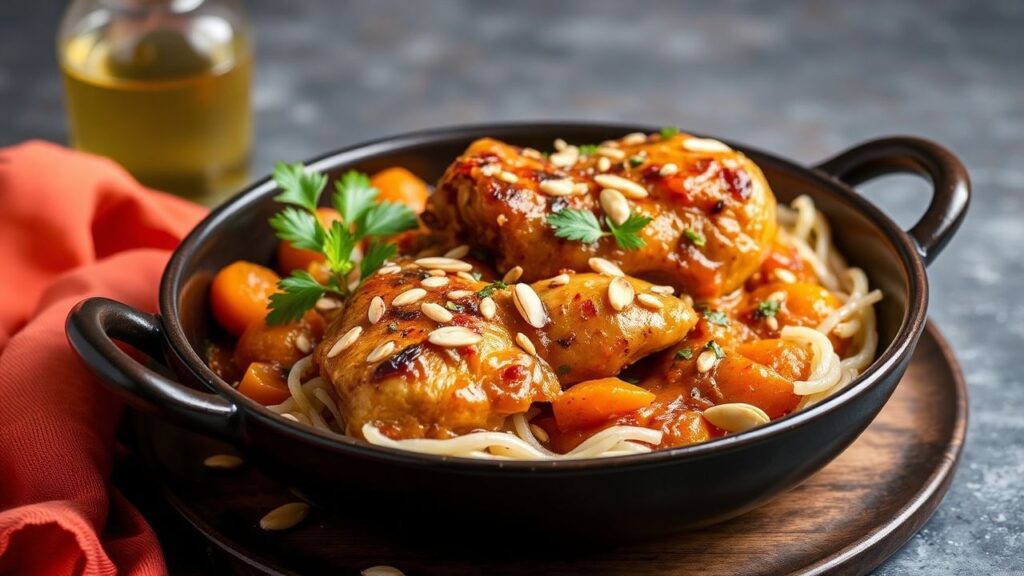
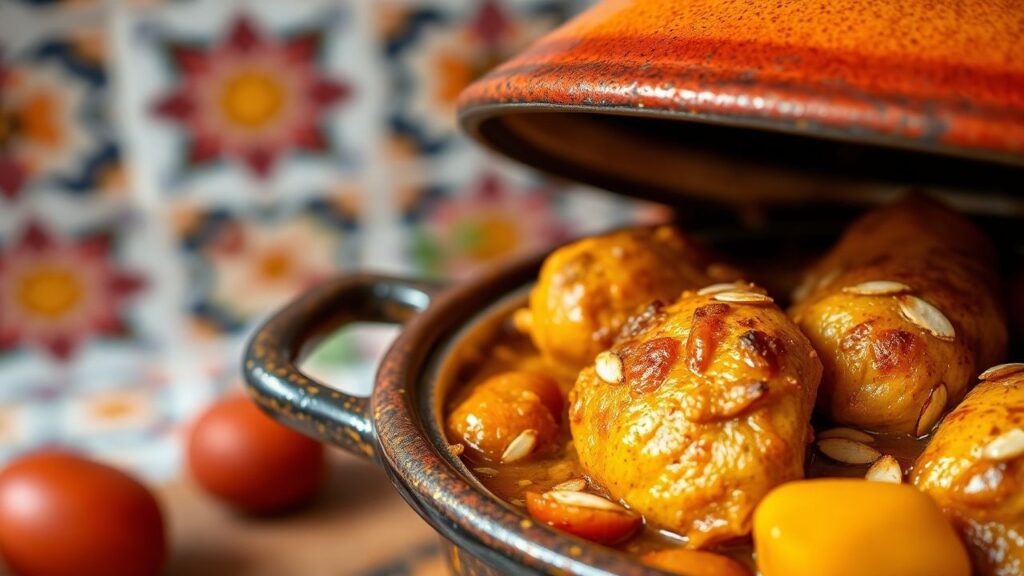
Crafting an authentic Moroccan Chicken tagine is a meditative process, one that rewards patience and attention to detail. It’s about building layers of flavor and allowing the ingredients to commune and transform. The traditional tagine pot is ideal, but a heavy-bottomed Dutch oven or a deep, oven-safe skillet with a tight-fitting lid will also serve admirably.
Harnessing the Aromatic Foundation
Begin by preparing your aromatics. Finely slice the onions, mince the garlic, and grate the fresh ginger. If using preserved lemon, rinse it thoroughly to remove excess salt, then finely chop the rind, discarding the pulp. In a small bowl, steep the saffron threads in 2 tablespoons of warm water; this process, known as blooming, releases their color and flavor.
Searing for Depth: The Chicken’s First Embrace
Heat the olive oil in your tagine base or Dutch oven over medium-high heat. Season the chicken pieces generously with salt and freshly ground black pepper. Carefully place the chicken pieces into the hot oil, skin-side down if applicable, and sear them until golden brown on all sides. This crucial step, known as the Maillard reaction, develops a rich, savory crust and renders some of the fat, which will form the base of your sauce. Do this in batches if necessary to avoid overcrowding the pot, which would steam rather than sear the chicken. Once seared, remove the chicken from the pot and set aside.
Building the Flavor Base: The Onion and Spice Mélange
Reduce the heat to medium. Add the sliced onions to the pot, scraping up any browned bits from the bottom. Cook the onions, stirring occasionally, until they are softened and translucent, about 8-10 minutes. This process draws out their natural sweetness. Add the minced garlic and grated fresh ginger, and cook for another minute until fragrant, being careful not to burn the garlic. Now, introduce the ground spices: ground ginger, turmeric, cinnamon, cumin, and coriander. Stir them into the onion and garlic mixture and cook for 1-2 minutes, allowing their aromas to bloom and intensify. This toasting of the dry spices is a vital step for unlocking their full flavor potential.
The Simmering Transformation
Return the seared chicken pieces to the pot, nestling them amongst the onions and spices. Pour in the bloomed saffron (including the water), the finely chopped preserved lemon (if using), and the chicken broth. Add the honey. Stir gently to combine, ensuring the chicken is mostly submerged in the liquid. Bring the mixture to a gentle simmer.
The Slow Dance of Flavors: Braising
Once simmering, cover the tagine or Dutch oven tightly with its lid. If using a tagine pot on a stovetop, ensure you are using a heat diffuser to prevent cracking. Alternatively, transfer the covered pot to a preheated oven at 160°C (320°F). Allow the tagine to braise gently for at least 1 hour and 15 minutes, or until the chicken is exceptionally tender and almost falling off the bone. The slow, humid cooking environment is what makes the tagine so effective at tenderizing meat and melding flavors.
Introducing the Sweetness: Apricots and Final Touches
After the initial braising period, stir in the dried apricots. Re-cover the pot and continue to cook for another 30-45 minutes, or until the apricots are plump and tender, and the sauce has thickened slightly. The apricots will absorb some of the liquid and their natural sugars will contribute to a beautiful, glossy glaze.
Finishing Touches: Texture and Aroma
While the tagine is in its final stages of cooking, toast the slivered almonds. You can do this in a dry skillet over medium heat, stirring frequently, until golden brown and fragrant, or spread them on a baking sheet and toast in the oven at 180°C (350°F) for 5-7 minutes. Watch them carefully, as they can burn quickly.
Once the chicken is cooked through and the apricots are tender, taste the sauce and adjust seasoning with salt and pepper as needed. The preserved lemon will have added a significant saltiness, so taste before adding more. If the sauce is too thin for your liking, you can remove the chicken and apricots and simmer the sauce uncovered for a few minutes to reduce it. Alternatively, you can gently mash a few of the apricots against the side of the pot to help thicken it naturally.
Serving the Moroccan Masterpiece
To serve, arrange the tender chicken pieces and plump apricots in a shallow serving dish or directly from the tagine pot. Spoon the rich, aromatic sauce generously over the top. Garnish with a liberal sprinkling of toasted slivered almonds and freshly chopped cilantro and parsley. This Moroccan Chicken tagine is traditionally served with couscous, which is perfect for soaking up every last drop of the exquisite sauce. Alternatively, crusty bread or rice pilaf make excellent accompaniments.
Nutritional Snapshot: A Wholesome Indulgence
While undeniably rich and flavorful, this Moroccan Chicken tagine offers a surprisingly balanced nutritional profile when prepared with mindful ingredient choices. The inclusion of lean protein, healthy fats from the almonds, and natural sugars from the apricots contributes to a satisfying and relatively wholesome meal.
Approximate Nutritional Information Per Serving (assuming 6 servings):
| Nutrient | Amount |
|---|---|
| Calories | 550-650 kcal |
| Protein | 35-45 g |
| Fat | 25-35 g |
| Saturated Fat | 6-8 g |
| Carbohydrates | 40-50 g |
| Fiber | 5-7 g |
| Sugars | 25-30 g (primarily from apricots and honey) |
| Sodium | 400-600 mg (can vary significantly based on preserved lemon and added salt) |
Note: These values are estimates and can vary based on specific ingredient brands, exact measurements, and portion sizes. The inclusion of preserved lemon will significantly impact sodium content.
Understanding the Nutritional Impact
The chicken provides a substantial source of lean protein, essential for muscle repair and growth. The olive oil and almonds contribute monounsaturated and polyunsaturated fats, which are beneficial for heart health. The apricots, while contributing natural sugars, also offer dietary fiber and vitamins A and C. The spices, beyond their flavor, contain antioxidants. The key to managing the nutritional profile lies in controlling added sugars and sodium, particularly from the preserved lemon and any added salt, and by choosing leaner cuts of chicken if desired (though bone-in dark meat offers superior flavor and moisture).
Elevating Your Moroccan Chicken: Pro Tips for Restaurant-Quality Results
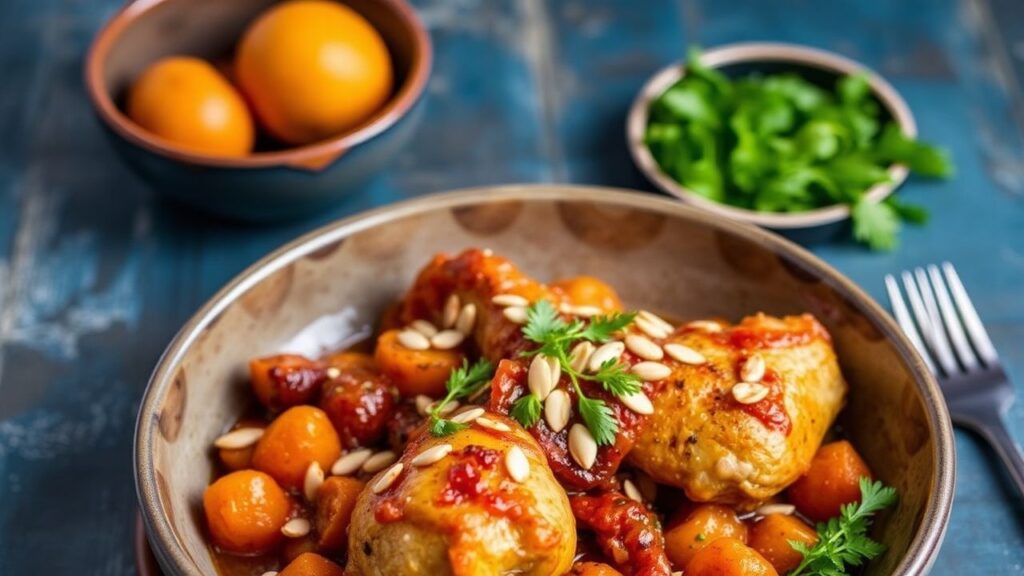
Transforming a good Moroccan Chicken tagine into an extraordinary one involves understanding the subtle techniques that chefs employ. These tips will help you achieve a depth of flavor and a refined presentation that will impress even the most discerning palates.
The Saffron Ritual: A Touch of Luxury
Never add saffron threads directly to the liquid. Always bloom them first in a small amount of warm water or broth. This not only ensures even distribution of flavor and color but also allows you to gauge the potency of your saffron. A pinch is potent; too much can impart an unpleasant medicinal note.
The Art of the Sear: Patience is Key
Don’t rush the searing of the chicken. A deep, even golden-brown crust is fundamental to developing the rich, savory base of the tagine sauce. Overcrowding the pan leads to steaming, not searing, and will compromise the final flavor. Work in batches, and don’t be tempted to move the chicken pieces too soon; allow them to develop that beautiful crust.
Preserved Lemon: The Secret Weapon
If you can source preserved lemons, use them. They are a cornerstone of authentic Moroccan flavor. The intensely fragrant, salty, and subtly fermented rind offers a complexity that cannot be replicated by fresh lemon zest alone. Rinse them well to manage the saltiness, and chop the rind very finely for even distribution. A little goes a long way.
The Toasted Almond Nuance
The almonds are not merely a garnish; they are an integral textural and flavor component. Toast them until they are fragrant and a uniform golden-brown. Be vigilant during this process, as they can transition from perfectly toasted to burnt in mere seconds. A light toast enhances their nutty character and provides a delightful crunch that contrasts beautifully with the tender chicken and soft apricots.
Balancing Sweetness and Acidity
The interplay between the sweetness of the apricots and honey, and the savory depth of the spices and chicken, is delicate. Taste and adjust seasoning at various stages. If the tagine seems too sweet, a little more preserved lemon or a tiny squeeze of fresh lemon juice at the end can provide a welcome acidic lift. Conversely, if it lacks sweetness, a touch more honey can be added.
FAQ: Your Moroccan Chicken Tagine Questions Answered
H2: Frequently Asked Questions About Moroccan Chicken Tagine
H3: Can I make Moroccan Chicken tagine with chicken breast instead of thighs?
While chicken thighs and drumsticks are recommended for their ability to remain moist and tender during the slow braising process, you can use chicken breast if preferred. However, it requires a different approach to cooking. To prevent the breast meat from drying out, it is best to sear it briefly, then add it to the tagine during the last 30-45 minutes of cooking, after the other ingredients have had time to develop their flavors. Alternatively, you can cut chicken breasts into larger chunks and cook them in the sauce for a shorter duration, ensuring they are not overcooked. The resulting dish will be lighter in flavor and texture compared to one made with dark meat.
H3: What are the best side dishes to serve with Moroccan Chicken tagine?
The quintessential accompaniment to Moroccan Chicken tagine is fluffy couscous. The tiny semolina grains are perfect for absorbing the rich, aromatic sauce. Prepare your couscous according to package directions, often by steeping it in hot broth or water. Other excellent options include:
- Moroccan-spiced rice pilaf: A flavorful rice dish that complements the tagine’s spices.
- Crusty bread: Ideal for scooping up every last drop of the sauce, especially a rustic baguette or a traditional Moroccan khobz.
- Steamed or roasted vegetables: Simple roasted carrots, zucchini, or a fresh green salad can provide a refreshing counterpoint.
Consider serving a selection of Moroccan salads, such as a vibrant carrot and orange salad or a simple tomato and cucumber salad, to add freshness and variety to the meal.
H3: How can I make my Moroccan Chicken tagine sauce richer and more flavorful?
Several techniques can enhance the richness and flavor of your tagine sauce:
- Properly sear the chicken: As detailed in the recipe, browning the chicken well creates a fond (browned bits) in the pot that forms the flavor base of the sauce.
- Bloom the spices: Toasting the dry spices briefly with the onions and garlic awakens their aromas and deepens their flavor.
- Use high-quality broth: A good chicken stock or homemade broth will lend more depth than a watery substitute.
- Incorporate preserved lemon: Its complex salty and fermented notes are unparalleled for adding depth and a unique Moroccan character.
- Slow, low cooking: Allowing the tagine to simmer gently for an extended period enables flavors to meld and the chicken to release its essence into the sauce.
- Reduce the sauce: If the sauce is too thin at the end, simmering it uncovered for a few minutes will concentrate its flavors and thicken it naturally.
- Add a touch of tomato paste: A tablespoon of good quality tomato paste, sautéed briefly with the aromatics, can add a subtle umami depth and richness to the sauce.
H3: Can I prepare Moroccan Chicken tagine in advance?
Yes, Moroccan Chicken tagine is an excellent dish to prepare in advance. In fact, many believe the flavors meld and deepen even further when allowed to rest overnight. You can cook the tagine completely, let it cool, and then refrigerate it. When ready to serve, gently reheat it on the stovetop over low heat or in a low oven. You may need to add a splash of broth or water if the sauce has thickened too much during storage. Garnish with toasted almonds and fresh herbs just before serving to maintain their texture and vibrancy.
This Moroccan Chicken tagine, proof of the enduring appeal of North African culinary artistry, promises a journey of taste and aroma. Its preparation is a rewarding ritual, and its consumption a delightful experience, bringing the warmth and vibrant flavors of Morocco directly to your table.
See also: Moroccan Chicken