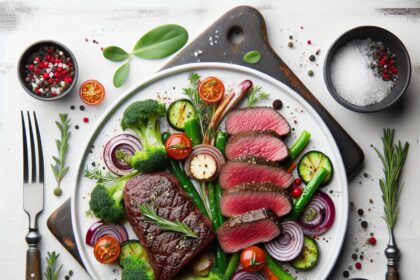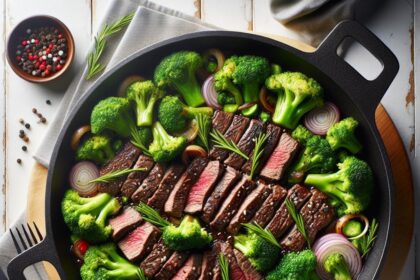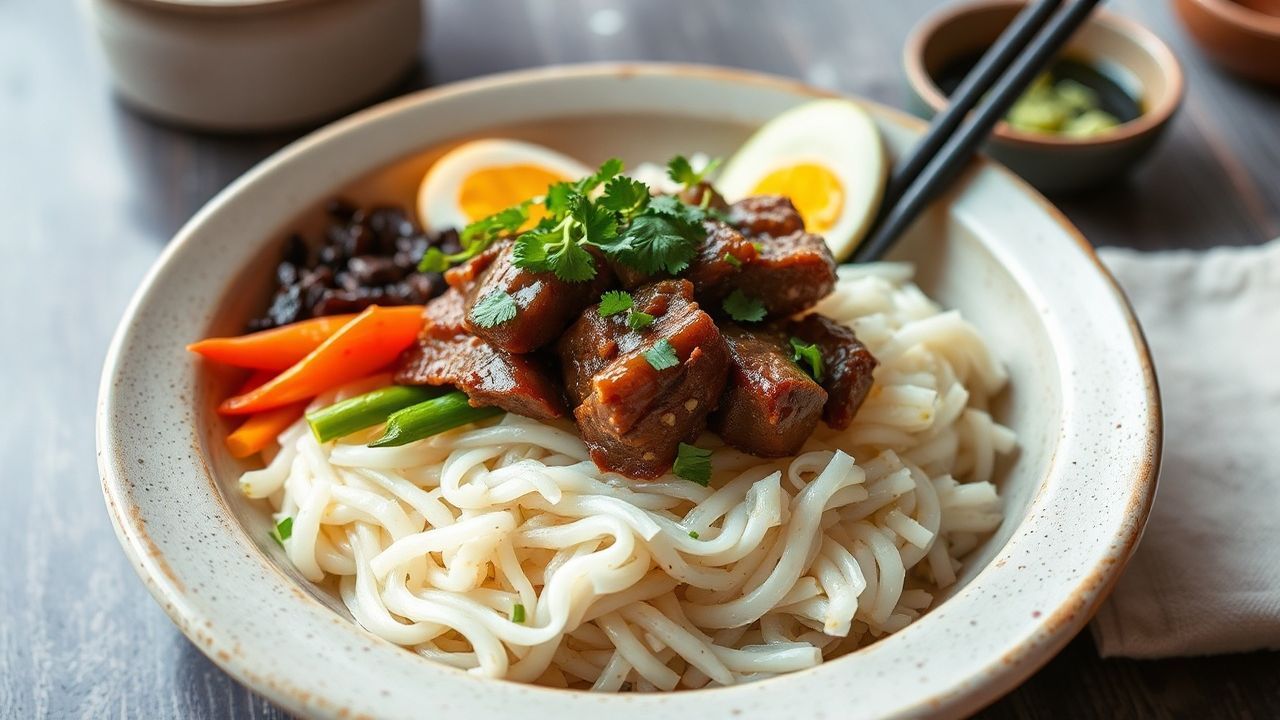

The notion that a perfectly balanced meal must be a singular, pre-ordained entity is a culinary fallacy perpetuated by uninspired plating. True gastronomic harmony is often achieved through thoughtful composition, where individual elements, each perfected in its own right, converge to create a greater, more profound whole. This is the very essence of Korean Bibimbap, a dish that transcends mere sustenance to become a canvas of vibrant flavors, textures, and aromas, particularly when anchored by tender bulgogi-marinated beef and a meticulously prepared array of seasonal vegetables.
- The Genesis of Harmony: A Cultural Tapestry in a Bowl
- Deconstructing the Masterpiece: Essential Components of Bibimbap
- The Heart of the Matter: Crafting the Perfect Bulgogi Beef and Vegetable Medley
- The Unifier: The Power of Gochujang Sauce
- Assembling the Masterpiece: The Art of Presentation
- Nutritional Profile: A Balanced Symphony
- Elevating Your Bibimbap: Pro-Tips from the Culinary Trenches
- Conclusion: A Culinary Canvas for Endless Creativity
- Frequently Asked Questions about Bibimbap
At a Glance: Key Takeaways
- Bibimbap is more than a mixed rice dish; it’s proof of Korean culinary philosophy of balance and harmony.
- The art lies in preparing each component to perfection before their ultimate, delightful union.
- Expertly seasoned beef and a vibrant medley of vegetables are crucial for an authentic and satisfying Bibimbap experience.
- The gochujang sauce is not merely a condiment but a critical flavor driver, demanding careful balancing.
The Genesis of Harmony: A Cultural Tapestry in a Bowl
The origins of Bibimbap are as rich and varied as its ingredients, with tales tracing its roots back to ancient agricultural practices and royal banquets. One popular theory suggests it evolved from the simple practice of mixing leftover banchan (side dishes) with rice, particularly during the Lunar New Year, a time for both celebration and resourcefulness. Another narrative points to its role in shamanistic rituals, where various offerings were mixed together. Regardless of its precise genesis, Bibimbap embodies the Korean concept of eumyangohaeng (yin and yang, and the five elements), where each color and ingredient represents a specific element and contributes to overall balance and well-being. The visual appeal is as paramount as the taste; a well-constructed Bibimbap is a feast for the eyes, mirroring the diversity of nature and the seasons.
The dish’s inherent adaptability has allowed it to flourish across different regions and social strata. From the humble farmer’s field to the opulent royal court, variations have emerged, each reflecting local produce and culinary preferences. This adaptability is proof of its enduring appeal, a dish that can be both deeply traditional and wonderfully contemporary. The modern iteration, often found in restaurants worldwide, typically features a base of steamed rice, crowned with an artful arrangement of seasoned vegetables, a protein (most commonly beef), and a dollop of spicy gochujang sauce. The magic truly happens when the diner, guided by tradition or impulse, mixes these elements together, transforming a visually stunning presentation into a symphony of unified flavors.
Deconstructing the Masterpiece: Essential Components of Bibimbap
Crafting an exceptional Bibimbap is not about haphazardly combining ingredients; it’s a meticulous process of preparing each element to its peak potential. The foundation, of course, is the rice. Typically, short-grain white rice is preferred for its slightly sticky texture, which holds the toppings and sauce together beautifully. However, for those seeking a more complex nutritional profile or a delightful textural contrast, a blend of white and brown rice, or even the addition of grains like barley or millet, can elevate the dish further. The cooking method is also key; perfectly steamed rice, neither mushy nor dry, is crucial for the overall success of the Bibimbap.
The vegetable components, or *namul*, are where the true artistry of Bibimbap shines. Each vegetable is prepared individually, often blanched or stir-fried, and then seasoned with a delicate hand. This ensures that each vegetable retains its distinct flavor, texture, and vibrant color. Common choices include:
- Spinach (Sigeumchi Namul): Blanching followed by a light seasoning of sesame oil, garlic, and a touch of soy sauce.
- Bean Sprouts (Kongnamul): Typically boiled until tender-crisp and seasoned similarly to spinach.
- Carrots (Danggeun Namul): Julienne and lightly sautéed to maintain a slight crunch and vibrant color.
- Shiitake Mushrooms (Pyogo Beoseot): Sliced and stir-fried with soy sauce, garlic, and often a hint of sugar to bring out their umami depth.
- Zucchini (Hobak Namul): Julienne and lightly stir-fried until tender-crisp.
- Radish (Mu Namul): Often thinly sliced and pickled or stir-fried.
The protein element, in this case, tender bulgogi-marinated beef, adds a rich, savory depth. The marinade is a critical factor, typically comprising soy sauce, garlic, ginger, sesame oil, sugar, and often a touch of pear or onion for natural tenderizing and sweetness. The beef is usually thinly sliced ribeye or sirloin, marinated for at least 30 minutes to allow the flavors to penetrate.
The Heart of the Matter: Crafting the Perfect Bulgogi Beef and Vegetable Medley
The preparation of the bulgogi beef is where a significant portion of the dish’s savory appeal is forged. The marinade is a delicate dance of sweet and savory, designed to both infuse flavor and tenderize the meat.
Bulgogi Beef Marinade Ingredients:
- 250g (approx. 1/2 lb) thinly sliced ribeye or sirloin
- 2 tablespoons soy sauce
- 1 tablespoon mirin (Korean rice wine) or dry sherry
- 1 tablespoon sesame oil
- 1 tablespoon finely grated pear or apple (for tenderizing and sweetness)
- 1 teaspoon minced garlic
- 1/2 teaspoon grated fresh ginger
- 1 teaspoon brown sugar or honey
- Pinch of black pepper
Bulgogi Beef Preparation:
1. In a medium bowl, whisk together all marinade ingredients until well combined.
2. Add the thinly sliced beef to the marinade, ensuring each piece is coated.
3. Cover and refrigerate for at least 30 minutes, or up to 2 hours for deeper flavor.
4. When ready to cook, heat a lightly oiled skillet or cast-iron pan over medium-high heat.
5. Add the marinated beef in a single layer, avoiding overcrowding the pan. Cook for 2-3 minutes per side, until beautifully caramelized and cooked through. Set aside.
The vegetables require a similar level of individual attention, ensuring each retains its integrity. The goal is not to create a homogenous mush but a vibrant mosaic of distinct tastes and textures.
Vegetable Preparation (Namul):
- Spinach: 150g (approx. 5 oz) fresh spinach, washed. Blanch in boiling water for 30 seconds. Immediately plunge into ice water to stop cooking. Squeeze out excess water. Toss with 1/2 teaspoon sesame oil, 1/4 teaspoon minced garlic, a pinch of salt, and a tiny splash of soy sauce.
- Bean Sprouts: 150g (approx. 5 oz) bean sprouts, rinsed. Boil in lightly salted water for 3-5 minutes until tender-crisp. Drain thoroughly. Toss with 1/2 teaspoon sesame oil, 1/4 teaspoon minced garlic, a pinch of salt, and a tiny splash of soy sauce.
- Carrots: 1 medium carrot, peeled and julienned. Sauté in 1 teaspoon of oil over medium heat for 2-3 minutes until tender-crisp. Season with a pinch of salt.
- Shiitake Mushrooms: 4-5 dried shiitake mushrooms, rehydrated and sliced, or 100g (approx. 3.5 oz) fresh shiitake mushrooms, sliced. Sauté in 1 teaspoon of oil with 1/2 teaspoon soy sauce, 1/4 teaspoon minced garlic, and a pinch of sugar until tender and slightly caramelized.
- Optional additions: Bell peppers (julienned and sautéed), cucumber (julienned and lightly salted to remove excess water), or fern bracken (*gosari*), often pre-cooked and seasoned.
The Unifier: The Power of Gochujang Sauce
No Bibimbap is truly complete without its signature sauce, the fiery and deeply flavorful gochujang. This fermented chili paste is the soul of the dish, providing a complex blend of spicy, sweet, and umami notes that bind all the individual components together. The quality of the gochujang itself is paramount; a well-aged, artisanal paste will offer a depth of flavor far superior to mass-produced varieties.
Classic Gochujang Sauce Ingredients:
- 2 tablespoons gochujang (Korean chili paste)
- 1 tablespoon sesame oil
- 1 tablespoon rice vinegar
- 1 teaspoon sugar or honey
- 1 teaspoon minced garlic
- 1/2 teaspoon toasted sesame seeds
- Optional: A splash of water to achieve desired consistency
Gochujang Sauce Preparation:
1. In a small bowl, combine gochujang, sesame oil, rice vinegar, sugar, minced garlic, and toasted sesame seeds.
2. Whisk until smooth and well incorporated. If the sauce is too thick, add a teaspoon of water at a time until it reaches a drizzling consistency. Adjust sweetness and acidity to your preference.
Assembling the Masterpiece: The Art of Presentation
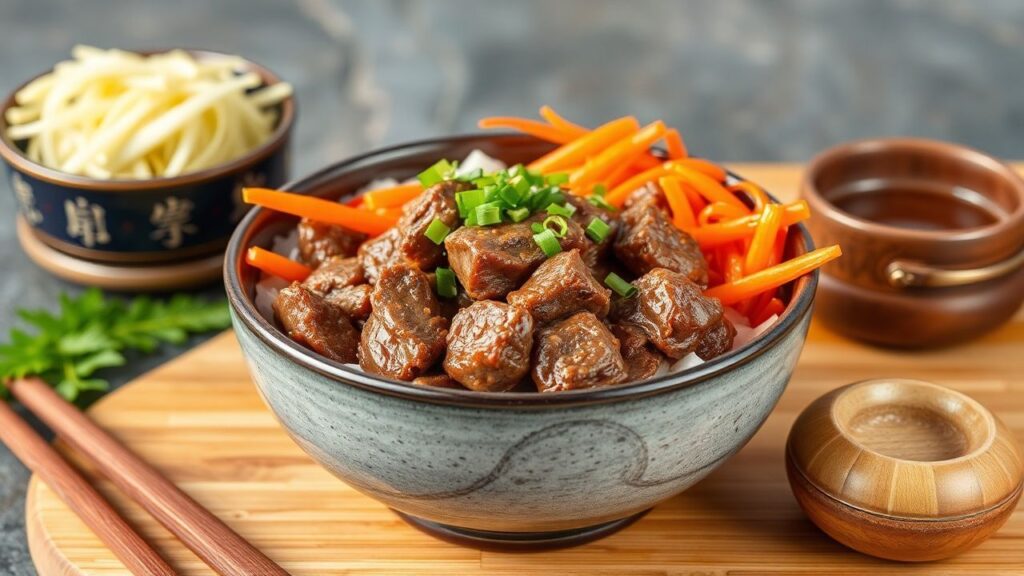
The visual appeal of Bibimbap is as integral to the experience as its taste. The arrangement of ingredients is not arbitrary; it’s a deliberate act of culinary artistry.
Bibimbap Assembly Instructions:
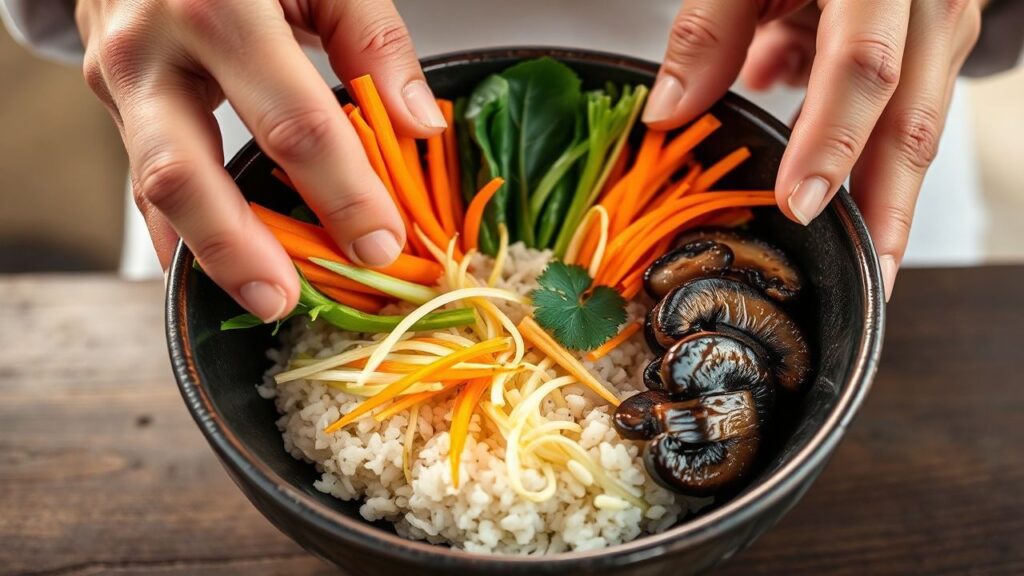
1. Start with a generous portion of warm, steamed rice in a large bowl. For an extra layer of flavor and texture, consider using a *dolsot* (hot stone bowl) which crisps the bottom layer of rice to a delightful crunch. If using a dolsot, lightly oil the bowl before adding the rice.
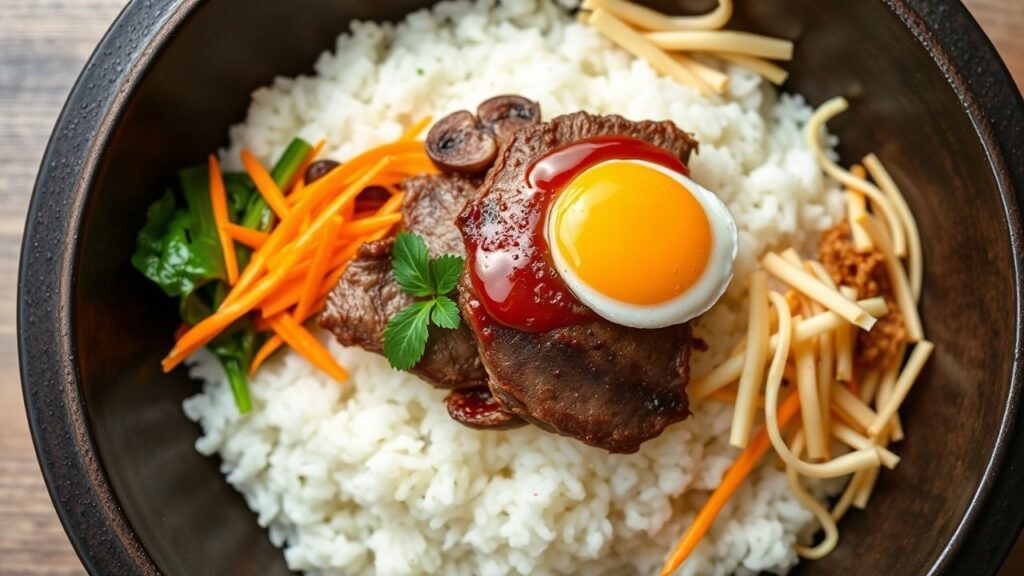
2. Artfully arrange the prepared vegetables and bulgogi beef in distinct sections atop the rice. Aim for a visually pleasing contrast of colors and shapes. Typically, the beef is placed in the center or to one side, with the vegetables fanned out around it.
3. Garnish with a fried egg, often sunny-side up with a runny yolk that will further enrich the dish when mixed. A sprinkle of toasted sesame seeds and finely chopped scallions adds a final flourish.
4. Serve the gochujang sauce on the side, allowing each diner to add as much or as little as they prefer.
The act of mixing the Bibimbap is a ritual in itself. It’s the moment where disparate elements unite, transforming a meticulously arranged tableau into a harmonious whole. The runny egg yolk emulsifies with the sauce and rice, while the crisp vegetables and tender beef provide textural counterpoints.
Nutritional Profile: A Balanced Symphony
A well-prepared Korean Bibimbap, particularly one featuring lean beef and a generous array of vegetables, can be a remarkably balanced and nutritious meal.
Estimated Nutritional Information (per serving, approximate):
- Calories: 500-700 kcal (varies greatly based on portion size and specific ingredients)
- Protein: 25-35g
- Fat: 20-30g (can be reduced by using leaner beef and less oil in vegetable preparation)
- Carbohydrates: 50-70g
- Fiber: 5-10g
- Vitamins & Minerals: Excellent source of Vitamin A, Vitamin C, iron, potassium, and various B vitamins due to the diverse vegetable and beef components.
Elevating Your Bibimbap: Pro-Tips from the Culinary Trenches
To truly transcend the everyday and achieve restaurant-quality Bibimbap in your own kitchen, a few expert touches can make all the difference.
Expert Pro-Tips for Bibimbap Perfection:
- The Power of Textural Contrast: Beyond the standard vegetables, consider adding crispy elements like fried wonton strips or toasted seaweed flakes for an unexpected textural dimension.
- The Dolsot Advantage: If you have a *dolsot*, use it! The characteristic sizzling sound and the formation of *nurungji* (scorched rice) at the bottom are fundamental to the Bibimbap experience for many. The intense heat also cooks the ingredients from below, creating a delightful crispiness.
- Seasoning is Key: Don’t be afraid to taste and adjust the seasoning of each individual component. A slightly under-seasoned vegetable can be rescued by the gochujang, but perfectly seasoned elements create a more complex and satisfying flavor profile.
- Marinating Matters for Beef: For the bulgogi, don’t rush the marinating process. The longer it sits, the more tender and flavorful the beef will be. Consider adding a splash of pear juice to the marinade; its natural enzymes are excellent tenderizers.
- The Egg’s Crucial Role: A perfectly cooked fried egg with a vibrant, runny yolk is non-negotiable for many. The yolk acts as a natural emulsifier, binding the flavors and adding a luxurious richness.
Conclusion: A Culinary Canvas for Endless Creativity
Bibimbap, in its essence, is a celebration of balance, flavor, and visual appeal. The meticulous preparation of each individual component, from the savory bulgogi beef to the vibrant medley of vegetables, is what elevates this dish beyond a simple mixed rice bowl. It is proof of the Korean culinary philosophy of harmony, where diverse elements converge to create a profoundly satisfying whole. Whether prepared in a traditional stone pot or a humble everyday bowl, Bibimbap offers a canvas for endless creativity, allowing for seasonal variations and personal culinary interpretations. It’s a dish that nourishes the body and delights the senses, a true masterpiece waiting to be mixed and savored.
Frequently Asked Questions about Bibimbap
What is the difference between Bibimbap and other mixed rice dishes?
While many cultures have dishes involving mixed rice, Bibimbap is distinguished by its specific Korean preparation and philosophy. Key differences lie in the meticulous individual preparation of each topping (namul and protein), the use of gochujang as a primary flavoring agent, and the emphasis on a visually balanced presentation before mixing. Unlike a simple fried rice where ingredients are cooked together, Bibimbap components are often pre-cooked separately to maintain their distinct textures and flavors, which are then unified by the diner’s mixing and the gochujang sauce. The concept of balancing colors and elements, rooted in Korean philosophy, is also a defining characteristic.
Can I make Bibimbap vegetarian or vegan?
Absolutely. Bibimbap is incredibly versatile and can be easily adapted for vegetarian and vegan diets. For a vegetarian version, simply omit the beef and increase the variety and quantity of vegetables. You can also add pan-fried tofu, marinated mushrooms, or even a vegetarian bulgogi-style protein. For a vegan Bibimbap, ensure that all ingredients, including the gochujang sauce (some contain fish products) and any marinades, are free from animal products. Many gochujang brands are naturally vegan, but it’s always worth checking the label. The fried egg can be replaced with a perfectly cooked seasoned tofu or omitted entirely.
What is the significance of the fried egg in Bibimbap?
The fried egg, typically served sunny-side up with a runny yolk, matter significantly in the Bibimbap experience. Its primary function is to act as a rich, emulsifying agent. When mixed into the hot rice and toppings, the warm, flowing yolk coats the ingredients, adding a luxurious creaminess and binding the flavors together. It contributes a delicate richness that complements the spiciness of the gochujang and the various textures of the vegetables and meat. For many, the runny yolk is an essential part of achieving the perfect bite, enriching the overall taste and mouthfeel of the dish.
How do I prevent my Bibimbap from becoming soggy?
To prevent your Bibimbap from becoming soggy, several techniques are crucial. Firstly, ensure all vegetables are thoroughly drained after blanching or cooking to remove excess moisture. Squeeze out as much water as possible, especially from spinach and bean sprouts. Secondly, when assembling, avoid letting the sauce sit on the rice and vegetables for too long before mixing. The ideal scenario is to serve the sauce on the side, allowing the diner to add it just before eating. If using a *dolsot*, the hot stone bowl itself helps to crisp the bottom layer of rice, creating a barrier against sogginess. Lastly, using a slightly firmer, less sticky rice variety can also help maintain better texture.
See also: Bibimbap