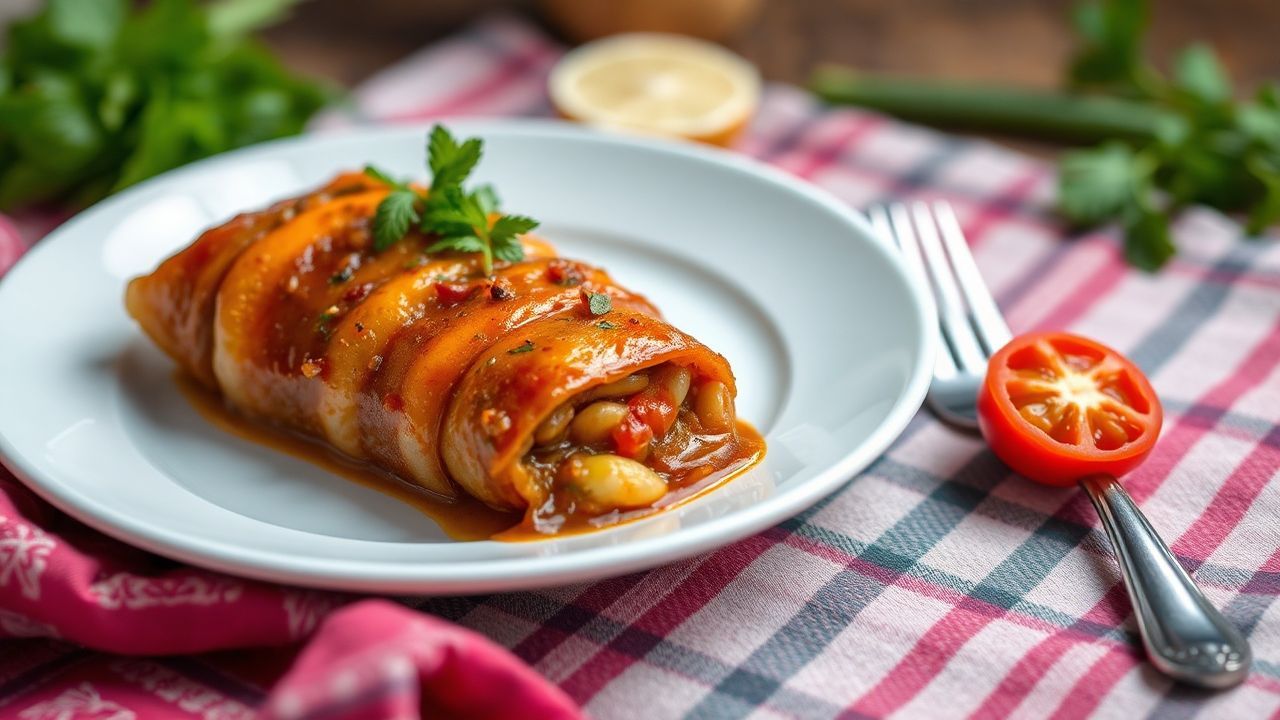

The aroma of simmering tomatoes, fragrant herbs, and a hint of warming spices – it’s a scent that, for many, conjures an immediate sense of homecoming, of shared meals and generations of culinary tradition. In the heart of Iraq, this evocative perfume is invariably linked to Dolma, a dish that transcends mere sustenance to become proof of patience, generosity, and the art of coaxing profound flavor from humble ingredients. It is not merely a meal; it is an event, a communal undertaking where families gather to meticulously prepare the components, a ritual that imbues each stuffed vegetable with a history and a soul.
- The Soul of the Plate: Understanding Iraqi Dolma
- The Anatomy of Perfection: Ingredients for Authentic Iraqi Dolma
- The Ritual of Preparation: A Step-by-Step Guide to Crafting Dolma
- Step 1: Preparing the Vegetables – The Foundation
- Step 2: Crafting the Aromatic Filling – The Heart of the Dolma
- Step 3: The Art of Stuffing – Patience and Precision
- Step 4: Assembling the Pot – A Culinary Mosaic
- Step 5: The Simmering Transformation – Infusing Flavors
- Nutritional Profile: A Wholesome Indulgence
- Elevating Your Dolma: Expert Tips for Culinary Excellence
- 💡 Expert Insight Expert Insight: The Importance of the Broth
- ⚠️ Pro-Caution Pro-Caution: The Rice-to-Meat Ratio
- Further Enhancements for a Restaurant-Quality Dolma:
- The Legacy of Dolma: More Than Just a Meal
- Frequently Asked Questions About Iraqi Dolma
At a Glance: Key Takeaways
- Iraqi Dolma is a complex, layered dish requiring patience and precision, reflecting deep cultural significance.
- The choice and preparation of vegetables are paramount to achieving the perfect texture and flavor balance.
- A masterful Dolma filling balances savory meat, aromatic herbs, and perfectly cooked rice, bound by a tangy sauce.
- Serving Dolma is an act of hospitality, often involving a lengthy, slow cooking process that melds all elements into a harmonious whole.
The Soul of the Plate: Understanding Iraqi Dolma
Iraqi Dolma is not a singular entity but rather a vibrant tapestry of stuffed vegetables, each contributing its unique texture and character to the final symphony. While the concept of stuffing vegetables is ancient and geographically widespread, the Iraqi iteration possesses a distinct identity, shaped by the region’s agricultural bounty, historical influences, and a deeply ingrained culinary philosophy. Unlike some of its more casually assembled counterparts, Iraqi Dolma is a dish that demands respect for its constituent parts. The vegetables are not merely vessels; they are integral players, their tender flesh yielding to the embrace of the flavorful filling, absorbing the rich broth in which they slowly simmer.
The foundation of any exceptional Dolma lies in the meticulous selection and preparation of the vegetables. This is where the true artistry begins. Consider plump, ripe tomatoes, their skins yielding to a gentle scoring; bell peppers, their vibrant hues promising sweetness; tender zucchini, their cores scooped out to create perfect hollows; and delicate grape leaves, their tartness a crucial counterpoint. The careful blanching of grape leaves, the precise hollowing of larger vegetables, and the gentle handling of smaller ones are all crucial steps that prevent them from becoming mushy during the long cooking process. It is this dedication to detail, this reverence for each ingredient, that elevates Dolma from a simple stuffed dish to a culinary masterpiece.
The Anatomy of Perfection: Ingredients for Authentic Iraqi Dolma
Crafting an authentic Iraqi Dolma is a journey that begins with sourcing the finest ingredients. The proportions and quality of each component are critical in achieving the signature balance of flavors and textures. This recipe aims for a substantial batch, ideal for a family gathering or for experiencing the satisfaction of leftovers. Remember, the magic of Dolma is often amplified on the second day.
For the Stuffed Vegetables:
- Tomatoes: 12-15 medium, ripe but firm (about 1.5 kg / 3.3 lbs)
- Bell Peppers: 6-8 medium, a mix of colors (red, yellow, green) (about 1 kg / 2.2 lbs)
- Zucchini: 6-8 medium, firm and straight (about 1.2 kg / 2.6 lbs)
- Eggplant: 2-3 small, firm (about 600g / 1.3 lbs)
- Onions: 4-6 medium, yellow or white (about 800g / 1.7 lbs)
- Grape Leaves: 50-60 fresh or brined leaves (if brined, rinse thoroughly)
For the Aromatic Filling:
- Ground Lamb or Beef: 500g (1.1 lbs) – a mix is often preferred for richness
- Short-grain Rice: 2 cups (400g) – rinsed thoroughly and drained
- Fresh Parsley: 1 large bunch (about 150g), finely chopped
- Fresh Dill: 1/2 bunch (about 50g), finely chopped
- Fresh Mint: 1/4 bunch (about 25g), finely chopped
- Tomatoes: 2 medium, finely diced (about 200g)
- Onions: 2 medium, finely diced (about 200g)
- Garlic: 4-6 cloves, minced
- Tomato Paste: 2 tablespoons
- Olive Oil: 1/4 cup (60ml)
- Spices:
- 1 teaspoon ground cumin
- 1 teaspoon ground coriander
- 1/2 teaspoon ground allspice
- 1/4 teaspoon ground cinnamon
- Pinch of cayenne pepper (optional, for a hint of heat)
- Salt and freshly ground black pepper, to taste
For the Tangy Cooking Broth:
- Pomegranate Molasses: 1/2 cup (120ml) – essential for the characteristic tang
- Tamarind Paste: 2 tablespoons (dissolved in 1/4 cup hot water, strained) – optional, for added complexity
- Lemon Juice: 1/4 cup (60ml) – fresh
- Tomato Paste: 1 tablespoon
- Water or Vegetable Broth: 4-6 cups (950ml – 1.4 liters), as needed
- Salt: to taste
The Ritual of Preparation: A Step-by-Step Guide to Crafting Dolma
The preparation of Iraqi Dolma is a labor of love, a multi-stage process that rewards patience with an unparalleled depth of flavor. Each step is a building block, contributing to the final harmonious dish. It is advisable to enlist help for this culinary endeavor; the process is more enjoyable and efficient when shared.
Step 1: Preparing the Vegetables – The Foundation
- Tomatoes: Using a sharp paring knife, carefully cut off the tops of the tomatoes. Reserve the tops. Gently scoop out the insides of the tomatoes with a small spoon, being careful not to puncture the skins. The scooped-out tomato pulp can be finely chopped and added to the filling or used to line the bottom of the cooking pot.
- Bell Peppers: Cut off the tops of the bell peppers and reserve them. Scoop out the seeds and membranes from the inside.
- Zucchini: Trim the ends of the zucchini. Using a mandoline corer or a long, narrow spoon, carefully hollow out the zucchini, leaving about a 1/4-inch (0.6 cm) wall. The scooped-out zucchini flesh can also be added to the filling.
- Eggplant: For smaller eggplants, slice off the stem end. Then, carefully hollow them out, similar to the zucchini, leaving a thick wall. For larger eggplants, you can halve them lengthwise and then hollow them out.
- Onions: This is arguably the most time-consuming part. Bring a pot of water to a boil. Add the whole onions and boil for 5-10 minutes, until slightly softened. This makes them easier to peel and separate into layers. Carefully peel the outer layers. Then, working from the root end, carefully separate the onion layers into individual pockets. You will want to separate them into sections that can hold filling, typically 2-3 layers per pocket, depending on the onion size. Avoid breaking the layers completely if possible.
- Grape Leaves: If using fresh grape leaves, blanch them in boiling water for 1-2 minutes until pliable. If using brined leaves, rinse them thoroughly under cold water to remove excess salt.
Step 2: Crafting the Aromatic Filling – The Heart of the Dolma
- In a large mixing bowl, combine the ground meat, rinsed and drained rice, finely chopped parsley, dill, and mint.
- Add the finely diced tomatoes, diced onions, minced garlic, tomato paste, and olive oil.
- Season generously with cumin, coriander, allspice, cinnamon, cayenne pepper (if using), salt, and freshly ground black pepper.
- Mix all ingredients thoroughly with your hands until well combined. The mixture should be fragrant and evenly distributed.
Step 3: The Art of Stuffing – Patience and Precision
- Vegetables: Begin stuffing the prepared vegetables. For tomatoes, peppers, zucchini, and eggplant, fill them about three-quarters full with the rice and meat mixture. Do not overstuff, as the rice will expand during cooking.
- Onions: Carefully place a portion of the filling into each separated onion layer. Fold the edges of the layer over the filling to enclose it.
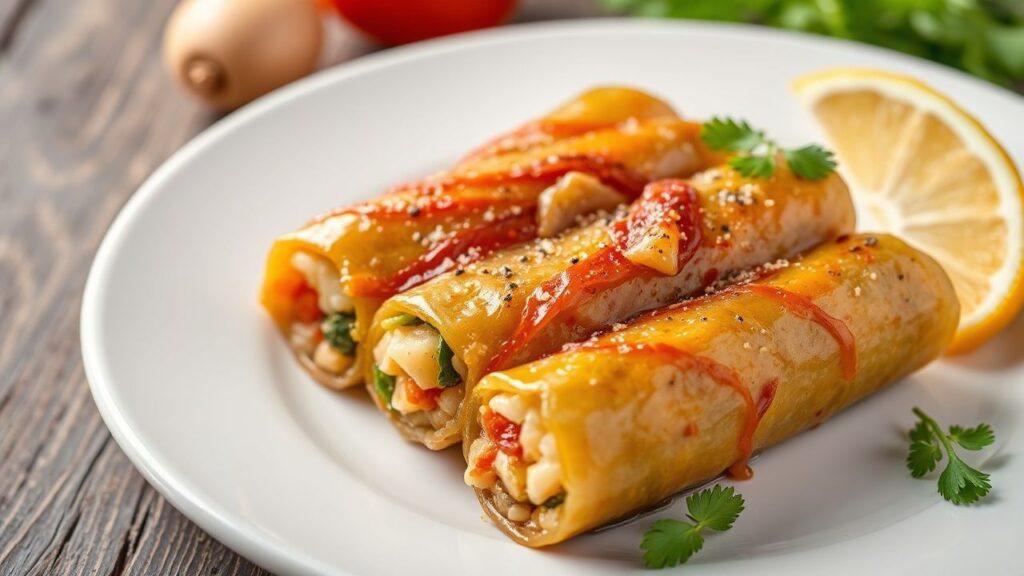
- Grape Leaves: Place a small spoonful of filling onto the stem end of a grape leaf. Fold in the sides of the leaf, then roll it up tightly, like a small cigar.
Step 4: Assembling the Pot – A Culinary Mosaic
- Line the bottom of a large, heavy-bottomed pot with any reserved tomato pulp, some of the scooped-out vegetable scraps, or a few extra grape leaves to prevent sticking and add flavor.
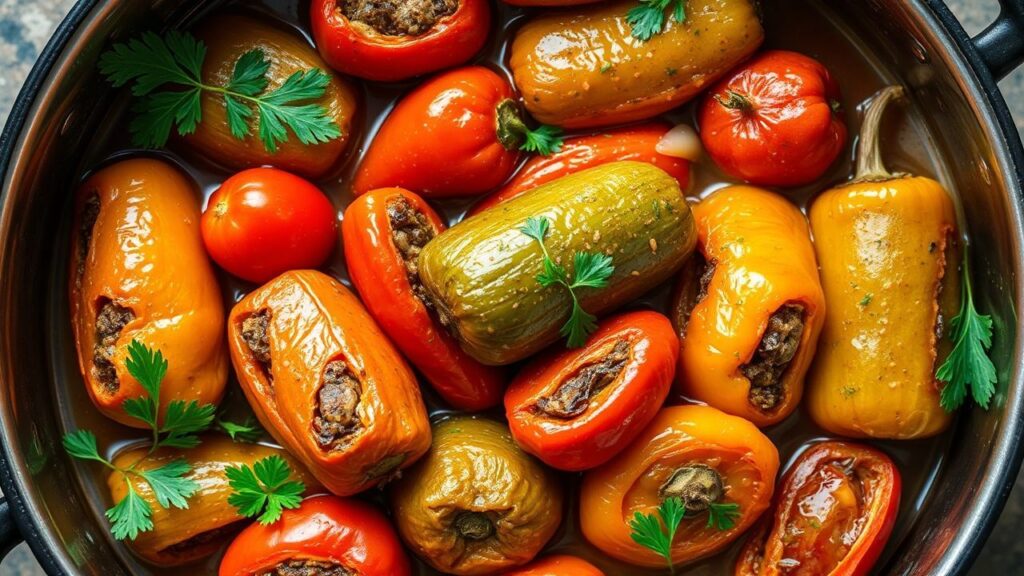
- Begin arranging the stuffed vegetables in the pot. Start with the larger, sturdier vegetables like eggplant and zucchini at the bottom, followed by bell peppers and tomatoes. Place the stuffed onion layers and grape leaves in the gaps between the larger vegetables or on top.
- Ensure the vegetables are packed relatively snugly, but not so tightly that they cannot expand during cooking. This helps them retain their shape.
- If you have any remaining filling, you can roll small grape leaf rolls to fill any remaining spaces.
Step 5: The Simmering Transformation – Infusing Flavors
- In a separate bowl, whisk together the pomegranate molasses, dissolved tamarind paste (if using), fresh lemon juice, tomato paste, and salt.
- Pour this tangy mixture over the arranged vegetables in the pot.
- Add water or vegetable broth to the pot until it just covers the vegetables. The liquid level is crucial; too much will dilute the flavors, too little will result in uneven cooking.
- Place a heatproof plate directly on top of the stuffed vegetables to keep them submerged and prevent them from falling apart during cooking.
- Cover the pot tightly with a lid.
- Bring the liquid to a gentle simmer over medium heat, then immediately reduce the heat to low.
- Allow the Dolma to simmer very gently for at least 2 to 3 hours, or until the rice is fully cooked and the vegetables are tender. The longer and slower the simmer, the more the flavors will meld.
Nutritional Profile: A Wholesome Indulgence
Iraqi Dolma, while a rich and satisfying dish, offers a surprisingly balanced nutritional profile when prepared with leaner meats and a focus on fresh vegetables. The exact nutritional values will vary depending on the specific ingredients used, particularly the fat content of the meat and the amount of oil incorporated. However, a typical serving (approximately 2-3 stuffed vegetables and a portion of the filling) can be estimated as follows:
| Nutrient | Approximate Amount (per serving) |
|---|---|
| Calories | 400-550 kcal |
| Protein | 20-30g |
| Fat | 15-25g (varying with meat choice) |
| Carbohydrates | 40-55g |
| Fiber | 5-8g |
| Sodium | Variable (depending on added salt and broth) |
The dish is a good source of vitamins and minerals from the diverse array of vegetables, including Vitamin C from peppers and tomatoes, Vitamin A, and various B vitamins. The rice provides complex carbohydrates for energy, and the meat contributes essential amino acids and iron. The herbs not only add flavor but also offer antioxidants. For a healthier rendition, consider using lean ground turkey or a combination of lean beef and lentils, and be mindful of the amount of oil used in the filling.
Elevating Your Dolma: Expert Tips for Culinary Excellence
Achieving truly exceptional Iraqi Dolma is a culmination of understanding subtle techniques and ingredient synergies. These insights, honed over years of culinary exploration, can transform a good Dolma into an unforgettable one.
💡 Expert Insight
Expert Insight: The Importance of the Broth
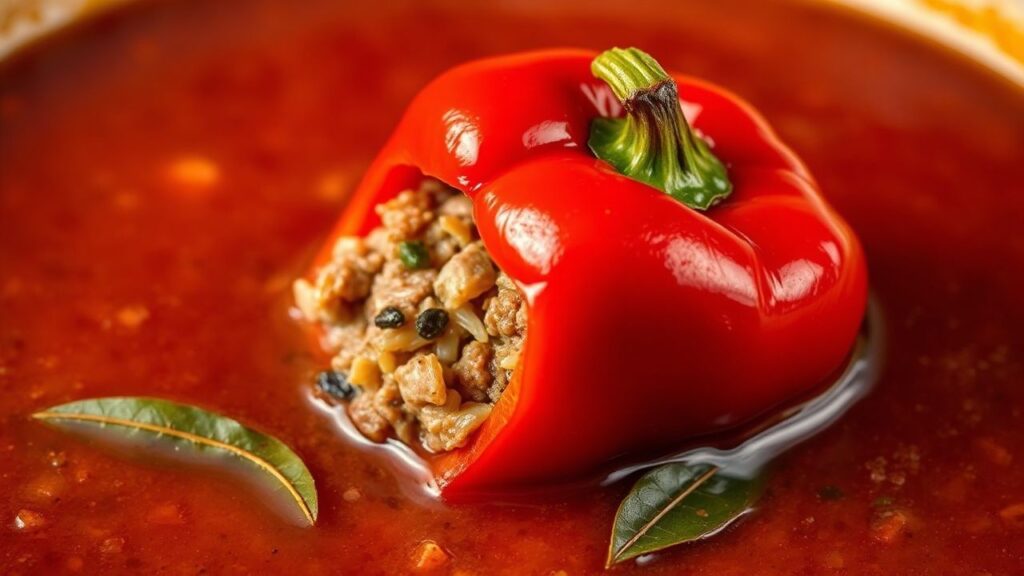
The cooking broth is not merely a liquid; it is the soul of the Dolma. The balance of sour (pomegranate molasses, lemon juice) and savory (tomato paste, herbs) is paramount. Don’t be afraid to taste and adjust the broth before simmering. A common mistake is to make it too bland; it should have a pronounced tang and depth that will permeate the vegetables and filling. Some chefs advocate for adding a few dried or fresh sour plums to the broth for an extra layer of complex tartness. Furthermore, the initial layer of scooped-out tomato pulp or vegetable trimmings at the bottom of the pot acts as a flavor anchor, slowly releasing its essence into the cooking liquid.
The simmering process is a slow dance of flavors. A vigorous boil will break down the delicate vegetables, while a whisper-soft simmer allows the ingredients to meld harmoniously. The plate on top is non-negotiable; it ensures even cooking and prevents the lighter ingredients, like grape leaves, from floating and becoming exposed to the air, which can lead to dryness. The aroma that fills your kitchen during this slow simmer is a promise of the deliciousness to come.
⚠️ Pro-Caution
Pro-Caution: The Rice-to-Meat Ratio
A common pitfall in Dolma preparation is an imbalanced rice-to-meat ratio. Too much rice can lead to a dry, crumbly filling, while too little can make the filling overly rich and heavy. The ideal ratio ensures that the rice cooks to a tender, slightly al dente texture, binding the meat and herbs without becoming mushy. It’s crucial to rinse the rice thoroughly to remove excess starch, which can make the filling gummy. Furthermore, the rice should be added raw to the filling; it will cook and absorb the juices from the meat and vegetables during the long simmering process. A good starting point is a 1:1 ratio by volume of rice to meat, adjusted slightly based on personal preference and the moisture content of your other filling ingredients.
Consider the texture you are aiming for. A slightly firmer rice provides a pleasant chew, while a softer rice will meld more seamlessly with the meat. The herbs matter significantly in this balance, their freshness cutting through the richness and adding aromatic complexity. Experimentation is key to finding your perfect ratio, but always err on the side of slightly more meat if you are unsure, as it contributes more moisture and flavor to the overall dish.
Further Enhancements for a Restaurant-Quality Dolma:
- Herb Intensity: Don’t shy away from fresh herbs. Generous amounts of parsley, dill, and mint are non-negotiable for authentic flavor. Some regional variations even incorporate chives or cilantro.
- Spice Nuance: The warming spices like cumin, coriander, and allspice are essential. A tiny pinch of cinnamon adds an unexpected depth that complements the savory notes beautifully.
- Pomegranate Molasses: This ingredient is the cornerstone of the tangy broth. Its complex, sweet-tart profile is irreplaceable. If you cannot find it, a combination of balsamic glaze and lemon juice can offer a similar effect, though it won’t be identical.
- Tamarind’s Touch: While optional, tamarind paste adds a subtle, exotic sourness that further elevates the broth. Its preparation involves dissolving the paste in hot water and straining to remove seeds and fibers.
- Layering is Key: The way you arrange the vegetables in the pot matters. Sturdier items at the bottom ensure they cook through, while more delicate items like grape leaves can be placed on top.
- Patience in Simmering: The longer, slower simmer is critical. This allows the flavors to meld and the rice to cook perfectly without becoming mushy. Low and slow is the mantra here.
The Legacy of Dolma: More Than Just a Meal
Iraqi Dolma is more than just a collection of stuffed vegetables; it is a culinary heritage, a storytelling medium, and a profound expression of hospitality. In Iraqi culture, preparing and serving Dolma is an act of deep respect and generosity. It is a dish reserved for special occasions, for welcoming guests, and for family gatherings where the act of communal preparation itself fosters bonds. The intricate process, from hollowing out each vegetable to carefully rolling each grape leaf, speaks of dedication and love. It is a dish that requires time, not just for cooking, but for the meticulous preparation that precedes it. This shared effort, often undertaken by multiple generations, transforms the kitchen into a hub of connection and culinary education.
The complexity of Dolma also reflects the richness of Iraqi cuisine, a fusion of Arab, Persian, and Turkic influences, shaped by centuries of trade and cultural exchange. The use of spices, the emphasis on fresh produce, and the art of slow cooking are all hallmarks of this vibrant culinary tradition. A well-executed plate of Dolma, with its vibrant colors and layered flavors, is proof of the enduring power of food to connect us to our past, our families, and our communities. It is a dish that continues to be cherished and passed down, ensuring that its delicious legacy endures for generations to come.
Frequently Asked Questions About Iraqi Dolma
What makes Iraqi Dolma different from other stuffed vegetable dishes?
Iraqi Dolma is distinguished by its specific combination of vegetables and, most importantly, its characteristic tangy and savory cooking broth. While other cultures stuff vegetables, the Iraqi version often incorporates a wider variety of vegetables in a single pot, including onions and grape leaves, alongside tomatoes, peppers, and zucchini. The defining element is the liberal use of pomegranate molasses and lemon juice in the broth, creating a unique sweet-sour complexity that infuses the entire dish. The filling itself is also typically more herbaceous, with generous amounts of fresh parsley, dill, and mint, and often includes a balance of ground meat and short-grain rice.
Can I make Dolma without meat?
Absolutely. Iraqi Dolma can be prepared as a vegetarian or vegan dish with excellent results. For a vegetarian version, you can omit the meat and increase the proportion of rice and finely chopped vegetables (like carrots, mushrooms, or more onions) in the filling. For a vegan rendition, ensure you use vegetable broth instead of meat broth and potentially add a touch more olive oil or a vegan protein source like cooked lentils or finely chopped firm tofu to the filling to provide substance. The foundational flavors of the herbs, spices, and the tangy broth remain the same, ensuring a delicious and satisfying meal.
How can I store and reheat leftover Dolma?
Leftover Dolma stores beautifully and often tastes even better the next day. Once cooled, transfer the Dolma and any remaining broth to an airtight container and refrigerate for up to 3-4 days. To reheat, gently warm the Dolma in a pot with its cooking liquid over low heat on the stovetop, ensuring it doesn’t boil vigorously. Alternatively, you can reheat individual portions in a microwave-safe dish, adding a splash of water or broth to prevent dryness. For a more crispy texture, you can also briefly pan-fry a few pieces after reheating, though this is less traditional.
See also: Dolma