
The Unsung Hero of Cairo’s Streets: Unpacking the Soul of Koshari
The notion that street food is inherently inferior to restaurant fare is a profoundly misguided, and frankly, elitist, perspective. Nowhere is this more evident than in the case of Egyptian Koshari. This seemingly simple, yet complex, assembly of humble ingredients is not merely sustenance; it is a culinary cornerstone, a national obsession, and proof of the ingenuity of Egyptian cuisine. To dismiss it as mere “street food” is to overlook a dish that has woven itself into the very fabric of Egyptian identity, a dish that, when prepared with care and understanding, rivals any haute cuisine in its depth of flavor, textural interplay, and sheer soul-satisfying power. My journey into the heart of Koshari preparation has revealed a dish that is far more than the sum of its parts – it is a carefully orchestrated symphony, demanding precision and respect for each individual element.
- The Unsung Hero of Cairo’s Streets: Unpacking the Soul of Koshari
- Deconstructing the Koshari Symphony: Essential Ingredients
- The Art of Preparation: A Step-by-Step Culinary Journey
- 1. The Rice Component: Fluffy Perfection
- 2. The Lentil Element: Earthy Depth
- 3. The Pasta Component: Al Dente Bite
- 4. The Chickpea Component: Creamy Richness
- 5. The Spiced Tomato Sauce (Salata): The Heartbeat
- 6. The Garlic Vinegar Sauce (Daqqa): The Zing Factor
- 7. Crispy Fried Onions: The Crown Jewel
- 8. The Chili Sauce (Shatta – Optional): The Fiery Kiss
- Assembling Your Masterpiece: The Koshari Ritual
- Nutritional Insights: A Wholesome Powerhouse
- Elevating Koshari: Expert Tips for Restaurant-Quality Results
- Conclusion: The Enduring Appeal of Koshari
- Frequently Asked Questions about Koshari
At a Glance: Mastering Egyptian Koshari
- A Culinary Mosaic: Koshari is a masterful blend of textures and flavors, showcasing the beauty of simple, accessible ingredients elevated through skillful preparation.
- Layered Complexity: Each component – rice, lentils, pasta, chickpeas, and the all-important sauces – plays a distinct role, contributing to a harmonious whole that is greater than its individual parts.
- The Sauces are Key: The transformative power of the spiced tomato sauce and the pungent garlic-infused vinegar (daqqa) cannot be overstated; they are the soul of the dish.
- Customization is King: While a classic Koshari is a delight, the true joy lies in its adaptability, allowing for personal preference in spice levels and ingredient ratios.
This dish, beloved by all strata of Egyptian society, from the bustling markets of Cairo to the quiet homes of Alexandria, represents a unique confluence of culinary influences. Its origins are debated, with some tracing it back to the British colonial era, suggesting a fusion of Indian lentil dishes (like khichdi) with local Egyptian staples. Others point to an older lineage, seeing echoes of ancient Roman and Greek grain preparations. Regardless of its precise genesis, Koshari has evolved into an unequivocally Egyptian icon, a dish that evokes nostalgia, comfort, and a profound sense of national pride. Its widespread appeal lies in its affordability, its nutritional completeness, and its ability to be endlessly customized, making it a perfect canvas for personal expression.
The magic of Koshari lies in its meticulous layering. It’s a dish that requires patience, a willingness to engage with multiple cooking processes simultaneously, and an understanding that each component, however seemingly minor, contributes critically to the final experience. It’s not about throwing disparate ingredients together; it’s about coaxing the best out of each one before uniting them in a glorious, edible mosaic.
Deconstructing the Koshari Symphony: Essential Ingredients
To truly appreciate Koshari, one must understand its constituent parts. Each element, prepared with care, contributes a vital texture, flavor, or aroma to the final dish. This is not a recipe for a quick weeknight meal; it is an invitation to engage in a culinary craft, to understand the nuances that elevate a simple assembly into a masterpiece.
The Foundation: Grains and Legumes
The base of Koshari is a carefully balanced blend of carbohydrates and protein, providing both sustenance and texture. The interplay between these elements is crucial for the dish’s signature mouthfeel.
- Rice: Long-grain white rice (like basmati or Egyptian rice) is the standard. It should be cooked until fluffy and separate, never mushy. A touch of oil or butter can enhance its richness.
- Brown Lentils: These small, earthy legumes provide a grounding, slightly firm texture and a robust flavor. They are typically boiled until tender but not disintegrated.
- Macaroni: Small, elbow-shaped pasta is common, though other small shapes like ditalini or penne can also be used. Cooked al dente, it adds a chewy contrast to the softer grains and lentils.
- Chickpeas (Garbanzo Beans): Canned or dried chickpeas, softened and cooked until tender, contribute a creamy, slightly nutty element.
The Soul: Sauces and Toppings
These components are what truly define Koshari, transforming the humble base into an explosion of flavor. They require dedicated preparation and are non-negotiable for an authentic experience.
- Spiced Tomato Sauce (Salata): This is the heart of Koshari. A rich, slightly tangy tomato sauce, infused with garlic, cumin, coriander, and a hint of chili for warmth.
- Garlic Vinegar Sauce (Daqqa): A pungent, acidic counterpoint to the sweet tomato sauce. It’s a simple yet potent blend of vinegar, garlic, cumin, and water.
- Crispy Fried Onions (Shata): Thinly sliced onions, fried until deeply golden and shatteringly crisp, provide an essential textural crunch and a sweet, caramelized aroma. This is often considered the crowning glory.
- Chili Sauce (Shatta): An optional, but highly recommended, fiery sauce made from chili peppers, often blended with oil or vinegar, for those who crave an extra kick.
The Art of Preparation: A Step-by-Step Culinary Journey
Crafting exceptional Koshari is a multi-stage process, best approached by preparing each component concurrently. This requires organization and a keen eye for timing, ensuring that everything is ready to be assembled at the peak of its perfection.
1. The Rice Component: Fluffy Perfection
The foundation of any great Koshari begins with perfectly cooked rice. This isn’t just about boiling grains; it’s about achieving a light, airy texture that allows each grain to stand independently, ready to absorb the complex flavors that will be layered upon it.
Ingredients:
- 2 cups (400g) long-grain white rice (basmati or Egyptian)
- 1 tablespoon vegetable oil or ghee
- 1 teaspoon salt
- 3 cups (720ml) water or chicken/vegetable broth
Method:
- Rinse the Rice: Thoroughly rinse the rice under cold running water until the water runs clear. This removes excess starch, preventing clumping.
- Sauté (Optional but Recommended): In a medium saucepan, heat the oil or ghee over medium heat. Add the rinsed and drained rice and sauté for 1-2 minutes, stirring constantly, until the grains are lightly toasted and fragrant. This step adds a subtle nutty depth.
- Cook the Rice: Add the water or broth and salt. Bring to a boil, then reduce heat to the lowest setting, cover tightly, and simmer for 15-20 minutes, or until all the liquid is absorbed and the rice is tender.
- Rest: Remove from heat and let stand, covered, for 5-10 minutes. Fluff gently with a fork before serving.
2. The Lentil Element: Earthy Depth
Brown lentils, when cooked correctly, offer a delightful chew and a grounding, earthy flavor that balances the brighter notes of the tomato sauce.
Ingredients:
- 1 cup (200g) brown or green lentils, rinsed
- 3 cups (720ml) water
- 1 bay leaf (optional)
- Salt to taste
Method:
- Boil: Combine the rinsed lentils, water, and bay leaf (if using) in a saucepan. Bring to a boil.
- Simmer: Reduce heat to low, cover, and simmer for 20-30 minutes, or until the lentils are tender but still hold their shape. Avoid overcooking, which will result in mushy lentils.
- Season: Drain any excess water. Season with salt to taste. Set aside.
3. The Pasta Component: Al Dente Bite
The pasta adds a crucial textural contrast. Overcooked pasta is a cardinal sin in Koshari; it must retain a pleasant bite.
Ingredients:
- 1 cup (100g) small elbow macaroni or ditalini
- Water for boiling
- Salt
Method:
- Boil Water: Bring a large pot of generously salted water to a rolling boil.
- Cook Pasta: Add the pasta and cook according to package directions, subtracting 1-2 minutes from the recommended time to ensure it is al dente.
- Drain: Drain the pasta thoroughly. You can toss it with a tiny bit of oil to prevent sticking if it won’t be used immediately.
4. The Chickpea Component: Creamy Richness
Chickpeas, whether from a can or cooked from dried, provide a creamy counterpoint to the firmer textures of the rice and lentils.
Ingredients:
- 1 can (400g) chickpeas, drained and rinsed, or 1 cup (200g) cooked dried chickpeas
Method:
- If using canned, simply drain and rinse. If using dried, ensure they are fully cooked and tender. Set aside.
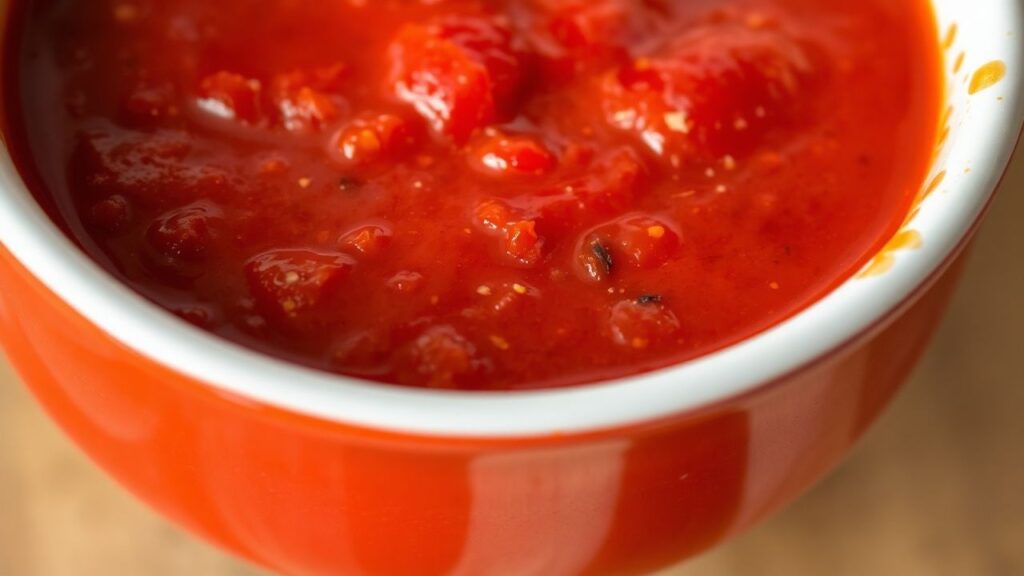
5. The Spiced Tomato Sauce (Salata): The Heartbeat
This sauce is the soul of Koshari. Its rich, aromatic depth comes from slow simmering and a judicious blend of spices. A well-made salata is sweet, tangy, and wonderfully savory.
Ingredients:
- 2 tablespoons vegetable oil
- 4 cloves garlic, minced
- 1 teaspoon ground cumin
- 1 teaspoon ground coriander
- 1/2 teaspoon red pepper flakes (or to taste, for subtle heat)
- 1 can (800g) crushed tomatoes
- 2 tablespoons white vinegar
- 1 tablespoon sugar (optional, to balance acidity)
- Salt and black pepper to taste
Method:
- Sauté Aromatics: Heat the oil in a saucepan over medium heat. Add the minced garlic and sauté until fragrant, about 1 minute, being careful not to burn it.
- Bloom Spices: Stir in the cumin, coriander, and red pepper flakes. Cook for another 30 seconds until fragrant.
- Simmer: Add the crushed tomatoes, vinegar, and sugar (if using). Bring to a simmer, then reduce heat to low, cover, and cook for at least 20-30 minutes, allowing the flavors to meld and the sauce to thicken slightly. Stir occasionally.
- Season: Season generously with salt and black pepper to taste. The sauce should be rich, slightly tangy, and well-spiced.
6. The Garlic Vinegar Sauce (Daqqa): The Zing Factor
This pungent sauce is crucial for cutting through the richness of the other components. It’s a simple yet potent flavor enhancer.
Ingredients:
- 1/2 cup (120ml) white vinegar
- 1/4 cup (60ml) water
- 2 cloves garlic, finely minced or grated
- 1/2 teaspoon ground cumin
- Pinch of salt
Method:
- Combine: In a small bowl, whisk together the vinegar, water, minced garlic, cumin, and salt.
- Rest: Let it sit for at least 15 minutes to allow the garlic to infuse its flavor into the vinegar mixture.
7. Crispy Fried Onions: The Crown Jewel
These aren’t just a garnish; they are an integral part of the Koshari experience, providing essential crunch and caramelized sweetness. This is where precision matters.
Ingredients:
- 2 large yellow onions, thinly sliced into rings
- 1/2 cup (120ml) vegetable oil (or enough to generously coat the bottom of the pan)
- Pinch of salt
Method:
- Prepare Onions: Separate the onion rings. If they seem very moist, you can pat them dry with paper towels.
- Fry Onions: Heat the vegetable oil in a skillet over medium-high heat. Add the onion rings in a single layer (fry in batches if necessary to avoid overcrowding).
- Achieve Golden Crispness: Fry, stirring occasionally, until the onions are deeply golden brown and crispy. This can take 8-15 minutes depending on the heat. Watch them closely as they can burn quickly once they start browning.
- Drain: Using a slotted spoon, remove the crispy onions and place them on a plate lined with paper towels to absorb excess oil. Sprinkle with a pinch of salt while still hot.

8. The Chili Sauce (Shatta – Optional): The Fiery Kiss
For those who enjoy a bit of heat, this sauce adds a welcome kick. It can be as simple or as complex as you desire.
Ingredients:
- 2-3 dried red chilies, rehydrated and deseeded (or 1-2 tablespoons chili paste)
- 1 tablespoon oil
- 1 clove garlic, minced
- 1 teaspoon vinegar
- Pinch of salt
Method:
- Sauté: In a small pan, heat the oil. Add the minced garlic and sauté briefly until fragrant.
- Blend: Add the rehydrated chilies (or chili paste), vinegar, and salt. Cook for 1 minute.
- Puree: Transfer to a small blender or food processor and pulse until a coarse paste forms. Adjust consistency with a little water if needed.
Assembling Your Masterpiece: The Koshari Ritual
The final act is the assembly, a personal ritual that brings all the elements together. There’s no single “correct” way to layer Koshari, but a thoughtful arrangement enhances the eating experience.
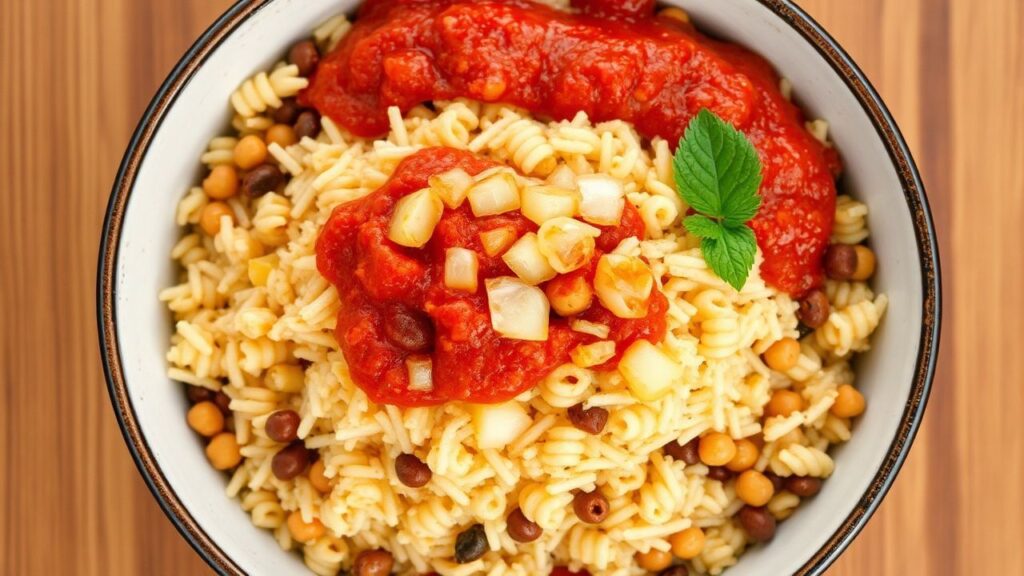
- The Base Layer: Begin with a generous portion of fluffy white rice in a deep bowl.
- Add Lentils and Pasta: Spoon a layer of the tender brown lentils and then the al dente macaroni over the rice.
- Introduce Chickpeas: Scatter the softened chickpeas across the top.
- The Tomato Embrace: Ladle a generous amount of the spiced tomato sauce (Salata) over the entire assembly. Ensure it coats the layers below.
- The Pungent Kiss: Drizzle the garlic vinegar sauce (Daqqa) over the tomato sauce. Adjust the amount to your preference for acidity.
- The Crown: Finish with a generous scattering of the crispy fried onions.
- The Fiery Finale (Optional): Add a dollop of the chili sauce (Shatta) if desired.
Serve immediately, allowing each diner to mix their Koshari to their preferred ratio before taking their first glorious bite. The symphony of textures – the soft rice, the chewy lentils and pasta, the creamy chickpeas, the crisp onions – combined with the explosion of flavors – the sweet and tangy tomato, the sharp garlic vinegar, the earthy spices – is what makes Koshari so utterly compelling.
Nutritional Insights: A Wholesome Powerhouse
Koshari is proof of how simple, plant-based ingredients can create a nutritionally complete and incredibly satisfying meal. It is a fantastic source of complex carbohydrates, fiber, and plant-based protein, making it a champion of sustainable and healthy eating.
Estimated Nutritional Information Per Serving (approximate, as preparation can vary):
| Nutrient | Amount |
|---|---|
| Calories | ~550-700 kcal |
| Protein | ~20-25 g |
| Carbohydrates | ~90-110 g |
| Fiber | ~15-20 g |
| Fat | ~15-25 g (highly dependent on oil used for frying) |
| Iron | Good source |
| Magnesium | Good source |
The fiber content, derived primarily from the lentils and chickpeas, aids digestion and promotes satiety. The combination of rice and lentils provides a complete protein profile, essential for muscle repair and overall bodily function. While the fried onions add considerable fat and calories, they are also a source of flavor and texture that is difficult to replicate. For a lighter version, one could reduce the amount of oil used in frying the onions or opt for air-frying them, though the traditional method yields the best results.
Elevating Koshari: Expert Tips for Restaurant-Quality Results
Achieving Koshari that truly sings requires attention to detail and a few insider secrets. These are the nuances that separate a good home-cooked Koshari from an exceptional one.
One of the most common pitfalls in Koshari preparation is the texture of the components. Overcooked lentils become mush, and undercooked rice is unpalatable. The goal is a harmonious balance – tender yet distinct lentils, fluffy separate grains of rice, and al dente pasta. This requires careful timing and a watchful eye on the cooking process. For instance, when cooking the rice, resist the urge to lift the lid too frequently. A tightly sealed lid traps steam, ensuring even cooking and preventing the grains from drying out.
The fried onions are another area ripe for elevation. Achieving that perfect golden-brown crispness without burning requires patience and the right temperature. Too hot, and they burn before they crisp; too low, and they become greasy. A consistent medium-high heat is key. Furthermore, ensuring they are thoroughly drained on paper towels immediately after frying is crucial to maintaining their crispness.
The tomato sauce, while seemingly straightforward, benefits from slow simmering. This allows the flavors to meld and deepen. Don’t rush this stage. A good 30 minutes of gentle simmering will transform a bright, acidic tomato sauce into a rich, complex flavor base. Tasting and adjusting the seasoning – salt, pepper, a touch more vinegar or a pinch of sugar – is essential in the final stages of sauce preparation.
Finally, consider the presentation. While Koshari is often served family-style in large bowls, individual servings can be a delightful way to showcase the layered artistry. A well-constructed bowl, with each component visible before being mixed, is a feast for the eyes as well as the palate. The visual appeal of the distinct colors and textures is part of the Koshari experience. Some chefs even recommend a final drizzle of a high-quality olive oil over the assembled dish for an added layer of richness and sheen, though this is a departure from strict tradition.
Conclusion: The Enduring Appeal of Koshari
Egyptian Koshari is more than just a meal; it is a cultural phenomenon. It is proof of the power of simple, honest ingredients transformed into something extraordinary through culinary skill and tradition. Its enduring popularity lies in its affordability, its nutritional completeness, and its ability to bring people together. Mastering Koshari at home is a rewarding endeavor, a journey into the heart of Egyptian cuisine that yields delicious, soul-satisfying results. It’s a dish that proves that the most profound culinary experiences can often be found in the humblest of origins, a vibrant, comforting, and utterly delicious embodiment of Egyptian hospitality and ingenuity.
Frequently Asked Questions about Koshari
What are the essential components of Koshari?
The absolute essential components of a classic Egyptian Koshari are: fluffy white rice, cooked brown lentils, macaroni, a spiced tomato sauce (Salata), and a garlic-vinegar sauce (Daqqa). Crispy fried onions are universally considered a non-negotiable topping, providing crucial texture and flavor. Chickpeas are also very common and add a creamy element. Some variations include a spicy chili sauce (Shatta) for those who enjoy heat.
Can Koshari be made ahead of time?
While Koshari is best assembled and served fresh, many of its components can be prepared in advance. The rice, lentils, and pasta can be cooked and stored separately in the refrigerator for up to 2-3 days. The tomato sauce and garlic vinegar sauce can also be made ahead and stored. The crispy fried onions are best made just before serving to ensure maximum crispness, as they tend to lose their crunch when stored. To assemble, gently reheat the cooked grains and sauces, then layer as usual.
Is Koshari a vegetarian or vegan dish?
Traditionally, Koshari is inherently vegetarian and largely vegan. The core ingredients – rice, lentils, pasta, chickpeas, tomatoes, vinegar, garlic, and spices – are all plant-based. The only potential non-vegan element might be if ghee (clarified butter) is used instead of oil in the rice or tomato sauce preparation. Most recipes opt for vegetable oil, making it fully vegan. The nutritional profile is excellent for plant-based diets, offering a complete protein and ample fiber.
See also: Koshari