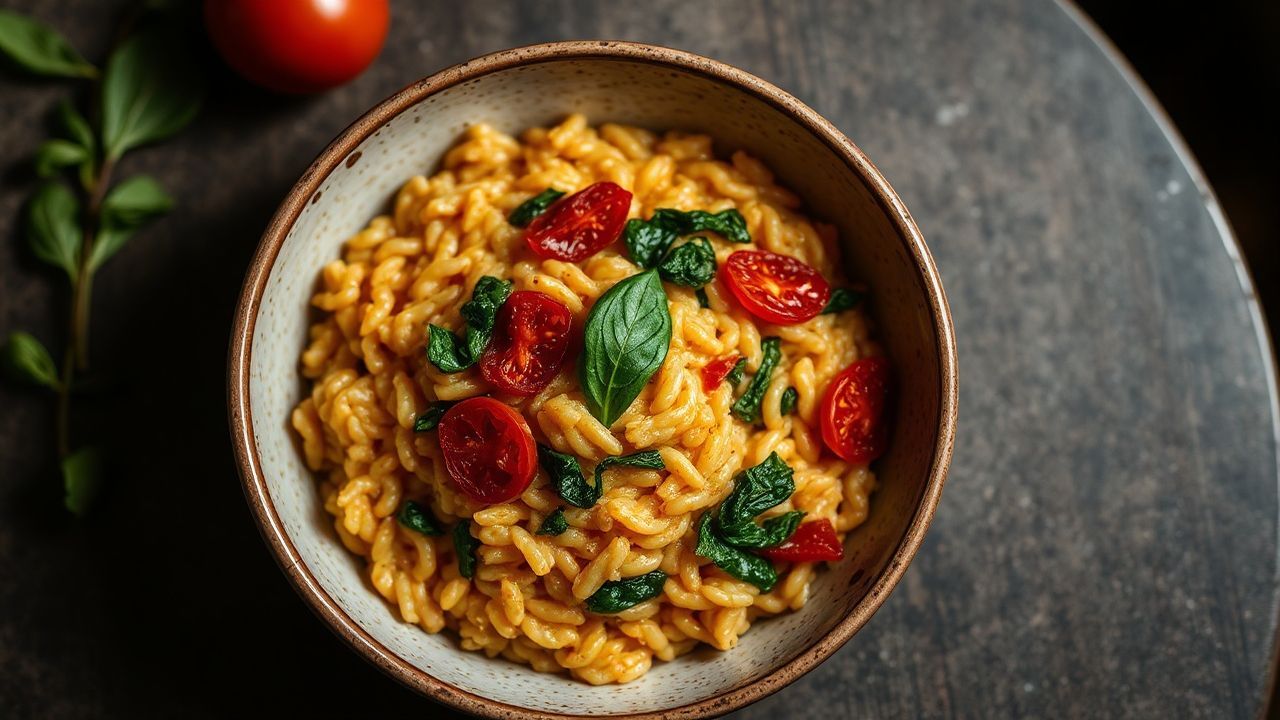

Imagine a rainy Tuesday evening in a dimly lit trattoria tucked away in a cobblestone alley of Milan. The air is thick with the aroma of simmering broth and toasted grain, a scent that promises warmth and culinary sophistication. I remember a chef whose hands moved with the precision of a watchmaker, serving a vibrant, golden-hued bowl of Risotto that balanced the intense tang of sun-dried tomatoes with the earthy freshness of baby spinach. It was a masterclass in texture and flavor, providing a meal that is simultaneously indulgent and nourishing.
At a Glance: Key Takeaways
- Starch Management: Selecting high-starch grains like Carnaroli ensures a naturally creamy finish without the need for heavy cream.
- Layered Flavoring: Rehydrating sun-dried tomatoes in the oil and broth infuses the entire dish with concentrated Mediterranean umami.
- The Mantecatura Phase: Vigorous stirring with cold butter and aged cheese at the end is the non-negotiable secret to restaurant-quality texture.
- Spinach Timing: Adding fresh greens only in the final moments preserves their vibrant color and delicate nutritional profile.
The Cultural Heritage of Authentic Risotto
The history of this iconic Italian dish is rooted in the fertile plains of the Po Valley, where glacial meltwater from the Alps feeds the vast rice paddies of Piedmont and Lombardy. While many associate Italian cuisine primarily with pasta, the northern regions have long championed short-grain rice as their primary starch. This specific preparation method, characterized by the gradual addition of liquid and constant agitation, differentiates it from any other rice dish in the world. It is a technique born of necessity and refined by centuries of regional pride.
Sun-dried tomatoes bring a Southern Italian influence to this northern classic, representing a fusion of regional traditions. Historically, tomatoes were dried on terracotta rooftops under the Sicilian sun to preserve the harvest for the winter months. When these concentrated “flavor bombs” meet the velvety texture of a northern rice preparation, the result is a balanced masterpiece. This dish is a historical dialogue between the sun-drenched south and the creamy, butter-rich north.
The inclusion of spinach adds a modern, health-conscious dimension to the traditional framework. Historically, greens were often overcooked or served as a separate side dish. Today, integrating fresh, iron-rich leaves into the rice during the final stages reflects a contemporary preference for brightness and textural contrast. This evolution demonstrates the versatility of the cooking method, proving it can adapt to modern nutritional standards without sacrificing its soul.
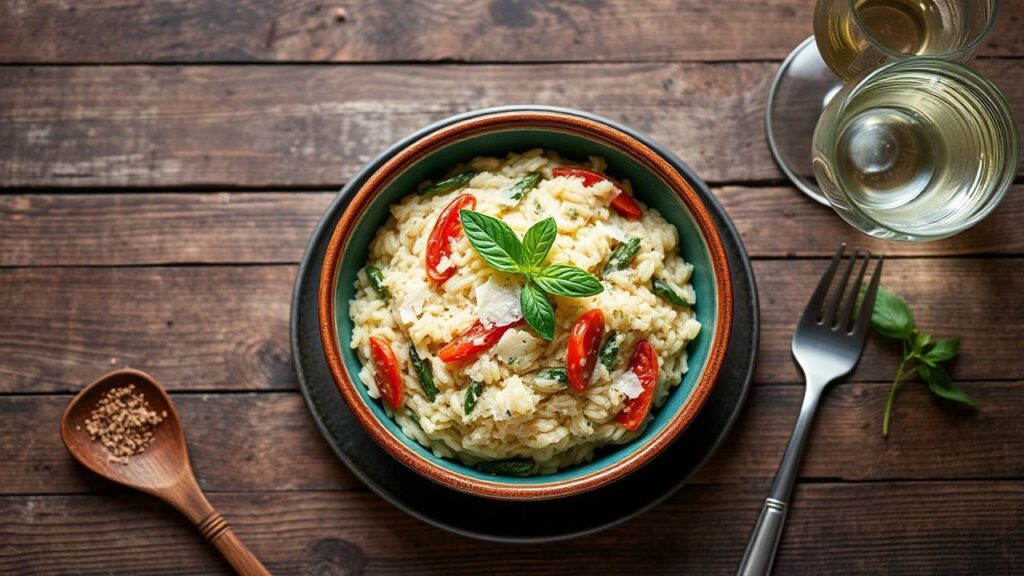
Essential Ingredients for a Vibrant Risotto
To achieve a result that rivals the finest Venetian establishments, you must be uncompromising regarding ingredient quality. The foundation is the rice. While Arborio is the most common variety, elite chefs prefer Carnaroli or Vialone Nano. These grains possess a higher amylose content, which allows them to maintain their structural integrity—the “al dente” bite—while releasing enough starch to create a luxurious, self-thickening sauce.
The liquid component is equally vital. A homemade vegetable or chicken stock provides a depth of flavor that store-bought cubes cannot replicate. Furthermore, the choice of wine is paramount; a dry, crisp white like Pinot Grigio or Sauvignon Blanc provides the necessary acidity to cut through the richness of the starch. Avoid “cooking wines,” which contain excessive salt and lack the nuanced aromatics required for a balanced palate.
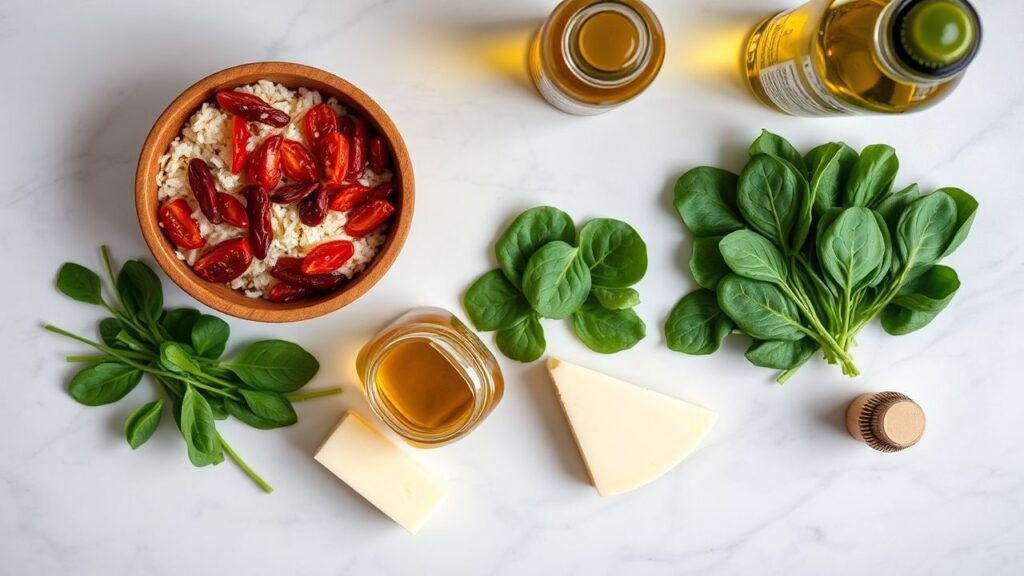
Ingredients List:
- 1.5 cups (300g) Carnaroli or Arborio rice
- 5 cups (1.2L) high-quality vegetable or chicken broth, kept at a low simmer
- 1/2 cup (120ml) dry white wine
- 1 small yellow onion or 2 shallots, finely minced
- 3 cloves garlic, minced
- 1/2 cup (60g) sun-dried tomatoes in oil, drained and thinly sliced
- 2 cups (60g) fresh baby spinach, roughly chopped
- 1/2 cup (50g) freshly grated Parmigiano-Reggiano
- 3 tbsp unsalted butter, chilled and cubed
- 2 tbsp extra virgin olive oil
- Salt and freshly cracked black pepper to taste
- Optional: A pinch of red chili flakes for subtle heat
The Science of Starch in a Perfect Risotto
Understanding the chemistry of the grain separates an amateur cook from a master. Each grain of rice is encased in a starch called amylopectin. As the rice is toasted in fat—a process known as tostatura—the exterior is sealed, but the heat begins to agitate the starch molecules. When the warm broth is added incrementally, the mechanical action of stirring causes these starch molecules to rub off the grain and emulsify with the liquid, creating the signature creamy sauce.
This phenomenon is why constant attention is required. Without regular stirring, the starch remains trapped within the grain, and the dish becomes a standard boiled rice preparation. However, over-stirring can be detrimental, potentially breaking the grains and creating a gummy texture. The goal is a gentle, consistent movement that coaxes the starch out while maintaining the individual identity of each grain.
The sun-dried tomatoes contribute more than just flavor; they add acidity and umami. This acidity helps further break down the proteins in the cheese added later, ensuring a smoother emulsion. Meanwhile, the spinach provides structural contrast. Because spinach is mostly water, adding it too early would dilute the sauce. By folding it in at the very end, the residual heat of the rice wilts the leaves just enough to release their flavor without compromising the viscosity of the Risotto.
Step-by-Step Preparation of Gourmet Risotto
Begin by heating the olive oil in a wide, heavy-bottomed pan over medium heat. Sauté the minced onions or shallots until they are translucent and fragrant, ensuring they do not brown. Add the garlic and the sliced sun-dried tomatoes, allowing them to render their flavor into the oil for about sixty seconds. This initial infusion ensures the base of the dish is saturated with Mediterranean aromatics.
Next, introduce the rice to the pan for the tostatura phase. Stir the grains for 2-3 minutes until the edges become translucent and you hear a faint clicking sound. This step is crucial for developing a nutty flavor and ensuring the grains remain distinct. Pour in the white wine to sfumare—or deglaze—the pan. Use a wooden spoon to scrape up any flavorful bits stuck to the bottom, and stir until the wine has been almost entirely absorbed.
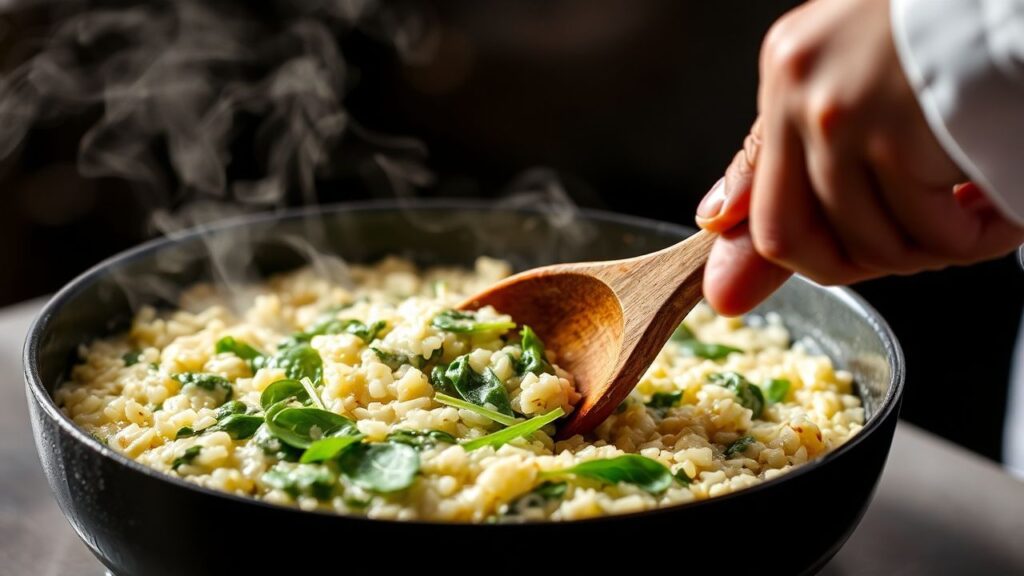
Now, begin the ritual of adding the broth. Add one ladle at a time, stirring frequently. Wait until the rice has absorbed the liquid and the spoon leaves a clear trail across the bottom of the pan before adding the next ladle. This process typically takes between 18 and 22 minutes. About five minutes before the rice reaches the perfect al dente state, fold in the chopped spinach. The leaves will shrink rapidly, integrating beautifully with the crimson flecks of the tomatoes.
The final and most important step is the mantecatura. Remove the pan from the heat. This is a vital classic Italian rice preparation technique. Add the cold, cubed butter and the Parmigiano-Reggiano. Stir vigorously for one minute to create a glossy, creamy finish. Cover the pan and let it rest for two minutes before serving. This allows the temperatures to stabilize and the flavors to fully meld.
Nutritional Profile of Modern Risotto
While often viewed as a heavy comfort food, a well-balanced Risotto offers significant nutritional value. The use of sun-dried tomatoes provides a concentrated source of lycopene, a powerful antioxidant known for supporting heart health. Spinach contributes essential vitamins A, C, and K, along with non-heme iron and folate. By focusing on high-quality fats like extra virgin olive oil and using cheese as a flavor accent rather than a primary filler, the dish remains surprisingly wholesome.
A standard serving (approximately 1.5 cups) contains:
- Calories: 420 kcal
- Total Fat: 18g (principally from olive oil and butter)
- Carbohydrates: 52g (complex starches from short-grain rice)
- Protein: 12g (from rice and Parmesan)
- Fiber: 4g (from spinach and tomatoes)
- Sodium: 650mg (dependent on broth quality)
To further enhance the nutritional profile, consider using a low-sodium broth or increasing the volume of spinach. Some modern variations incorporate a small amount of nutritional yeast to boost B-vitamins while reducing the overall dairy content. Regardless of these adjustments, the fundamental satisfaction of the dish remains its ability to provide long-lasting energy through complex carbohydrates.
Mastering the Texture: The “All’Onda” Effect
In professional Italian kitchens, the ideal consistency is described as all’onda, which translates to “on the wave.” When you tilt the plate, the rice should move fluidly like a slow-moving wave rather than sitting in a stiff, stagnant heap. If your preparation is too thick, simply stir in a tablespoon of warm broth just before serving to loosen the emulsion.
The contrast between the chewy grain and the silky sauce is the hallmark of expertise. Achieving this requires a sensory approach; you must listen to the sound of the rice as it hits the pan and feel the resistance against the spoon. If the rice is sticking to the bottom, your heat is too high. If the liquid isn’t simmering, your heat is too low. It is a meditative process that rewards those who stay present in the kitchen.
Final garnishes elevate the aesthetic and flavor profile. A drizzle of the oil from the sun-dried tomato jar provides a final punch of concentrated flavor. Freshly cracked black pepper and a few small basil leaves add a bright finish that cuts through the richness. Remember, the eyes eat first, and the vibrant red and green colors against the creamy white rice make this dish a visual triumph.
FAQ: Mastering Your Risotto Skills
What is the best type of rice for a creamy texture?
Carnaroli is widely considered the “king of rice.” It has a higher starch content and a firmer texture than Arborio, making it more resistant to overcooking. While Arborio is a respectable and widely available choice, seeking out Carnaroli will significantly improve the creaminess and “bite” of your final dish.
Can I make this recipe vegan?
Absolutely. To create a vegan version, substitute the butter with a high-quality vegan butter alternative or simply increase the amount of extra virgin olive oil. Replace the Parmigiano-Reggiano with nutritional yeast or a cashew-based vegan parmesan. The starch from the rice will still provide a remarkably creamy texture even without dairy.
How do I fix risotto that is too crunchy?
If your rice is still too hard after you have used all your broth, do not panic. Simply heat a small amount of water or additional broth and continue adding a ladle at a time, stirring until the desired tenderness is reached. Always ensure the added liquid is hot to avoid shocking the grains.
Can I use frozen spinach instead of fresh?
While fresh baby spinach is preferred for its texture and color, frozen spinach can be used. However, you must thaw it completely and squeeze out every drop of excess moisture before adding it to the rice. Failure to do so will result in a watery dish that lacks the vibrant appeal of the original recipe.
Is it possible to over-stir the rice?
While stirring is essential for starch release, aggressive or constant whisking can break the delicate grains, leading to a gluey consistency. Use a gentle folding motion with a wooden spoon or a heat-resistant spatula. The goal is to keep the grains moving and the liquid circulating without damaging the rice’s structure.
See also: Risotto