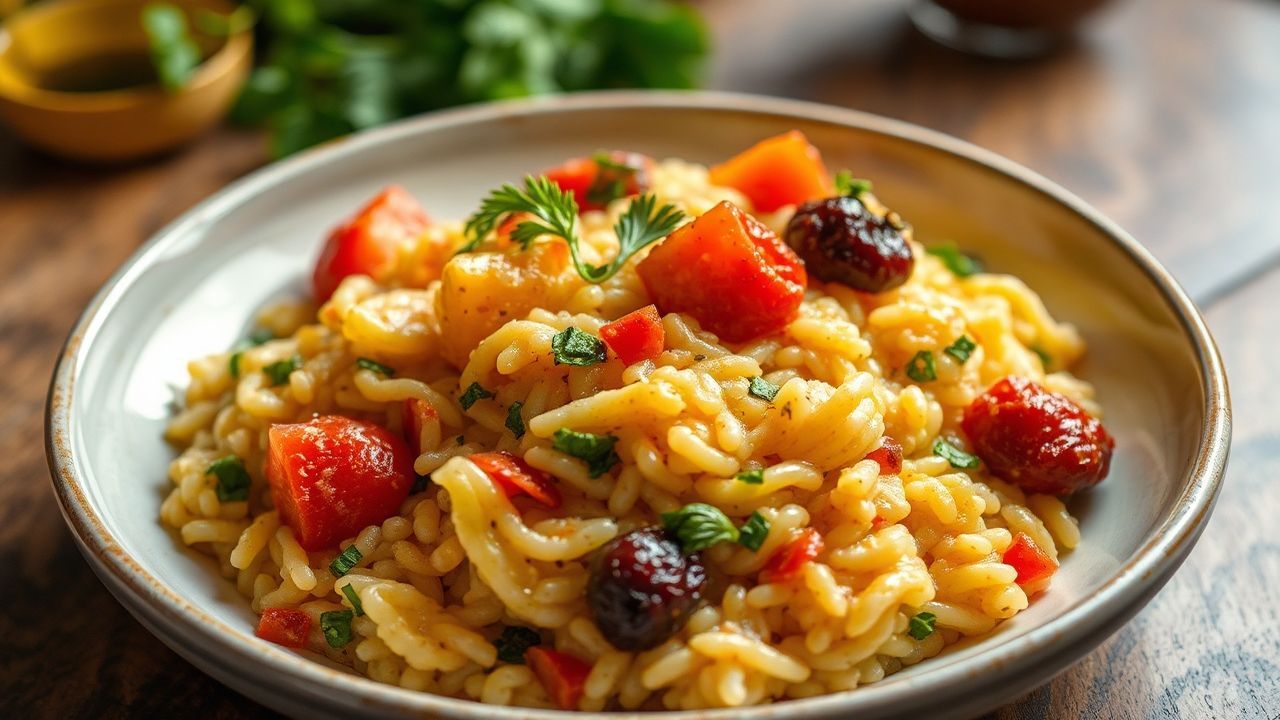

There was a time, not so long ago in my culinary journey, when the mere mention of vegetable risotto conjured images of a bland, mushy disappointment. A dish relegated to the realm of “healthy alternatives” rather than true gastronomic pleasure. I recall a particularly dismal encounter at a provincial trattoria, where a so-called “spring vegetable risotto” arrived looking more like congealed wallpaper paste, punctuated by sad, overcooked peas and carrots. It was a stark reminder of how easily this noble dish can falter when technique and understanding are absent. This experience, however, served as a powerful catalyst, igniting a deeper exploration into the soul of risotto, particularly its verdant, vegetable-laden iterations. For when executed with precision and respect for its ingredients, vegetable risotto transcends mere sustenance to become a symphony of textures and tastes, proof of the transformative power of simple, high-quality components coaxed into creamy harmony.
- The Soul of Risotto: More Than Just Rice
- Deconstructing the Vegetable Risotto: A Masterclass in Technique
- The Vegetable Ensemble: Crafting Harmony
- The Anatomy of a Perfect Vegetable Risotto: A Recipe
- Nutritional Information (Per Serving – Approximate)
- Elevating Your Risotto: Expert Pro-Tips
- Frequently Asked Questions
Key Takeaways:
- Mastering the toasting of the rice is paramount for a foundational nutty flavour and crucial texture.
- The slow, gradual addition of hot broth is the cornerstone of achieving that signature creamy consistency without resorting to heavy creams.
- Selecting the right vegetables and their preparation dictates the dish’s success, balancing sweetness, earthiness, and freshness.
- A final mantecatura, the vigorous stirring with fat and cheese, is the alchemical step that unifies the dish.
The Soul of Risotto: More Than Just Rice
At its heart, risotto is an expression of patience and alchemy. It is not a dish that can be rushed; its very essence is built upon a slow, deliberate transformation. The choice of rice is, of course, fundamental. Arborio, Carnaroli, and Vialone Nano are the traditional protagonists, their high amylopectin content yielding that coveted creamy texture as they release their starches. Unlike other rice preparations, risotto eschews the simple boiling of grains in a vast quantity of liquid. Instead, it demands engagement: a constant, gentle stirring that encourages the starch molecules to emulsify with the cooking liquid, creating a luscious, flowing consistency. This process, when applied to a medley of vibrant vegetables, elevates the dish from a simple starch base to a complex, layered experience.
The beauty of vegetable risotto lies in its inherent adaptability. It is a canvas upon which the seasons can paint their most vibrant hues. From the sweet tenderness of spring peas and asparagus to the robust earthiness of autumn mushrooms and squash, the possibilities are as boundless as the gardener’s bounty. The key, however, is not merely to toss in any vegetable; it is to understand how each ingredient contributes to the overall flavour profile and textural interplay. Some vegetables, like finely diced carrots or leeks, can be introduced early to soften and meld into the rice, providing a subtle sweetness and aromatic depth. Others, such as delicate greens or florets, are best added towards the end, preserving their freshness, vibrant colour, and a satisfying slight bite. This mindful integration ensures that the vegetables are not mere adornments but integral components of the risotto’s soul.
Deconstructing the Vegetable Risotto: A Masterclass in Technique
Creating an exceptional vegetable risotto is a nuanced undertaking, requiring a deep understanding of ingredient interaction and precise execution. It begins with the selection of rice. I invariably lean towards Carnaroli for its superior starch release and firm grain integrity, which resists overcooking better than Arborio. While both are excellent, Carnaroli imparts a creamier, more luxurious texture without the grain becoming gummy. The foundation of flavour is built by gently sautéing aromatics – typically finely minced shallots or onions, and sometimes a clove of garlic – in a generous amount of good quality olive oil or a combination of olive oil and butter. This initial step is not about browning, but about coaxing out their sweetness and aroma, a crucial prelude to toasting the rice itself.
The toasting of the rice, often referred to as “tostatura,” is a non-negotiable step that sets the stage for success. The dry grains are added to the sautéed aromatics and stirred over medium heat until they become translucent around the edges and emit a faint, nutty aroma. This process seals the outer layer of each grain, allowing it to absorb the cooking liquid gradually without becoming mushy. It’s a subtle but critical transformation that impacts both the texture and the flavour absorption of the final dish. A common pitfall here is overheating, which can scorch the rice and impart a bitter note. Patience is key; a minute or two of gentle stirring is usually sufficient.
The Broth: The Lifeblood of Risotto
The quality and temperature of the broth are paramount. A flavourless broth will yield a flavourless risotto, no matter how skillfully prepared. I advocate for a homemade vegetable broth, simmered with a mirepoix of onions, carrots, celery, and a bouquet garni of herbs like parsley, thyme, and bay leaf. This ensures a depth of flavour that store-bought alternatives often lack. Crucially, the broth must be kept at a bare simmer in a separate pot throughout the cooking process. Adding cold broth shocks the rice, hindering the starch release and compromising the creamy texture. The gradual, ladle-by-ladle addition of hot broth, allowing each addition to be almost fully absorbed before the next, is the cornerstone of the risotto-making technique. This slow, rhythmic process, punctuated by gentle stirring, encourages the rice to release its starches, creating that signature unctuousness.
The ratio of broth to rice is also a point of consideration, though it’s less about a fixed measurement and more about observation. A general guideline is approximately 3-4 cups (750-1000ml) of broth per cup (200g) of rice, but this can vary depending on the type of rice, the humidity, and the intensity of the heat. The aim is to achieve a consistency that is flowing and creamy, not stiff or watery. As the risotto nears completion, the broth should be added more judiciously, allowing the chef to control the final texture. The rice should be *al dente* – tender but with a slight, pleasant chew at its core. This requires tasting frequently in the final stages of cooking.
The Vegetable Ensemble: Crafting Harmony
The selection and preparation of vegetables are where vegetable risotto truly comes alive. For a vibrant spring rendition, I often employ a combination of finely diced leeks, tender asparagus tips blanched to a perfect *al dente*, and sweet English peas. The leeks, sautéed with the aromatics, provide a delicate oniony base. The asparagus, cut into bite-sized pieces, is briefly blanched separately to retain its vivid green hue and crisp texture before being stirred in towards the end. Fresh peas, when in season, offer a burst of sweetness; frozen peas, while convenient, should be added with care to avoid overcooking and a dulling of their flavour. The key is to introduce vegetables at different stages to ensure each retains its optimal texture and flavour. Some vegetables, like butternut squash or pumpkin, require more substantial cooking and might be roasted or steamed separately before being incorporated, adding a deeper, sweeter dimension.
For a more robust autumn or winter risotto, mushrooms are an obvious and delightful choice. A mix of cremini, shiitake, and oyster mushrooms, sautéed until golden brown and their liquid has evaporated, adds an incredible umami depth. These can be introduced earlier in the cooking process, allowing their flavour to infuse the rice. Finely diced celery can also be added with the onions, providing an aromatic counterpoint. Root vegetables, such as finely diced carrots or parsnips, can be softened in the initial sauté or added with the first few ladles of broth. The aim is a harmonious blend, where no single vegetable overpowers the others, but rather contributes to a complex and satisfying flavour profile. A splash of white wine, added after toasting the rice and before the first ladle of broth, is also essential for deglazing the pan and adding a layer of acidity that brightens the entire dish.
The Grand Finale: Mantecatura
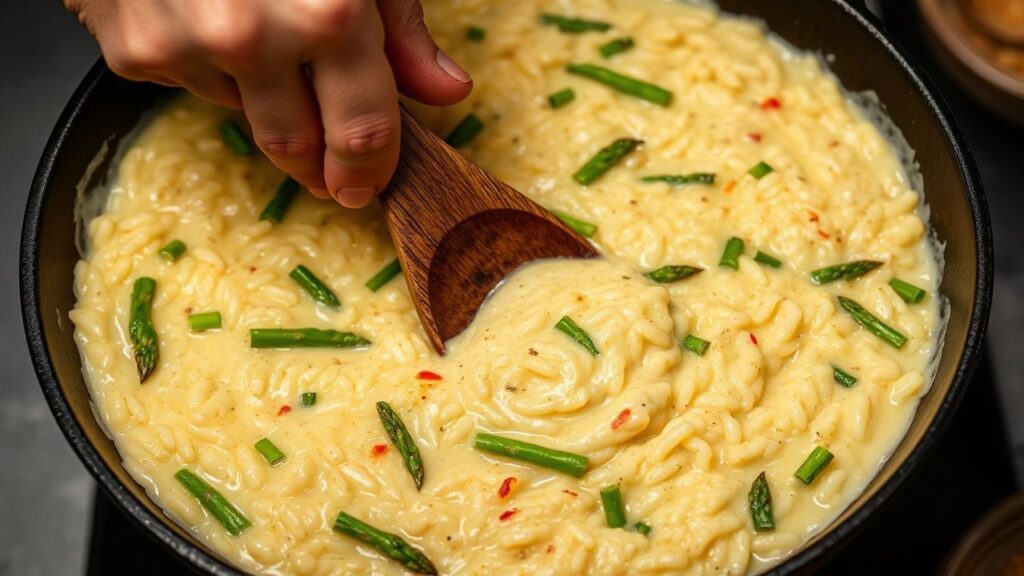
The final, crucial step in achieving that quintessential creamy texture is the mantecatura. This Italian term refers to the vigorous stirring of the cooked risotto off the heat with a knob of cold butter and freshly grated Parmigiano-Reggiano cheese. The butter emulsifies with the residual starch and liquid, while the cheese adds its characteristic salty, nutty flavour and further binds the dish. This vigorous whisking, almost beating, is what creates the final glossy, flowing consistency – a texture that should cascade gently from the spoon, not hold a rigid shape. It’s a moment of pure culinary magic, transforming the individual grains into a cohesive, luxurious whole.
The type of fat used in the mantecatura can subtly alter the final outcome. While butter is traditional and highly effective, some chefs experiment with a drizzle of high-quality extra virgin olive oil for a slightly lighter, fruitier finish, especially in vegetable-forward risottos. The amount of cheese is also a matter of personal preference, but a good rule of thumb is about 50-75 grams per serving. It’s vital that the cheese is freshly grated; pre-grated varieties often contain anti-caking agents that can hinder proper emulsification. The resting period after mantecatura is also important. Allowing the risotto to sit, covered, for a minute or two allows the flavours to meld and the texture to settle, ensuring it presents perfectly. This final touch is what separates a good risotto from an extraordinary one.
The Anatomy of a Perfect Vegetable Risotto: A Recipe
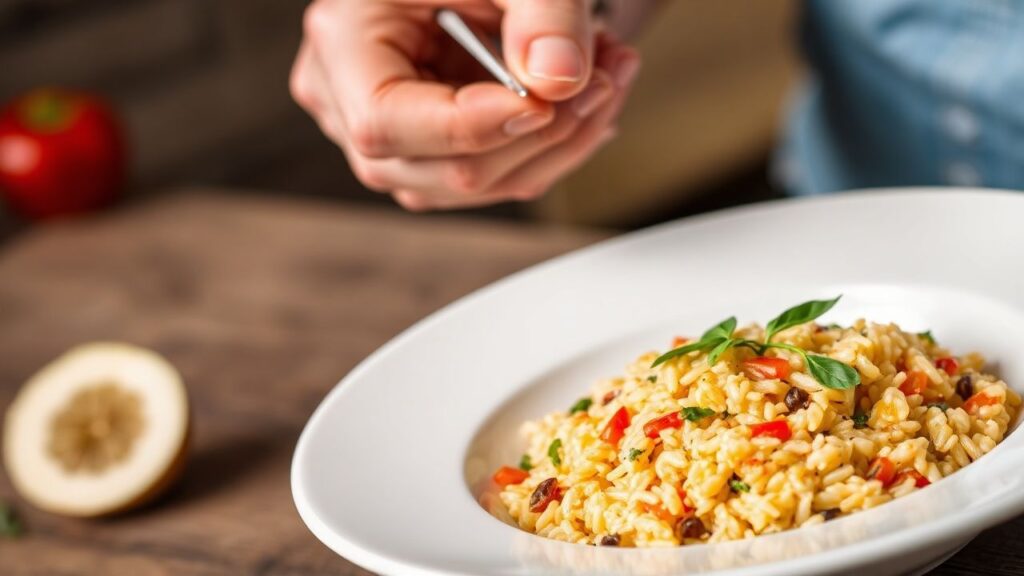
This recipe focuses on a classic spring vegetable risotto, proof of fresh, vibrant flavours. The principles, however, are universally applicable to any seasonal vegetable selection.
Ingredients (Serves 4)
- 300g (approx. 1 ½ cups) Carnaroli rice
- 1.2 litres (approx. 5 cups) hot, high-quality vegetable broth
- 1 large shallot, finely minced
- 2 cloves garlic, minced (optional, use sparingly to not overpower)
- 150g (approx. 1 cup) fresh or frozen peas
- 200g (approx. 1 ½ cups) asparagus, tough ends trimmed, cut into 2cm pieces (tips separated)
- 50ml (approx. ¼ cup) dry white wine (e.g., Pinot Grigio, Sauvignon Blanc)
- 60g (approx. 4 tbsp) unsalted butter, divided
- 75g (approx. ¾ cup) freshly grated Parmigiano-Reggiano cheese, plus extra for serving
- 2 tbsp extra virgin olive oil
- Salt and freshly ground black pepper, to taste
- Fresh parsley or chives, finely chopped, for garnish
Preparation Method
- Prepare the Vegetables: If using fresh peas, shell them. Blanch the asparagus pieces (excluding the tips) in boiling salted water for 2-3 minutes until tender-crisp. Immediately plunge into ice water to stop the cooking and preserve their colour. Drain well and set aside. Blanch the asparagus tips for 1 minute, then plunge into ice water. Drain and set aside.
- Heat the Broth: Pour the vegetable broth into a saucepan and bring to a gentle simmer over low heat. Keep it simmering throughout the cooking process.
- Sauté Aromatics: In a large, heavy-bottomed saucepan or Dutch oven, heat the olive oil and 20g (1.5 tbsp) of the butter over medium heat. Add the minced shallot and cook gently until softened and translucent, about 5-7 minutes. Do not allow it to brown. If using garlic, add it in the last minute of cooking.
- Toast the Rice: Add the Carnaroli rice to the pan. Stir continuously for 1-2 minutes, until the edges of the grains appear translucent and a faint nutty aroma is released. This toasting is crucial for texture.
- Deglaze: Pour in the white wine. Stir constantly until the wine has completely evaporated, scraping up any bits from the bottom of the pan.
- Add Broth Gradually: Begin adding the hot vegetable broth, one ladleful (about 120ml or ½ cup) at a time. Stir frequently, allowing the liquid to be almost completely absorbed before adding the next ladleful. This process should take about 18-20 minutes.
- Incorporate Vegetables: When the risotto is about 5 minutes away from being *al dente* (taste a grain – it should have a slight chew), stir in the blanched asparagus pieces and the peas. Continue adding broth and stirring until the rice is tender but still has a slight bite, and the consistency is creamy and flowing.
- Mantecatura: Remove the pan from the heat. Add the remaining 40g (3 tbsp) of cold butter and the grated Parmigiano-Reggiano cheese. Stir vigorously, almost beating the risotto, until the butter and cheese are fully incorporated and the risotto is glossy and emulsified.
- Season and Serve: Season generously with salt and freshly ground black pepper to taste. The Parmigiano-Reggiano will add saltiness, so taste before adding too much. Gently fold in the blanched asparagus tips.
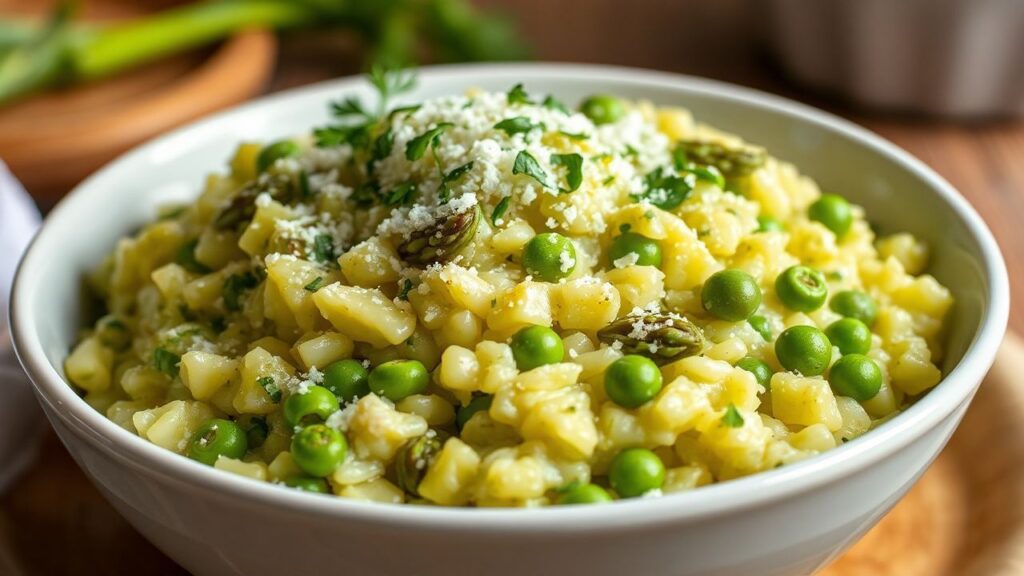
- Rest and Garnish: Let the risotto rest, covered, for 1-2 minutes. Serve immediately in warm bowls, garnished with fresh chopped parsley or chives and an extra sprinkle of Parmigiano-Reggiano.
Nutritional Information (Per Serving – Approximate)
Please note that nutritional values can vary based on specific ingredients and portion sizes.
| Component | Amount |
|---|---|
| Calories | 450-550 kcal |
| Protein | 15-20g |
| Fat | 18-25g |
| Saturated Fat | 8-12g |
| Carbohydrates | 60-75g |
| Fiber | 4-6g |
| Sodium | 600-800mg (can be reduced by using low-sodium broth) |
Elevating Your Risotto: Expert Pro-Tips
Achieving restaurant-quality risotto at home is entirely within reach with a few key adjustments and considerations. Beyond the foundational techniques, it’s the subtle nuances that elevate the dish from merely good to truly exceptional. One such nuance lies in the choice of fats. While butter is traditional for its richness and emulsifying properties, consider using a high-quality extra virgin olive oil for sautéing the aromatics and even a small amount in the mantecatura for a brighter, more herbaceous note, particularly when dealing with delicate spring vegetables.
The addition of a finely grated lemon zest during the final mantecatura can impart a wonderful brightness and cut through the richness, especially in vegetable-focused risottos. This small addition can dramatically lift the flavours. Furthermore, don’t underestimate the power of a good quality stock. While homemade is always ideal, if using store-bought, opt for a low-sodium, intensely flavourful vegetable broth. Consider infusing your stock with additional aromatics like a bay leaf or a sprig of thyme for an extra layer of complexity. For a truly decadent experience, a small amount of mascarpone cheese can be added during the mantecatura, alongside or in place of some of the butter, for an unparalleled creamy texture.
When incorporating mushrooms, sauté them separately until deeply browned before adding them to the risotto. This concentrates their flavour and prevents them from releasing excess moisture into the rice, which can dilute the final texture. For a truly luxurious mushroom risotto, consider using a combination of dried porcini mushrooms (rehydrated, reserving the flavourful soaking liquid to add to the broth) and fresh varieties. The rehydrated porcini provide an intense umami depth that is unparalleled. Remember, the key to a perfect risotto is constant attention and a willingness to taste and adjust seasonings and texture as you go. It’s a meditative process, and the rewards are substantial.
The quality of the vegetables themselves matter significantly. Whenever possible, opt for seasonal produce. The flavour and texture of spring peas and asparagus are incomparable to their out-of-season counterparts. When working with vegetables that require longer cooking times, such as winter squash or root vegetables, it is often best to pre-cook them separately – roasting or steaming – and then add them to the risotto in the final stages of cooking. This ensures they are perfectly tender without overcooking the rice. A well-executed vegetable risotto is a celebration of both the grain and its verdant companions, a harmonious marriage of earthy flavours and creamy textures that speaks to the heart of Italian culinary philosophy.
Frequently Asked Questions
What is the best type of rice for risotto?
The most revered rice varieties for risotto are those with a high amylopectin content, which allows them to release starch and create a creamy texture. The top choices are Carnaroli, often considered the “king” of risotto rice due to its firm texture and excellent starch release, which helps prevent it from becoming mushy; Arborio, which is more widely available and produces a good creamy result, though it can be slightly more prone to overcooking; and Vialone Nano, which is particularly popular in the Veneto region and is known for its ability to absorb a large amount of liquid, resulting in a very creamy risotto.
How can I make my risotto creamier without adding cream?
The creaminess in a well-made risotto comes from the starch released by the rice grains during the cooking process, combined with the fats from butter and cheese during the mantecatura. The key techniques are: using the correct type of rice (Carnaroli, Arborio, Vialone Nano), toasting the rice properly before adding liquid, gradually adding hot broth and stirring frequently to encourage starch release, and finally, performing a vigorous mantecatura with cold butter and freshly grated hard cheese off the heat. If you find your risotto still lacking desired creaminess, you can incorporate a small amount of mascarpone cheese or a tablespoon of a puréed cooked vegetable (like butternut squash) during the final stirring phase.
Can I prepare risotto ahead of time?
Risotto is best enjoyed immediately after it has been cooked and finished with the mantecatura. The texture and creaminess are at their peak when freshly made. While you *can* partially cook risotto and then reheat it, the results are often disappointing. The rice can become waterlogged and lose its characteristic *al dente* bite, and the creamy emulsion can break. If you must prepare it in advance, cook the rice until it’s about 80% done, spread it thinly on a baking sheet to cool quickly, and then refrigerate. To reheat, warm it gently in a saucepan with a little extra hot broth, stirring constantly, and finish with a fresh mantecatura. However, for the best experience, it’s always recommended to make risotto fresh.
See also: Risotto